The official data lists 161 versions of the Kia Niro (2016–2027), in the European Union, the United Kingdom, France, the United States, and Canada. Each market publishes its own figures, measured on its own test procedure.
At a glance
Years in the data
2016–2027
Markets
European Union, United Kingdom, France, United States, Canada
Engines
1.6 L to 1.6 L
Power
27 kW (37 PS) to 204 kW (277 PS)
Fuels
Electric, Plug-in hybrid, Hybrid, LPG, Petrol
Lowest consumption (United Kingdom)
1.4 L/100 km (WLTP)
Lowest consumption (European Union)
3.4 L/100 km (WLTP)
Lowest consumption (France)
4.4 L/100 km (WLTP)
Plug-in hybrid, weighted (France)
0.8 L/100 km (WLTP)
Plug-in hybrid, weighted (European Union)
0.8 L/100 km (WLTP)
New registrations in the EU
746,752
What is the Kia Niro?
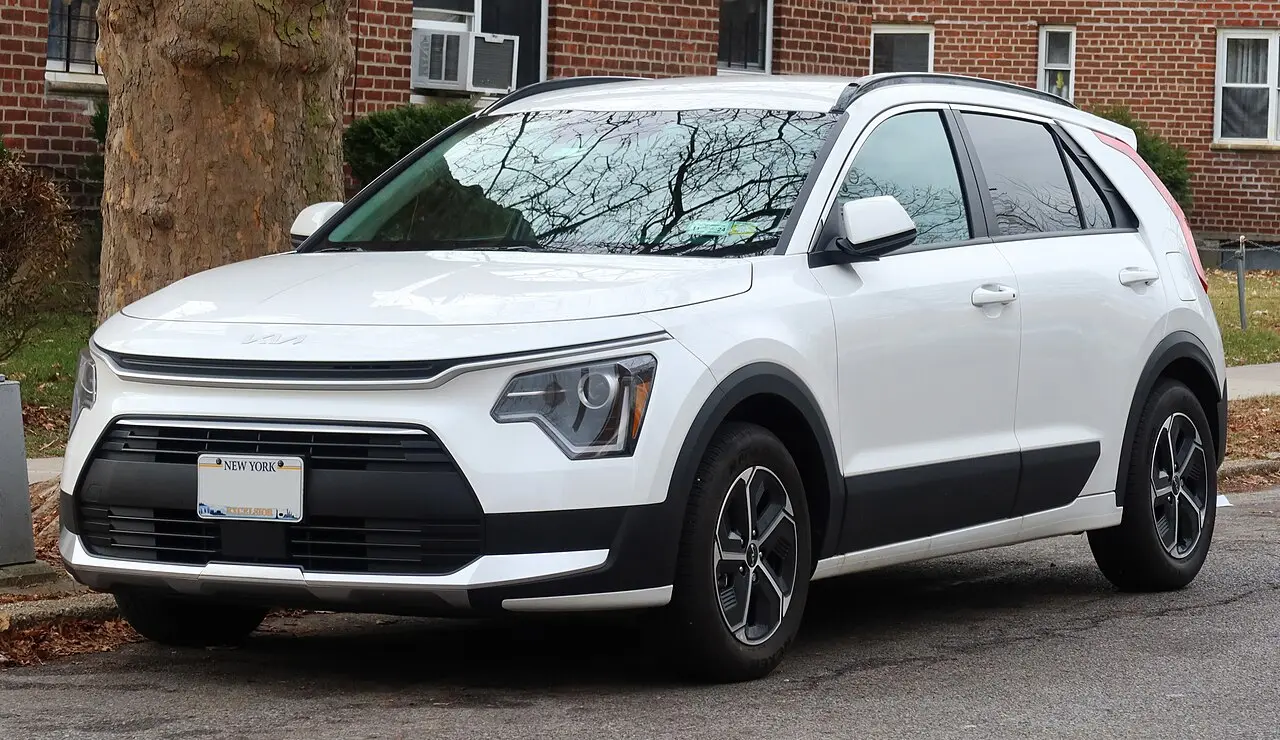
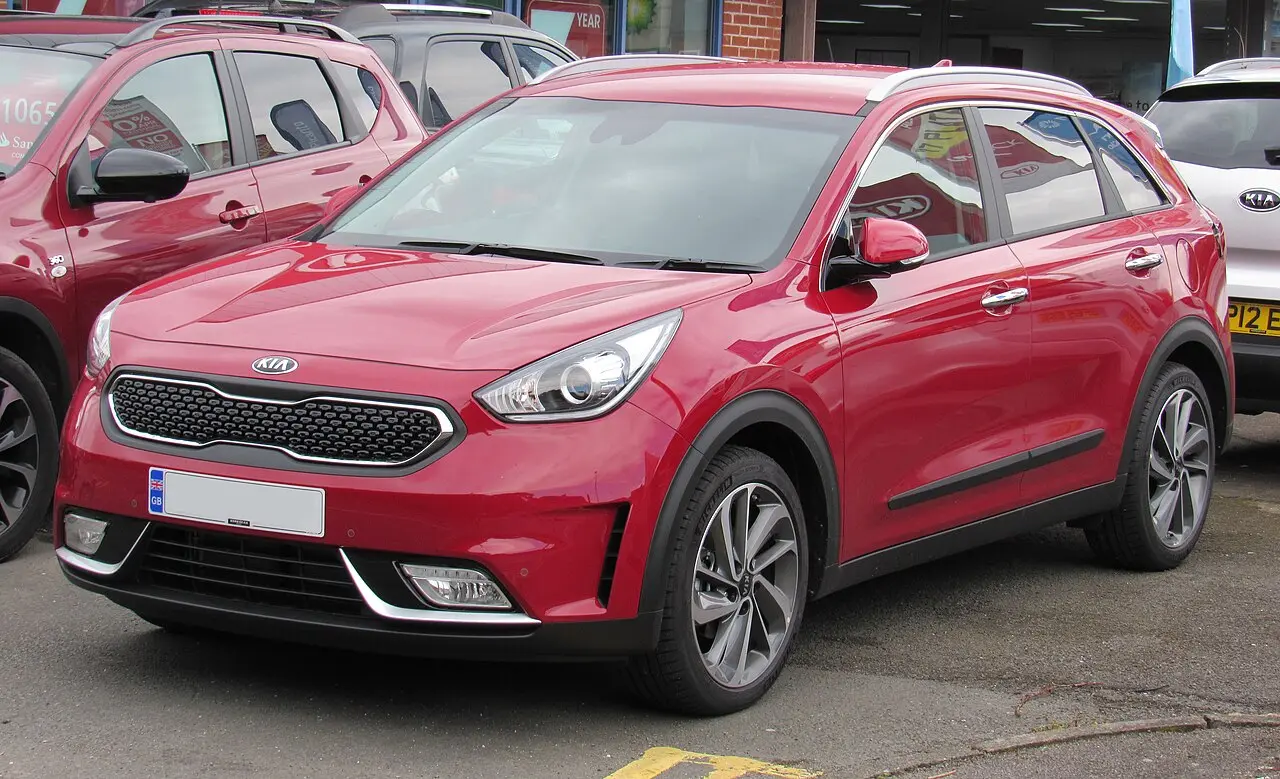
The Niro is Kia’s compact crossover, offered as a hybrid, plug-in hybrid or fully electric car. It combines a raised driving position with a cabin shaped for everyday use. Introduced in 2016, it was Kia’s first model developed on a dedicated eco-car platform.
The first generation ran from 2017–2022, followed by the second from 2023 onward. The redesign carried forward the Niro’s mix of hybrid, plug-in hybrid and electric powertrains.
Engines and power
Hybrid and plug-in hybrid Niros use a 1.6-litre engine, alongside fully electric versions. EU figures show listed power from 27 kW (37 PS) to 150 kW (204 PS). In the UK, the range reaches 204 kW (277 PS); Canada lists an electric version at 150 kW (204 PS). In a hybrid, the quoted system output includes the electric motor as well as the petrol engine.
EU registrations include conventional hybrid and plug-in hybrid versions. The plug-in hybrid can run on electricity, and its official weighted fuel figure assumes that some driving is electric.
How economical is the Kia Niro?
The lowest listed EU figure for non-plug-in versions is 3.4 L/100 km on WLTP. The plug-in hybrid’s weighted EU figure is 0.8 L/100 km on WLTP; it assumes some driving is electric, so it is not the same kind of measure as petrol-only consumption. UK figures reach 1.4 L/100 km on WLTP for non-plug-in versions and 1.3 L/100 km on NEDC for the plug-in hybrid.
In the US, the EPA rates the lowest listed non-plug-in figure at 4.4 L/100 km, or 53 MPG combined, and the plug-in hybrid at 4.9 L/100 km. Canada’s 5-cycle figures are 4.4 and 4.8 L/100 km respectively. WLTP and NEDC in Europe, EPA in the US and Canada’s 5-cycle procedure differ, so the results are not directly comparable.
Questions and answers
Which Kia Niro generations are listed?
The first generation is listed as 2017–2022 and the second as 2023 onward.
Does the Niro come as a fully electric car?
Yes. It is available as an electric car, hybrid and plug-in hybrid.
What does the plug-in hybrid’s 0.8 L/100 km figure mean?
It is the EU WLTP weighted figure, which assumes that some driving is electric.
New cars registered in the EU (plus Norway and Iceland), from the European Environment Agency. Figures on the NEDC procedure until 2020 and on WLTP from 2021; versions are grouped by engine and power, with their number of registrations.
Years and version
Engine
Power
Fuel
Consumption (combined)
CO₂
Electric range
EU registrations
2025
1.6 L
68 kW (92 PS)
Hybrid
4.4 L/100 km WLTP
101 g/km
–
14,175
2025
1.6 L
69 kW (94 PS)
Hybrid
4.5 L/100 km WLTP
102 g/km
–
7,881
2025
Electric motor
150 kW (204 PS)
Electric
19.3 kWh/100 km WLTP
0 g/km
439 km
3,756
2025
1.6 L
75 kW (102 PS)
Hybrid
4.6 L/100 km WLTP
104 g/km
–
2,793
2025
1.6 L
69 kW (94 PS)
Plug-in hybrid
0.9 L/100 km WLTP13.2 kWh/100 km WLTP
20 g/km
64 km
2,075
2025
1.6 L
69 kW (94 PS)
LPG
–
102 g/km
–
587
2025
1.6 L
68 kW (92 PS)
Plug-in hybrid
0.8 L/100 km WLTP13.0 kWh/100 km WLTP
19 g/km
65 km
561
2025
1.6 L
77 kW (105 PS)
Plug-in hybrid
0.9 L/100 km WLTP13.1 kWh/100 km WLTP
22 g/km
65 km
372
2025
1.6 L
77 kW (105 PS)
Hybrid
4.5 L/100 km WLTP
103 g/km
–
204
2025
1.6 L
75 kW (102 PS)
Plug-in hybrid
2.6 L/100 km WLTP8.1 kWh/100 km WLTP
55 g/km
62 km
146
2025
Electric motor
50 kW (68 PS)
Electric
16.2 kWh/100 km WLTP
0 g/km
460 km
63
2023–2024
Electric motor
150 kW (204 PS)
Electric
16.2 kWh/100 km WLTP
0 g/km
460 km
46,418
2023–2024
1.6 L
77 kW (105 PS)
Hybrid
4.5 L/100 km WLTP
102 g/km
–
31,744
2023–2024
1.6 L
77 kW (105 PS)
Plug-in hybrid
0.8 L/100 km WLTP13.1 kWh/100 km WLTP
19 g/km
64 km
10,825
2024
1.6 L
69 kW (94 PS)
Hybrid
4.4 L/100 km WLTP
102 g/km
–
10,317
2024
1.6 L
69 kW (94 PS)
Plug-in hybrid
0.8 L/100 km WLTP13.1 kWh/100 km WLTP
19 g/km
64 km
1,470
2024
1.6 L
69 kW (94 PS)
LPG
4.6 L/100 km WLTP
103 g/km
–
112
United Kingdom 46 versions
New cars on sale in the UK, from the Vehicle Certification Agency. NEDC figures until 2018 and WLTP figures after; years are the editions a version appeared in.
Years and version
Engine
Power
Fuel
Gearbox
Consumption (combined)
CO₂
Electric range
2025–2026'2' 64.8kWh 201bhp 1-speed Auto · '3' 64.8kWh 201bhp 1-speed Auto · '4' 64.8kWh 201bhp 1-speed Auto
Electric motor
150 kW (204 PS)
Electric
Automatic
16.2 kWh/100 km WLTP
0 g/km
460 km
2025–2026'4' 64.8kWh 201bhp 1-speed Auto (Heat Pump)
Electric motor
150 kW (204 PS)
Electric
Automatic
16.2 kWh/100 km WLTP
0 g/km
458 km
2025–2026'2' 1.6 GDi 127bhp 6-speed Auto
1.6 L
95 kW (129 PS)
Hybrid
6-speed automatic
4.4 L/100 km WLTP
100 g/km
–
2025–2026'3' 1.6 GDi 127bhp 6-speed Auto
1.6 L
95 kW (129 PS)
Hybrid
6-speed automatic
4.6 L/100 km WLTP
105 g/km
–
2025–2026'4' 1.6 GDi 127bhp 6-speed Auto
1.6 L
95 kW (129 PS)
Hybrid
6-speed automatic
4.6 L/100 km WLTP
106 g/km
–
2025–2026'Pure' 1.6 GDi 136bhp · Pure 1.6 GDi 136bhp
1.6 L
101 kW (137 PS)
Hybrid
6-speed automatic
4.5 L/100 km WLTP
102 g/km
–
2025–2026'Evolve' 1.6 GDi 136bhp · 'Aspire' 1.6 GDi 136bhp · Evolve 1.6 GDi 136bhp and 1 more trim
1.6 L
101 kW (137 PS)
Hybrid
6-speed automatic
4.9 L/100 km WLTP
111 g/km
–
2025–2026'2' 1.6 GDi 168bhp 6-speed Auto
1.6 L
126 kW (171 PS)
Plug-in hybrid
6-speed automatic
12.8 kWh/100 km WLTP
–
65 km
2025–2026'3' 1.6 GDi 168bhp 6-speed Auto
1.6 L
126 kW (171 PS)
Plug-in hybrid
6-speed automatic
13.6 kWh/100 km WLTP
–
59 km
2025–2026'4' 1.6 GDi 168bhp 6-speed Auto
1.6 L
126 kW (171 PS)
Plug-in hybrid
6-speed automatic
13.7 kWh/100 km WLTP
–
59 km
2024e-Niro '2' 39kWh Lithium-ion 134bhp
Electric motor
136 kW (185 PS)
Electric
–
15.3 kWh/100 km WLTP
0 g/km
289 km
2024'2' 64.8kWh 201bhp 1-speed Auto · '3' 64.8kWh 201bhp 1-speed Auto · '3' 64.8kWh 201bhp Heat Pump 1-speed Auto and 12 more trims
Electric motor
204 kW (277 PS)
Electric
–
16.2 kWh/100 km WLTP
0 g/km
460 km
2024'2' 64.8kWh 201bhp 1-speed Auto · '3' 64.8kWh 201bhp 1-speed Auto · '4' 64.8kWh 201bhp 1-speed Auto
Model years sold in the USA, from the EPA and the Department of Energy (fueleconomy.gov). MPG on the EPA test; litres per 100 km = 235.215 ÷ MPG.
Years and version
Engine
Fuel
Gearbox
Drive
Consumption (combined)
CO₂
Electric range
2027SIDI; Hybrid
1.6 L
Hybrid
6-speed automated manual
Front-wheel drive
50 MPG (4.7 L/100 km) EPA
111 g/km
–
2023–2026
Electric motor
Electric
Automatic
Front-wheel drive
113 MPGe EPA
0 g/km
407 km
2023–2026SIDI; Hybrid
1.6 L
Hybrid
6-speed automated manual
Front-wheel drive
49 MPG (4.8 L/100 km) EPA
112 g/km
–
2023–2026SIDI; Hybrid
1.6 L
Hybrid
6-speed automated manual
Front-wheel drive
53 MPG (4.4 L/100 km) EPA
104 g/km
–
2025–2026SIDI; PHEV
1.6 L
Plug-in hybrid
6-speed automated manual
Front-wheel drive
48 MPG (4.9 L/100 km) EPA
44 g/km
–
2023SIDI; PHEV
1.6 L
Plug-in hybrid
6-speed automated manual
Front-wheel drive
48 MPG (4.9 L/100 km) EPA
44 g/km
–
Canada 5 versions
Model years sold in Canada, from Natural Resources Canada fuel consumption ratings (5-cycle test).
Years and version
Engine
Power
Fuel
Gearbox
Consumption (combined)
CO₂
Electric range
2023–2026Station wagon: Small · Sport utility vehicle: Small
Electric motor
150 kW (204 PS)
Electric
Automatic
18.6 kWh/100 km 5-cycle
0 g/km
407 km
2026Sport utility vehicle: Small
1.6 L
–
Plug-in hybrid
6-speed automated manual
4.8 L/100 km 5-cycle
42 g/km
55 km
2023–2026Station wagon: Small · Sport utility vehicle: Small
1.6 L
–
Petrol
6-speed automated manual
4.8 L/100 km 5-cycle
112 g/km
–
2023–2026Station wagon: Small · Sport utility vehicle: Small
1.6 L
–
Petrol
6-speed automated manual
4.4 L/100 km 5-cycle
104 g/km
–
2023–2025Station wagon: Small · Sport utility vehicle: Small
1.6 L
–
Plug-in hybrid
6-speed automated manual
4.8 L/100 km 5-cycle
42 g/km
55 km
Versions outside these generations
European Union 2 versions
New cars registered in the EU (plus Norway and Iceland), from the European Environment Agency. Figures on the NEDC procedure until 2020 and on WLTP from 2021; versions are grouped by engine and power, with their number of registrations.
Years and version
Engine
Power
Fuel
CO₂
EU registrations
2016
1.6 L
77 kW (105 PS)
Petrol
93 g/km
16,544
2016
1.6 L
77 kW (105 PS)
Other fuel
101 g/km
534
Official figures are measured on standard test procedures and differ between markets. Your consumption depends on how, where and in what conditions you drive.