Kia

Kia Forte

Kia Forte
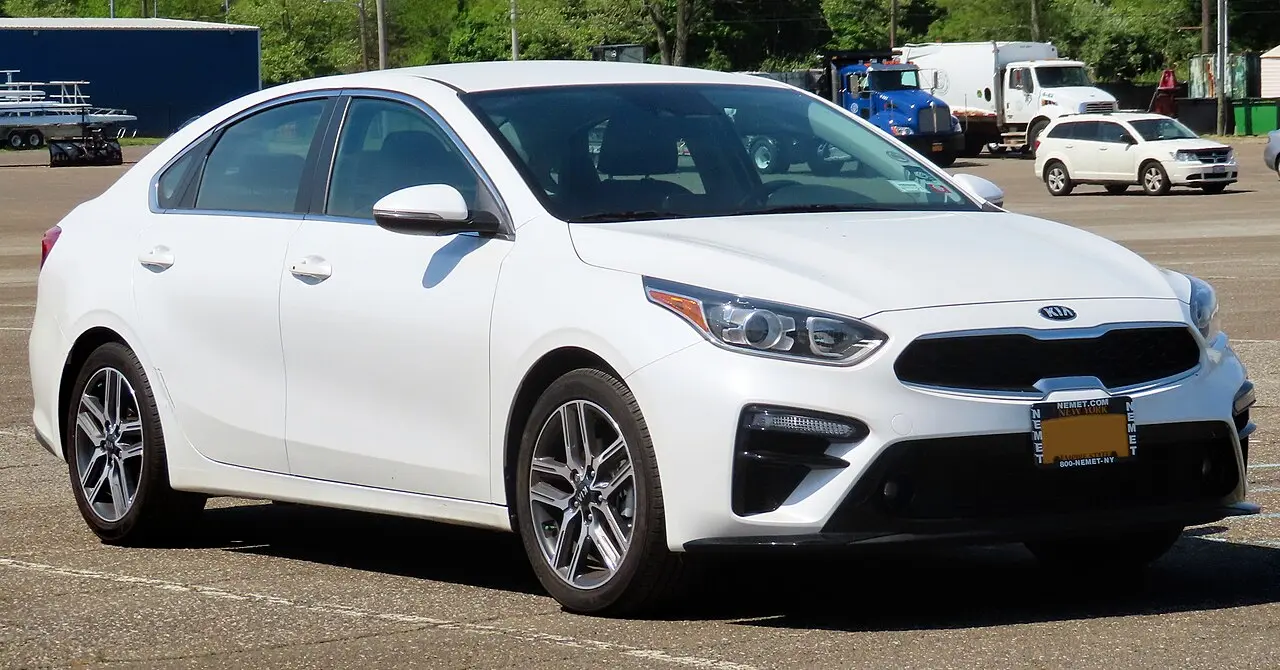
Photo: Kevauto / Wikimedia Commons · CC BY-SA 4.0

The official data lists 130 versions of the Kia Forte (2010–2024), in the United States and Canada. Each market publishes its own figures, measured on its own test procedure.

At a glance

Years in the data
2010–2024
Markets
United States, Canada
Engines
1.6 L to 2.4 L
Fuels
Petrol
Lowest consumption (United States)
6.7 L/100 km (EPA)
Lowest consumption (Canada)
6.9 L/100 km (5-cycle)

What is the Kia Forte?

The Forte is Kia’s compact passenger car, sold in North America as a practical sedan for everyday driving. It has a conventional four-door layout and a separate boot. In Kia’s range, it filled the compact-car role alongside the brand’s SUVs and other models.

In the United States and Canada, the Forte name spans three generations. Related Kia compact cars have used the Cerato name in some other markets.

Forte generations and engines

The first generation, code TD, ran from 2010 to 2013. The second generation, YD, followed from 2014 to 2018, and the third generation, BD, ran from 2019 to 2024. Across those generations, US and Canadian engine sizes ranged from 1.6 to 2.4 litres. All listed versions use petrol.

The three generations trace the Forte’s evolution from the TD to the YD and then the BD. The Forte remained a compact sedan through each generation.

How economical is the Kia Forte?

The lowest listed US figure is 6.7 L/100 km under the EPA test, alongside a combined rating of 35 MPG. Canada’s lowest listed figure is 6.9 L/100 km under NRCan’s 5-cycle procedure. The methods differ, so these ratings are best understood within their respective markets.

US figures span 2010–2024 and include 59 versions. Canadian figures cover the same years and include 71 versions.

Where was the Forte sold?

The Forte was sold in the United States and Canada across three generations.

Questions and answers

How many Kia Forte generations were there?

Three: TD (2010–2013), YD (2014–2018) and BD (2019–2024).

What engines did the Forte use?

North American versions had petrol engines from 1.6 to 2.4 litres.

What is the lowest official Forte fuel consumption figure?

The US EPA low is 6.7 L/100 km, or 35 MPG combined. Canada’s NRCan 5-cycle low is 6.9 L/100 km.

Was the Forte sold in Europe?

The Forte name was used in the United States and Canada; related Kia compact cars used the Cerato name in some other markets.
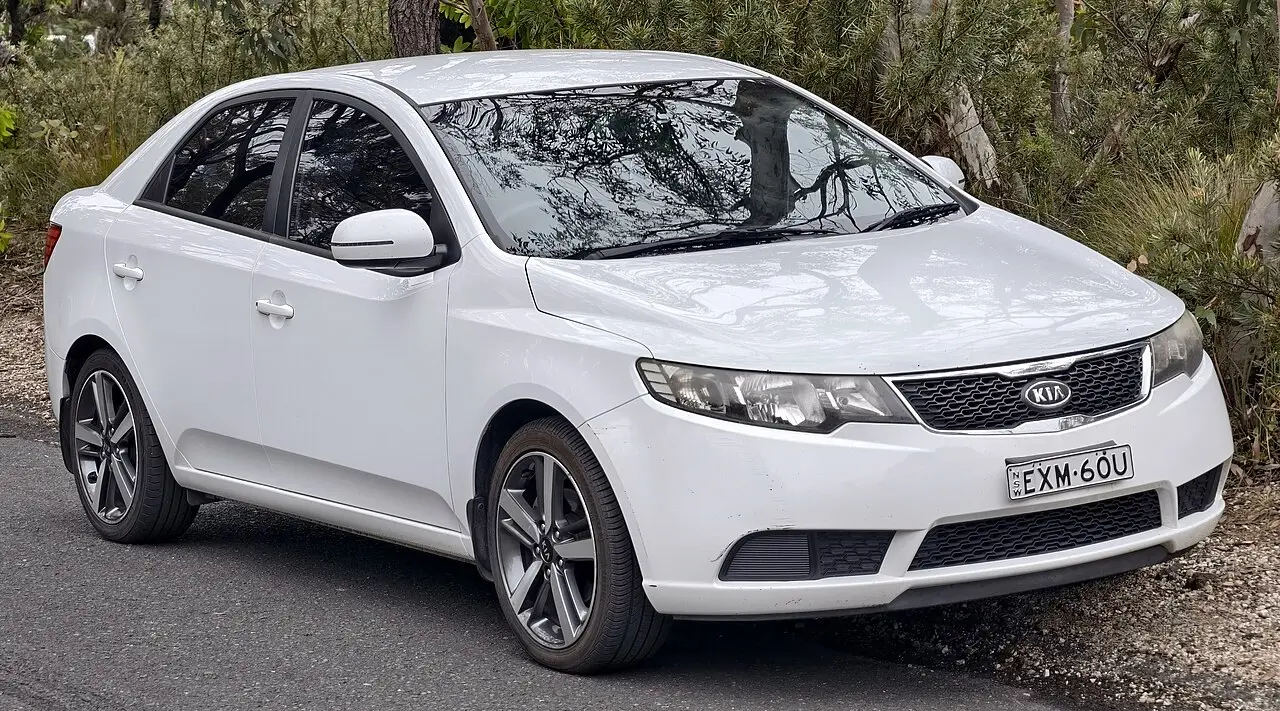
Forte first generation (2010–2013)

Kia Forte first generation
Photo: © M 93 / Wikimedia Commons · CC BY-SA 3.0 de

Model codes: TD · Sold in: United States and Canada · References: en.wikipedia.org, en.wikipedia.org

Show all 33 versions

Forte second generation (2014–2018)

Kia Forte second generation
Photo: Kevauto / Wikimedia Commons · CC BY-SA 4.0

Model codes: YD · Sold in: United States and Canada · References: en.wikipedia.org

Show all 74 versions

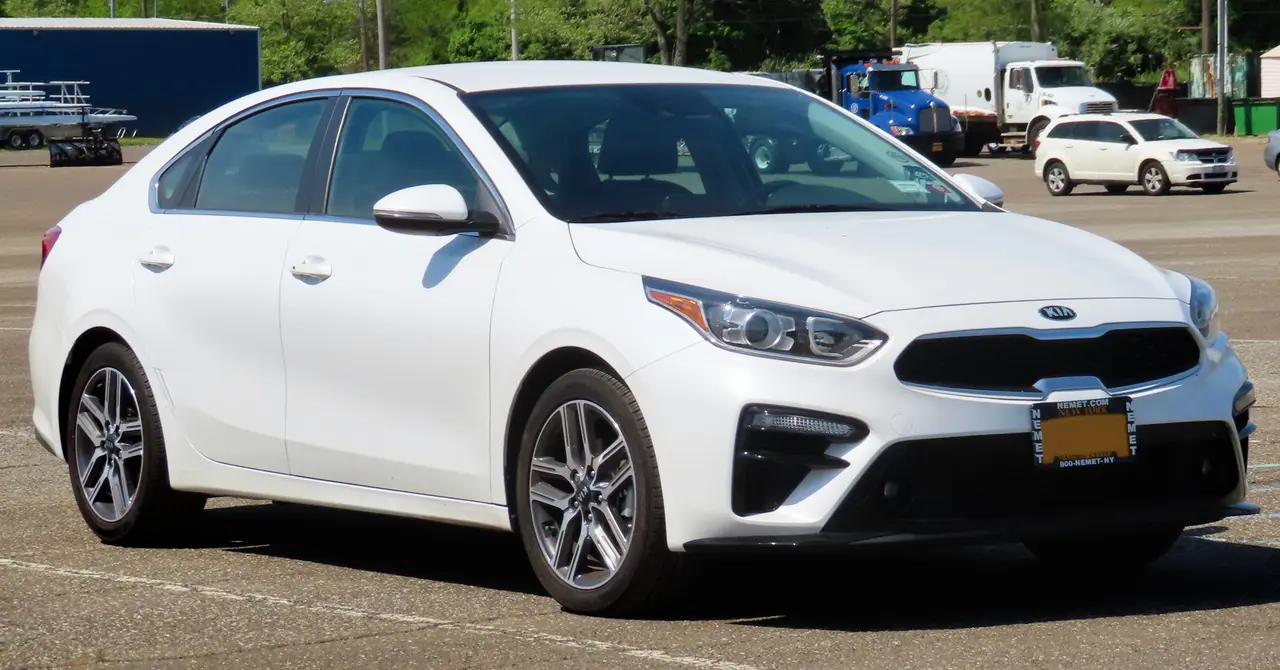
Forte third generation (2019–2024)

Kia Forte third generation
Photo: Kevauto / Wikimedia Commons · CC BY-SA 4.0

Model codes: BD · Sold in: United States and Canada · References: en.wikipedia.org, cars.com

United States 11 versions

Model years sold in the USA, from the EPA and the Department of Energy (fueleconomy.gov). MPG on the EPA test; litres per 100 km = 235.215 ÷ MPG.

Years and versionEngineFuelGearboxDriveConsumption (combined)CO₂
2020–2024SIDI1.6 LPetrol7-speed automated manualFront-wheel drive30 MPG (7.8 L/100 km) EPA184 g/km
2022–2024SIDI1.6 LPetrol6-speed manualFront-wheel drive26 MPG (9.0 L/100 km) EPA216 g/km
2023–20242.0 LPetrolContinuously variable (CVT)Front-wheel drive34 MPG (6.9 L/100 km) EPA162 g/km
2023–20242.0 LPetrolContinuously variable (CVT)Front-wheel drive32 MPG (7.4 L/100 km) EPA172 g/km
2019–20222.0 LPetrolContinuously variable (CVT)Front-wheel drive35 MPG (6.7 L/100 km) EPA159 g/km
20222.0 LPetrolContinuously variable (CVT)Front-wheel drive33 MPG (7.1 L/100 km) EPA168 g/km
2020–2021SIDI1.6 LPetrol6-speed manualFront-wheel drive28 MPG (8.4 L/100 km) EPA203 g/km
2019–20212.0 LPetrol6-speed manualFront-wheel drive31 MPG (7.6 L/100 km) EPA180 g/km
20212.0 LPetrolContinuously variable (CVT)Front-wheel drive33 MPG (7.1 L/100 km) EPA168 g/km
20202.0 LPetrolContinuously variable (CVT)Front-wheel drive33 MPG (7.1 L/100 km) EPA167 g/km
20192.0 LPetrolContinuously variable (CVT)Front-wheel drive34 MPG (6.9 L/100 km) EPA166 g/km

Canada 12 versions

Model years sold in Canada, from Natural Resources Canada fuel consumption ratings (5-cycle test).

Years and versionEngineFuelGearboxConsumption (combined)CO₂
2020–2024Mid-size1.6 LPetrol7-speed automated manual7.8 L/100 km 5-cycle184 g/km
2020–2024Full-size1.6 LPetrol7-speed automated manual8.0 L/100 km 5-cycle190 g/km
2023–2024Mid-size2.0 LPetrolContinuously variable (CVT)7.2 L/100 km 5-cycle170 g/km
2023–2024Full-size2.0 LPetrolContinuously variable (CVT)7.7 L/100 km 5-cycle182 g/km
2022Mid-size2.0 LPetrolContinuously variable (CVT)7.0 L/100 km 5-cycle165 g/km
2020–2022Full-size2.0 LPetrolContinuously variable (CVT)7.1 L/100 km 5-cycle169 g/km
2022Mid-size2.0 LPetrol6-speed manual7.6 L/100 km 5-cycle178 g/km
2021Full-size1.6 LPetrol6-speed manual8.8 L/100 km 5-cycle209 g/km
2019–2021Mid-size2.0 LPetrol6-speed manual7.6 L/100 km 5-cycle180 g/km
2021Mid-size2.0 LPetrolContinuously variable (CVT)6.9 L/100 km 5-cycle164 g/km
2020Mid-size2.0 LPetrolContinuously variable (CVT)7.0 L/100 km 5-cycle165 g/km
2019Mid-size2.0 LPetrolContinuously variable (CVT)6.9 L/100 km 5-cycle164 g/km

Official figures are measured on standard test procedures and differ between markets. Your consumption depends on how, where and in what conditions you drive.