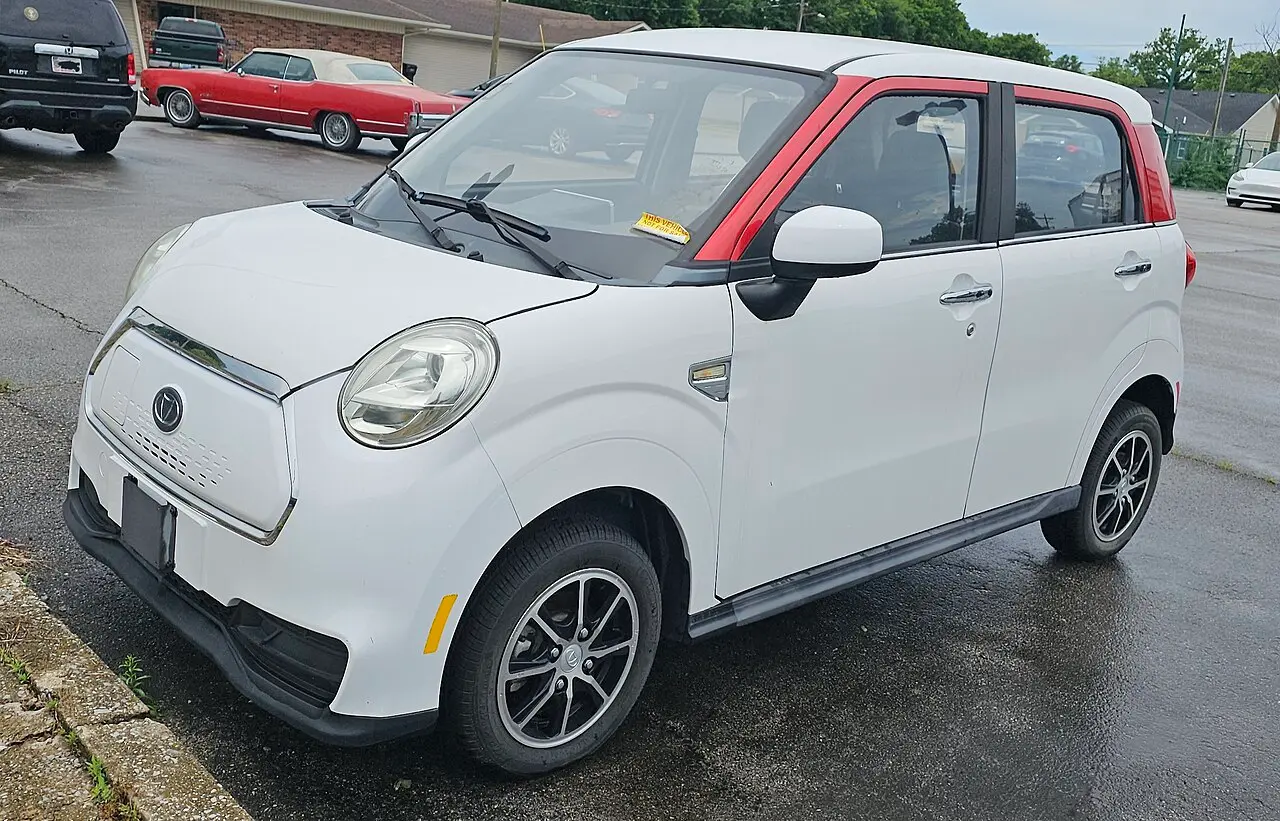
What is the Kandi K27?
The Kandi K27 is a small, battery-electric hatchback. Kandi introduced it in the United States alongside the K23 as part of its move into the US passenger-car market. Kandi Technologies, based in China, makes electric vehicles and related parts, as well as off-road vehicles.
Generations and design
The K27 has no separately identified generations. Its compact hatchback body and electric drive give it a simple role in Kandi’s passenger-car range. The company’s work spans electric vehicles, vehicle parts and off-road vehicles.
Engines, power and efficiency
The K27 uses electric power, with one version listed for the United States in the 2021 model year. EPA testing procedures differ from European WLTP and NEDC tests and Canada’s 5-cycle test, so results from those markets are not directly interchangeable.
Where was the Kandi K27 sold?
Kandi introduced the K27 in the United States, where it appears in EPA figures for the 2021 model year.
Questions and answers
Is the Kandi K27 electric?
Yes. The K27 is a battery-electric car.
What body style is the Kandi K27?
It is a small hatchback.
Which model year does the official US listing cover?
The US EPA listing covers the 2021 model year.
Was the Kandi K27 listed in European or Canadian figures?
The listed market is the United States, under EPA testing.