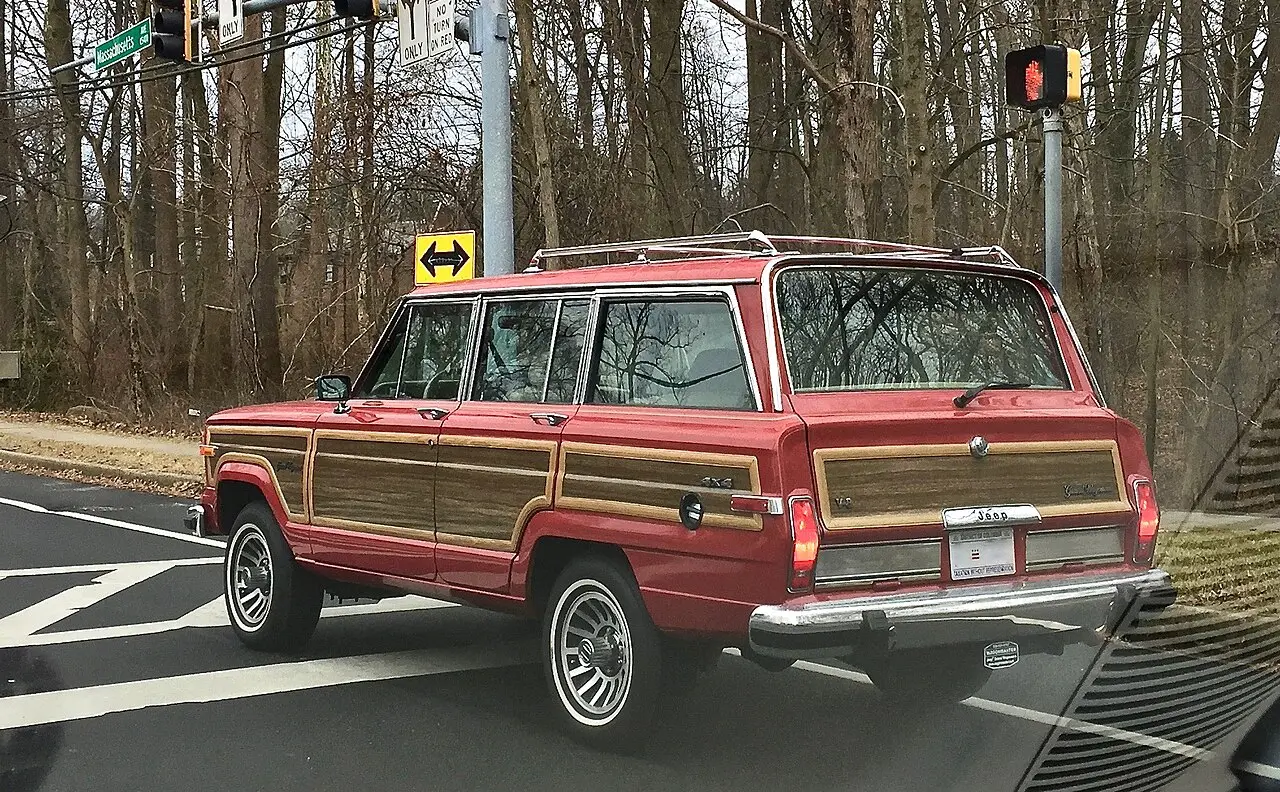
Jeep

Jeep Wagoneer

Jeep Wagoneer
Photo: CZmarlin / Wikimedia Commons · CC0

The official data lists 10 versions of the Jeep Wagoneer (1990–2025), in the United States and Canada. Each market publishes its own figures, measured on its own test procedure.

At a glance

Years in the data
1990–2025
Markets
United States, Canada
Engines
3.0 L to 5.7 L
Fuels
Petrol, Hybrid
Lowest consumption (United States)
11.8 L/100 km (EPA)
Lowest consumption (Canada)
12.5 L/100 km (5-cycle)

What is the Jeep Wagoneer?

The Wagoneer is a full-size Jeep SUV, with a name tied to the brand’s history of combining passenger comfort with four-wheel-drive utility. It sits at the spacious end of Jeep’s range, with room for people and luggage. The original Wagoneer helped establish that blend of comfort and capability; the modern model brings the name back in a large, technology-focused SUV.

Wagoneer generations

The SJ generation ran from 1990–1991. Jeep’s history describes the SJ as a long-running full-size vehicle, later renamed the Grand Wagoneer. From the beginning, the Wagoneer paired four-wheel drive with the comfort and convenience of a passenger car.

The WS generation spans 2022–2025 in the United States and Canada. Its return brought the Wagoneer name back as a modern large SUV, with an emphasis on passenger space and in-cabin technology.

Engines and fuel consumption

In the United States, the range includes petrol and hybrid versions with engines from 3.0 L to 5.7 L. Canada lists petrol versions across the same engine-size span.

The lowest listed US consumption is 11.8 L/100 km, and the best combined EPA rating is 20 MPG. Canada’s lowest listed consumption is 12.5 L/100 km on the NRCan 5-cycle test. EPA and NRCan use different procedures, so their results are not directly comparable.

Where was the Wagoneer sold?

The Wagoneer is listed in the United States and Canada. US figures span 1990–2025, while Canadian figures span 2022–2025. The modern WS generation appears in both markets, bringing Jeep’s historic name back to its large-SUV range.

Questions and answers

What engines were available in the Wagoneer?

The US range includes petrol and hybrid versions with engines from 3.0 L to 5.7 L. Canada lists petrol versions across the same engine-size span.

What is the Wagoneer’s best EPA fuel economy?

The best listed combined EPA rating is 20 MPG.

What is the Wagoneer’s lowest listed consumption in Canada?

It is 12.5 L/100 km on NRCan’s 5-cycle test.

Wagoneer SJ (1990–1991)

Jeep Wagoneer SJ
Photo: CZmarlin / Wikimedia Commons · CC0

Model codes: SJ · Sold in: United States and Canada · References: jeep.com, jeep.com

Show 1 version

Wagoneer WS (2022–2025)

Model codes: WS · Sold in: United States and Canada · References: en.wikipedia.org, en.wikipedia.org

United States 6 versions

Model years sold in the USA, from the EPA and the Department of Energy (fueleconomy.gov). MPG on the EPA test; litres per 100 km = 235.215 ÷ MPG.

Years and versionEngineFuelGearboxDriveConsumption (combined)CO₂
2023–2025SIDI3.0 LPetrol8-speed automaticRear-wheel drive20 MPG (11.8 L/100 km) EPA281 g/km
2023–2025SIDI3.0 LPetrol8-speed automaticAll-wheel drive19 MPG (12.4 L/100 km) EPA293 g/km
2023Mild Hybrid5.7 LHybrid8-speed automaticRear-wheel drive18 MPG (13.1 L/100 km) EPA300 g/km
2023Mild Hybrid5.7 LHybrid8-speed automaticAll-wheel drive17 MPG (13.8 L/100 km) EPA324 g/km
2022Mild Hybrid5.7 LHybrid8-speed automaticRear-wheel drive18 MPG (13.1 L/100 km) EPA298 g/km
2022Mild Hybrid5.7 LHybrid8-speed automaticAll-wheel drive17 MPG (13.8 L/100 km) EPA323 g/km

Canada 3 versions

Model years sold in Canada, from Natural Resources Canada fuel consumption ratings (5-cycle test).

Years and versionEngineFuelGearboxConsumption (combined)CO₂
2023–2025Sport utility vehicle: Standard3.0 LPetrol8-speed automatic12.5 L/100 km 5-cycle293 g/km
2023Sport utility vehicle: Standard5.7 LPetrol8-speed automatic13.8 L/100 km 5-cycle324 g/km
2022Sport utility vehicle: Standard5.7 LPetrol8-speed automatic13.8 L/100 km 5-cycle323 g/km

Official figures are measured on standard test procedures and differ between markets. Your consumption depends on how, where and in what conditions you drive.