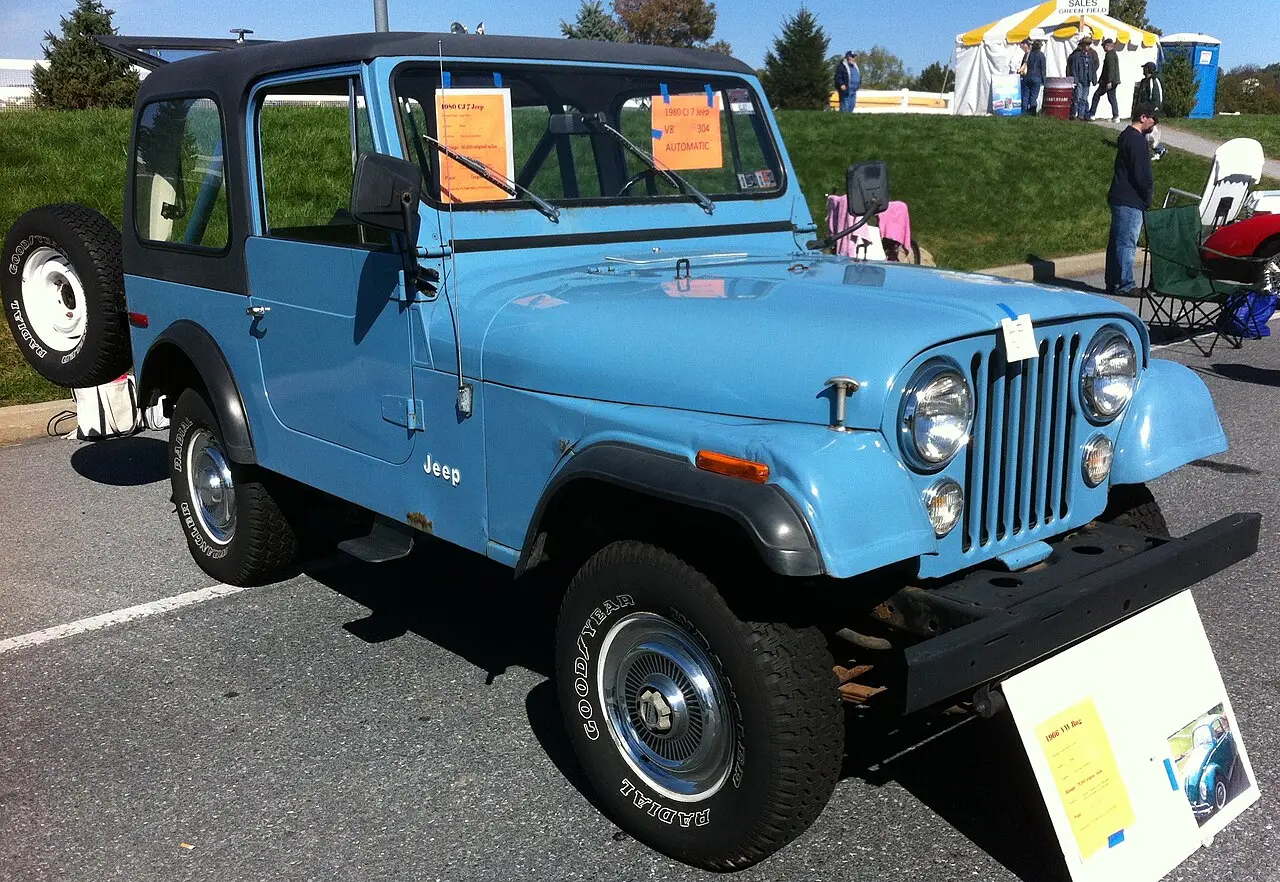
Jeep

Jeep Scrambler

Jeep Scrambler
Photo: CZmarlin / Wikimedia Commons · CC0

The official data lists 18 versions of the Jeep Scrambler (1984–1986), in the United States. Each market publishes its own figures, measured on its own test procedure.

At a glance

Years in the data
1984–1986
Markets
United States
Engines
2.5 L to 4.2 L
Fuels
Petrol
Lowest consumption (United States)
11.2 L/100 km (EPA)

What is the Jeep Scrambler?

The Jeep Scrambler is a CJ-based pickup with an open-sided body and a cargo bed. It combined the familiar shape of Jeep’s CJ off-road vehicles with a longer body suited to carrying gear. It was part of the CJ line, which grew from Jeep’s civilian four-wheel-drive vehicles.

Generation and engines

The Scrambler’s generation, the CJ-8, ran from 1981 to 1986. Based on the CJ-7, it had a longer wheelbase and a pickup bed, giving it a distinct place in the CJ family.

US EPA-listed versions from 1984 to 1986 used petrol engines ranging from 2.5 L to 4.2 L.

How economical is the Jeep Scrambler?

The best combined EPA rating listed for the Scrambler is 21 MPG. The EPA test procedure is specific to the United States; European WLTP and NEDC procedures and Canada’s 5-cycle test can produce different results.

Where was it sold?

The CJ-8 generation is identified with the US market. US EPA figures cover model years 1984 to 1986.

Questions and answers

When was the Jeep Scrambler sold?

The CJ-8 Scrambler generation ran from 1981 to 1986; US EPA figures cover 1984 to 1986.

What kind of vehicle is the Scrambler?

It is a CJ-based pickup with an open-sided body, a longer wheelbase than the CJ-7 and a cargo bed.

What engines did the Scrambler have?

US EPA-listed versions used petrol engines from 2.5 L to 4.2 L.

What is its best EPA fuel economy?

The best listed combined rating is 21 MPG.

Scrambler CJ-8 Scrambler (1981–1986)

Jeep Scrambler CJ-8 Scrambler
Photo: CZmarlin / Wikimedia Commons · CC0

Model codes: CJ-8 · Sold in: United States · References: motortrend.com, jeepdatabase.com

United States 18 versions

Model years sold in the USA, from the EPA and the Department of Energy (fueleconomy.gov). MPG on the EPA test; litres per 100 km = 235.215 ÷ MPG.

Years and versionEngineFuelGearboxDriveConsumption (combined)CO₂
1985–1986(FFS)4.2 LPetrol3-speed automaticFour- or all-wheel drive15 MPG (15.7 L/100 km) EPA368 g/km
1984–1986(FFS) CA model · (FFS)4.2 LPetrol4-speed manualFour- or all-wheel drive16 MPG (14.7 L/100 km) EPA345 g/km
1985–1986(FFS)4.2 LPetrol5-speed manualFour- or all-wheel drive17 MPG (13.8 L/100 km) EPA325 g/km
1985(FFS) CA model, SIL2.5 LPetrol4-speed manualFour- or all-wheel drive17 MPG (13.8 L/100 km) EPA325 g/km
1985(FFS) CA model, SIL2.5 LPetrol5-speed manualFour- or all-wheel drive17 MPG (13.8 L/100 km) EPA325 g/km
1985(FFS), SIL2.5 LPetrol4-speed manualFour- or all-wheel drive18 MPG (13.1 L/100 km) EPA307 g/km
1985(FFS), SIL2.5 LPetrol5-speed manualFour- or all-wheel drive18 MPG (13.1 L/100 km) EPA307 g/km
1985(FFS) CA model4.2 LPetrol3-speed automaticFour- or all-wheel drive16 MPG (14.7 L/100 km) EPA345 g/km
1985(FFS) CA model4.2 LPetrol5-speed manualFour- or all-wheel drive17 MPG (13.8 L/100 km) EPA325 g/km
1984(FFS)(SIL)2.5 LPetrol4-speed manualFour- or all-wheel drive21 MPG (11.2 L/100 km) EPA263 g/km
1984(FFS)2.5 LPetrol4-speed manualFour- or all-wheel drive20 MPG (11.8 L/100 km) EPA276 g/km
1984(FFS) · (FFS) CA model2.5 LPetrol5-speed manualFour- or all-wheel drive21 MPG (11.2 L/100 km) EPA263 g/km
1984(FFS)(SIL) CA model · (FFS) CA model2.5 LPetrol4-speed manualFour- or all-wheel drive20 MPG (11.8 L/100 km) EPA276 g/km
1984(FFS)4.2 LPetrol3-speed automaticFour- or all-wheel drive18 MPG (13.1 L/100 km) EPA307 g/km
1984(FFS)4.2 LPetrol4-speed manualFour- or all-wheel drive17 MPG (13.8 L/100 km) EPA325 g/km
1984(FFS)4.2 LPetrol5-speed manualFour- or all-wheel drive17 MPG (13.8 L/100 km) EPA325 g/km
1984(FFS) CA model4.2 LPetrol3-speed automaticFour- or all-wheel drive17 MPG (13.8 L/100 km) EPA325 g/km
1984(FFS) CA model4.2 LPetrol5-speed manualFour- or all-wheel drive17 MPG (13.8 L/100 km) EPA325 g/km

Official figures are measured on standard test procedures and differ between markets. Your consumption depends on how, where and in what conditions you drive.