Jeep

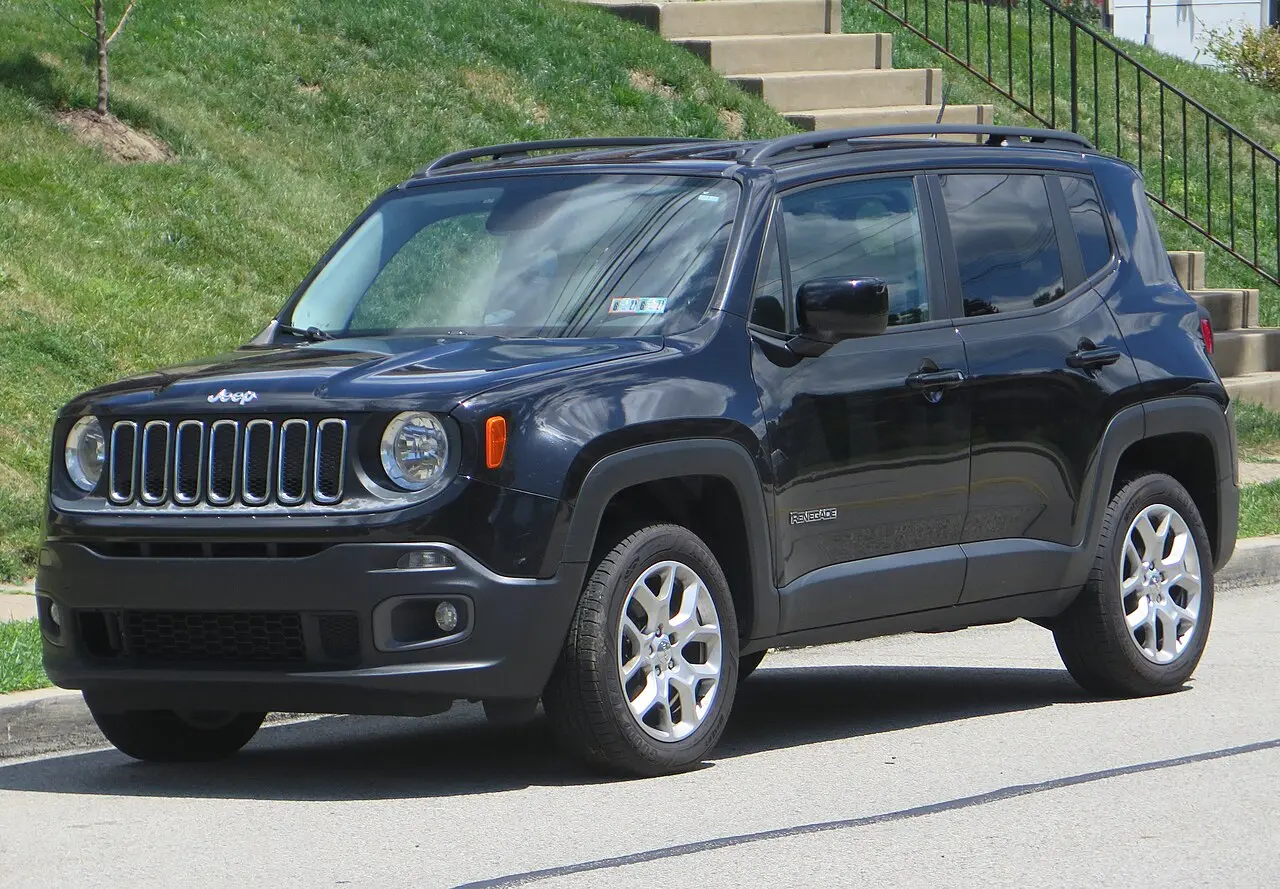
Jeep Renegade

Jeep Renegade
Photo: Cutlass / Wikimedia Commons · CC0

The official data lists 264 versions of the Jeep Renegade (2014–2026), in the European Union, the United Kingdom, France, the United States, and Canada. Each market publishes its own figures, measured on its own test procedure.

At a glance

Years in the data
2014–2026
Markets
European Union, United Kingdom, France, United States, Canada
Engines
1.0 L to 2.4 L
Power
81 kW (110 PS) to 155 kW (211 PS)
Fuels
Plug-in hybrid, Hybrid, Petrol, Diesel, LPG, Flex fuel (E85)
Lowest consumption (United Kingdom)
4.4 L/100 km (NEDC)
Lowest consumption (European Union)
4.9 L/100 km (WLTP)
Lowest consumption (France)
5.8 L/100 km (WLTP)
Plug-in hybrid, weighted (European Union)
1.8 L/100 km (WLTP)
Plug-in hybrid, weighted (France)
1.9 L/100 km (WLTP)
New registrations in the EU
862,454

What is the Jeep Renegade?

The Renegade is Jeep’s small SUV, with upright styling and a compact shape suited to everyday driving. It brought the brand into the small-SUV segment, carrying familiar Jeep design cues in a smaller package.

Jeep introduced the Renegade in 2014. Its single generation, known as BU, has been sold in Europe since 2014 and in the United States and Canada through 2023. The global model offered both road-focused and four-wheel-drive versions.

Engines and power

European and UK Renegades have been offered with petrol, diesel, LPG, hybrid and plug-in hybrid power. Across EU registrations, engine sizes ranged from 1.0 to 2.0 litres and power from 77 kW (105 PS) to 155 kW (211 PS). UK figures extend the power range to 179 kW (243 PS).

The US and Canadian ranges included petrol and flex-fuel E85 engines, from 1.3 to 2.4 litres in the listed versions. The choice of engines and fuels varied by market and specification.

Fuel consumption

The lowest official EU consumption figure is 4.9 L/100 km on the WLTP test for petrol, diesel and hybrid versions. Plug-in hybrids have a weighted WLTP figure as low as 1.8 L/100 km. That figure assumes some driving is electric, so fuel use on a long journey without charging may be higher.

In the UK, the lowest listed figure is 4.4 L/100 km under the older NEDC procedure, while the plug-in hybrid weighted WLTP figure is 6.9 L/100 km. The US EPA rates the most economical listed version at 27 MPG combined. Canada’s NRCan 5-cycle result is 8.7 L/100 km. WLTP and NEDC in Europe, EPA in the US and the 5-cycle procedure in Canada use different test methods, so figures are best considered within their own market.

Where was the Renegade sold?

The Renegade was sold in the EU, the UK, France, the United States and Canada. EU registration figures record 862,454 examples from 2014 onward. The leading listed EU versions included a 1.6-litre diesel and a 1.0-litre petrol, each rated at 88 kW (120 PS).

Questions and answers

How many generations of Jeep Renegade are there?

The Renegade has one generation, the BU, sold since 2014 in Europe and from 2015 to 2023 in the United States and Canada.

Was the Renegade available as a plug-in hybrid?

Yes. European and UK versions included plug-in hybrids, alongside petrol, diesel and hybrid models.

What is the lowest official EU consumption figure for the Renegade?

The lowest listed weighted figure is 1.8 L/100 km WLTP for a plug-in hybrid. It assumes some driving is electric; the lowest figure for petrol, diesel and hybrid versions is 4.9 L/100 km WLTP.
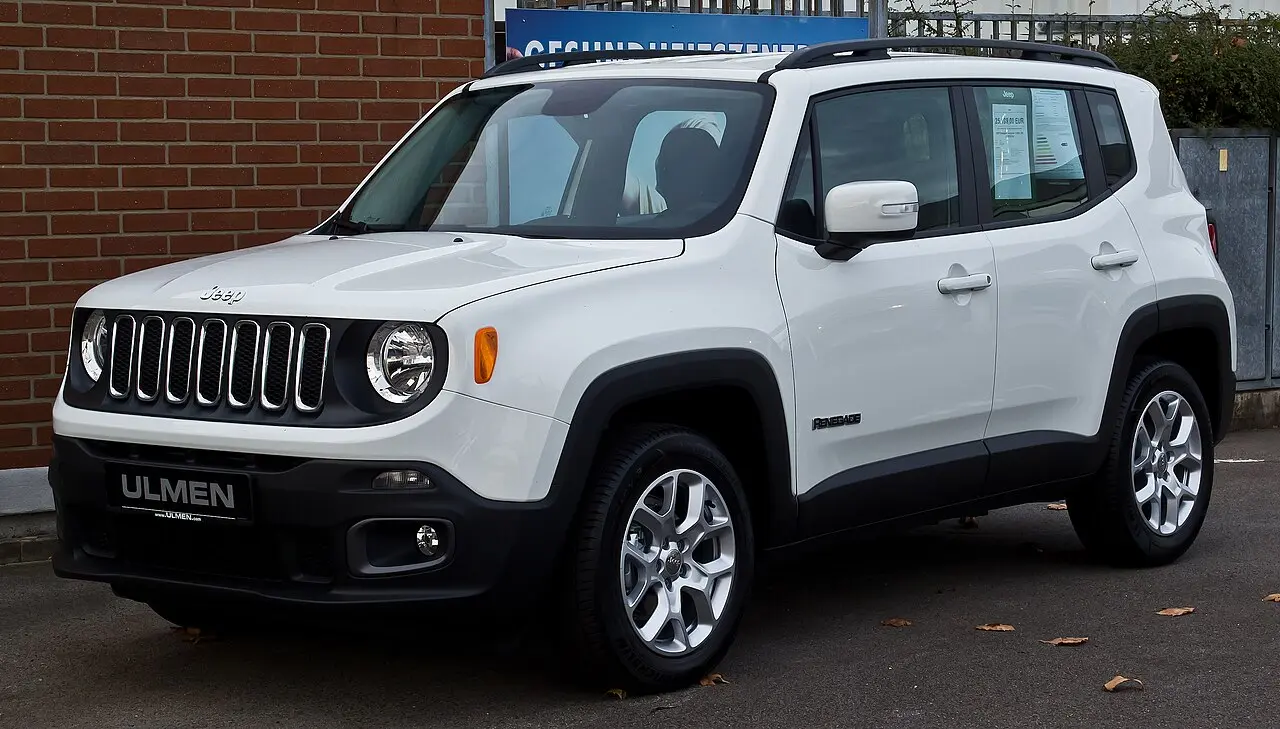
Renegade BU (since 2014)

Jeep Renegade BU
Photo: M 93 / Wikimedia Commons · CC BY-SA 3.0 de

Model codes: BU · Sold in: European Union, United Kingdom, and France · References: en.wikipedia.org, auto-motor-und-sport.de

Show all 233 versions

Renegade BU (2015–2023)

Jeep Renegade BU
Photo: Cutlass / Wikimedia Commons · CC0

Model codes: BU · Sold in: United States and Canada · References: en.wikipedia.org

United States 12 versions

Model years sold in the USA, from the EPA and the Department of Energy (fueleconomy.gov). MPG on the EPA test; litres per 100 km = 235.215 ÷ MPG.

Years and versionEngineFuelGearboxDriveConsumption (combined)CO₂
2022–20231.3 LPetrol9-speed automaticAll-wheel drive26 MPG (9.0 L/100 km) EPA216 g/km
2021–2023SIDI1.3 LPetrol9-speed automaticAll-wheel drive24 MPG (9.8 L/100 km) EPA231 g/km
2019–2022SIDI1.3 LPetrol9-speed automaticFront-wheel drive27 MPG (8.7 L/100 km) EPA204 g/km
2021SIDI1.3 LPetrol9-speed automaticAll-wheel drive26 MPG (9.0 L/100 km) EPA191 g/km
2015–20212.4 LPetrol9-speed automaticAll-wheel drive24 MPG (9.8 L/100 km) EPA231 g/km
2018–20212.4 LPetrol9-speed automaticFront-wheel drive25 MPG (9.4 L/100 km) EPA222 g/km
2019–2020SIDI1.3 LPetrol9-speed automaticAll-wheel drive26 MPG (9.0 L/100 km) EPA216 g/km
2019–2020SIDI1.3 LPetrol9-speed automaticAll-wheel drive24 MPG (9.8 L/100 km) EPA230 g/km
2015–20181.4 LPetrol6-speed manualFront-wheel drive26 MPG (9.0 L/100 km) EPA209 g/km
2017–20181.4 LPetrol6-speed manualAll-wheel drive26 MPG (9.0 L/100 km) EPA211 g/km
2015–2018FFV2.4 LFlex fuel (E85)9-speed automaticFront-wheel drive25 MPG (9.4 L/100 km) EPA222 g/km
2015–20161.4 LPetrol6-speed manualAll-wheel drive27 MPG (8.7 L/100 km) EPA208 g/km

Canada 19 versions

Model years sold in Canada, from Natural Resources Canada fuel consumption ratings (5-cycle test).

Years and versionEngineFuelGearboxConsumption (combined)CO₂
2021–2023Sport utility vehicle: Small1.3 LPetrol9-speed automatic9.2 L/100 km 5-cycle222 g/km
2021–2023Sport utility vehicle: Small1.3 LPetrol9-speed automatic9.9 L/100 km 5-cycle231 g/km
2019–2022Sport utility vehicle: Small1.3 LPetrol9-speed automatic8.7 L/100 km 5-cycle204 g/km
2017–2021Sport utility vehicle: Small2.4 LPetrol9-speed automatic9.5 L/100 km 5-cycle222 g/km
2017–2021Sport utility vehicle: Small2.4 LPetrol9-speed automatic9.8 L/100 km 5-cycle230 g/km
2019–2020Sport utility vehicle: Small1.3 LPetrol9-speed automatic9.2 L/100 km 5-cycle216 g/km
2019–2020Sport utility vehicle: Small1.3 LPetrol9-speed automatic9.9 L/100 km 5-cycle230 g/km
2017–2018Sport utility vehicle: Small1.4 LPetrol6-speed manual8.9 L/100 km 5-cycle209 g/km
2017–2018Sport utility vehicle: Small1.4 LPetrol6-speed manual8.9 L/100 km 5-cycle211 g/km
2017–2018Sport utility vehicle: Small2.4 LFlex fuel (E85)9-speed automatic12.5 L/100 km 5-cycle206 g/km
2016Sport utility vehicle: Small1.4 LPetrol6-speed manual8.8 L/100 km 5-cycle207 g/km
2016Sport utility vehicle: Small1.4 LPetrol6-speed manual8.8 L/100 km 5-cycle203 g/km
2016Sport utility vehicle: Small2.4 LPetrol9-speed automatic9.4 L/100 km 5-cycle220 g/km
2016Sport utility vehicle: Small2.4 LFlex fuel (E85)9-speed automatic12.2 L/100 km 5-cycle201 g/km
2016Sport utility vehicle: Small2.4 LPetrol9-speed automatic9.8 L/100 km 5-cycle229 g/km
2015Sport utility vehicle: Small1.4 LPetrol6-speed manual8.8 L/100 km 5-cycle202 g/km
2015Sport utility vehicle: Small2.4 LPetrol9-speed automatic9.4 L/100 km 5-cycle216 g/km
2015Sport utility vehicle: Small2.4 LFlex fuel (E85)9-speed automatic12.2 L/100 km 5-cycle195 g/km
2015Sport utility vehicle: Small2.4 LPetrol9-speed automatic9.8 L/100 km 5-cycle225 g/km

Official figures are measured on standard test procedures and differ between markets. Your consumption depends on how, where and in what conditions you drive.