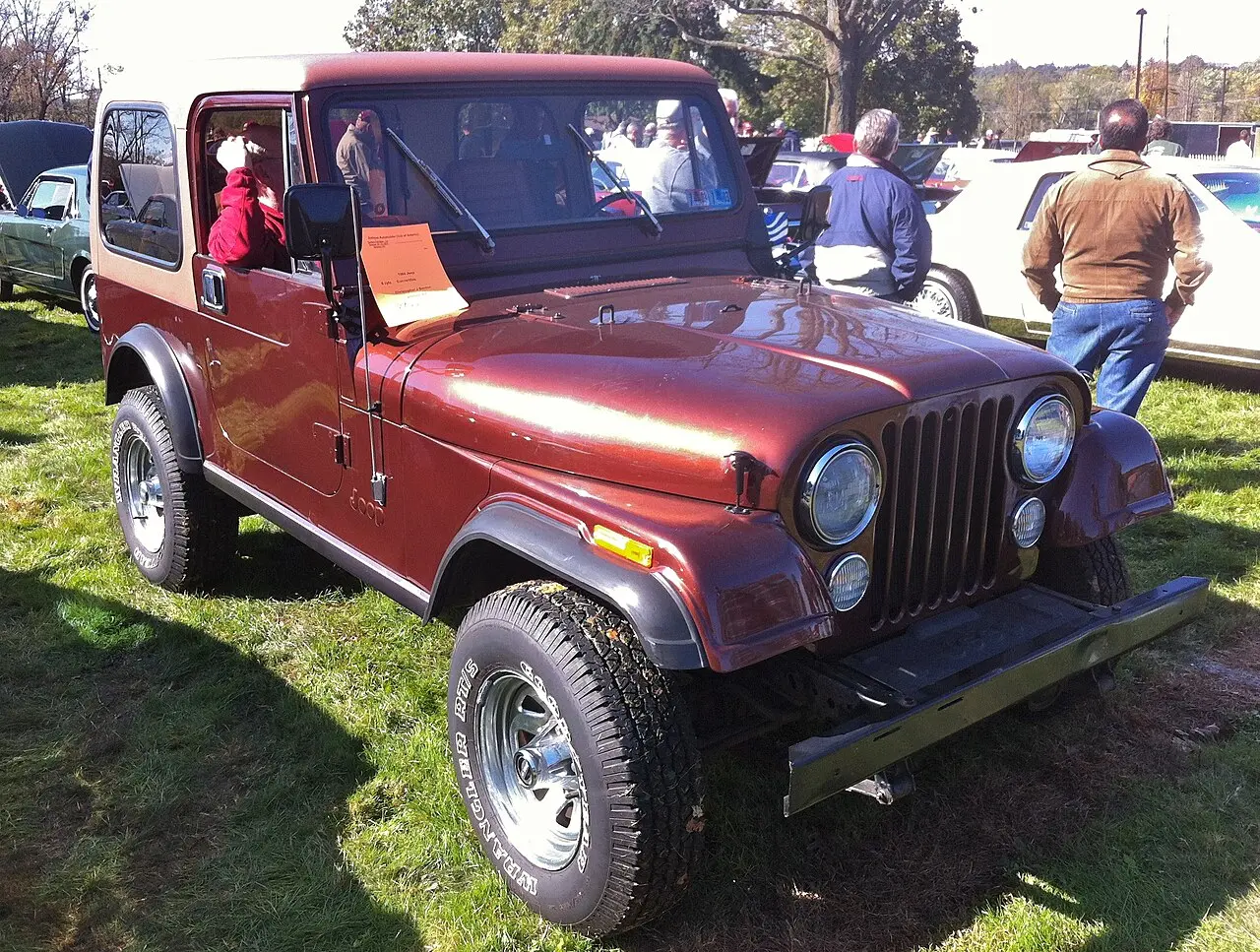
Jeep

Jeep CJ-7

Jeep CJ-7
Photo: CZmarlin / Wikimedia Commons · CC0

The official data lists 17 versions of the Jeep CJ-7 (1984–1986), in the United States. Each market publishes its own figures, measured on its own test procedure.

At a glance

Years in the data
1984–1986
Markets
United States
Engines
2.5 L to 4.2 L
Fuels
Petrol
Lowest consumption (United States)
11.2 L/100 km (EPA)

What is the Jeep CJ-7?

The Jeep CJ-7 is an open-bodied, four-wheel-drive vehicle in Jeep’s CJ line. Its removable-top design carried forward the line’s open-air character. Jeep introduced the CJ-7 in 1976, making it a notable step in the development of the civilian Jeep range.

Generation and engines

The CJ-7 was a distinct generation in the CJ line. US EPA-listed versions from 1984 to 1986 used petrol engines ranging from 2.5 L to 4.2 L.

How economical is the Jeep CJ-7?

The best combined rating listed for the CJ-7 is 21 MPG under the US EPA procedure. European WLTP and NEDC tests and Canada’s 5-cycle procedure differ, so results from those markets may not match directly.

Where was it sold?

The CJ-7 generation and EPA figures here relate to the United States. The EPA figures cover model years 1984 to 1986.

Questions and answers

What years do the US EPA figures cover for the CJ-7?

They cover model years 1984 to 1986.

What engines were offered?

US EPA-listed versions used petrol engines from 2.5 L to 4.2 L.

What is the CJ-7’s best combined fuel economy?

Its best listed combined EPA rating is 21 MPG.

What kind of car is the CJ-7?

It is an open-bodied, four-wheel-drive vehicle from Jeep’s CJ line.

CJ-7 CJ-7 (1984–1986)

Jeep CJ-7 CJ-7
Photo: CZmarlin / Wikimedia Commons · CC0

Model codes: CJ-7 · Sold in: United States · References: jeep.com, motortrend.com

United States 17 versions

Model years sold in the USA, from the EPA and the Department of Energy (fueleconomy.gov). MPG on the EPA test; litres per 100 km = 235.215 ÷ MPG.

Years and versionEngineFuelGearboxDriveConsumption (combined)CO₂
1985–1986(FFS), SIL2.5 LPetrol4-speed manualFour- or all-wheel drive18 MPG (13.1 L/100 km) EPA307 g/km
1986(FFS), SIL2.5 LPetrol5-speed manualFour- or all-wheel drive17 MPG (13.8 L/100 km) EPA325 g/km
1985–1986(FFS)4.2 LPetrol3-speed automaticFour- or all-wheel drive15 MPG (15.7 L/100 km) EPA368 g/km
1984–1986(FFS) CA model · (FFS)4.2 LPetrol4-speed manualFour- or all-wheel drive16 MPG (14.7 L/100 km) EPA345 g/km
1985–1986(FFS)4.2 LPetrol5-speed manualFour- or all-wheel drive17 MPG (13.8 L/100 km) EPA325 g/km
1985(FFS), SIL2.5 LPetrol5-speed manualFour- or all-wheel drive18 MPG (13.1 L/100 km) EPA307 g/km
1985(FFS) CA model, SIL2.5 LPetrol4-speed manualFour- or all-wheel drive17 MPG (13.8 L/100 km) EPA325 g/km
1985(FFS) CA model, SIL2.5 LPetrol5-speed manualFour- or all-wheel drive17 MPG (13.8 L/100 km) EPA325 g/km
1984–1985(FFS) · (FFS) CA model4.2 LPetrol3-speed automaticFour- or all-wheel drive16 MPG (14.7 L/100 km) EPA345 g/km
1985(FFS) CA model4.2 LPetrol5-speed manualFour- or all-wheel drive17 MPG (13.8 L/100 km) EPA325 g/km
1984(FFS)(SIL)2.5 LPetrol4-speed manualFour- or all-wheel drive21 MPG (11.2 L/100 km) EPA263 g/km
1984(FFS)2.5 LPetrol4-speed manualFour- or all-wheel drive20 MPG (11.8 L/100 km) EPA276 g/km
1984(FFS) · (FFS) CA model2.5 LPetrol5-speed manualFour- or all-wheel drive21 MPG (11.2 L/100 km) EPA263 g/km
1984(FFS)(SIL) CA model · (FFS) CA model2.5 LPetrol4-speed manualFour- or all-wheel drive20 MPG (11.8 L/100 km) EPA276 g/km
1984(FFS)4.2 LPetrol4-speed manualFour- or all-wheel drive17 MPG (13.8 L/100 km) EPA325 g/km
1984(FFS)4.2 LPetrol5-speed manualFour- or all-wheel drive17 MPG (13.8 L/100 km) EPA325 g/km
1984(FFS) CA model4.2 LPetrol5-speed manualFour- or all-wheel drive17 MPG (13.8 L/100 km) EPA325 g/km

Official figures are measured on standard test procedures and differ between markets. Your consumption depends on how, where and in what conditions you drive.