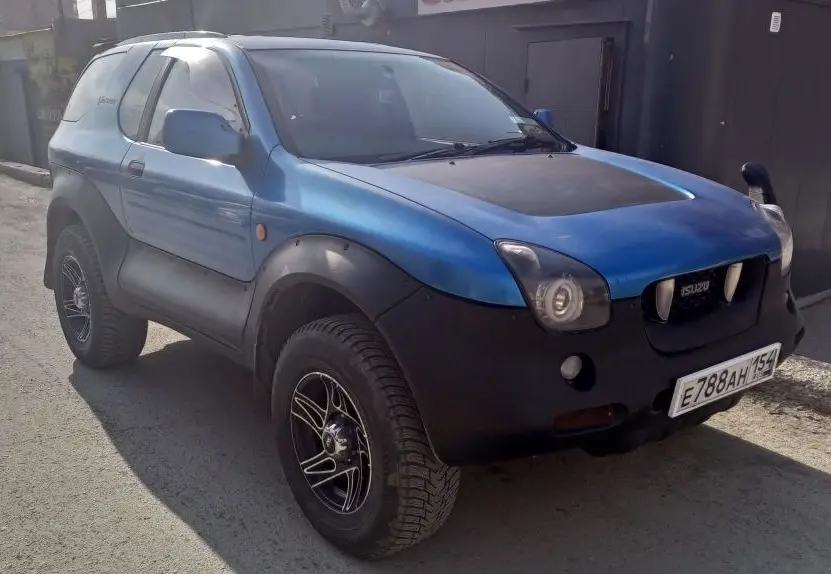
What is the Isuzu VehiCROSS?
The VehiCROSS was a compact SUV with a distinctive two-door body, sold in the United States from 1999 to 2001. Its short shape and prominent dark body cladding gave it a striking look. Isuzu’s background in trucks and utility vehicles was reflected in this compact SUV’s off-road focus.
Generation and design
The VehiCROSS’s single US generation ran from 1999 to 2001. It grew from a concept car, and the production model retained much of the concept’s distinctive appearance.
Engine and fuel economy
United States versions used a 3.5-litre petrol engine. The best listed combined EPA rating was 15 MPG, equivalent to 15.7 L/100 km. EPA ratings use a different test procedure from Europe’s WLTP and NEDC tests and Canada’s 5-cycle test.
Where was the VehiCROSS sold?
The VehiCROSS was sold in the United States from 1999 through 2001. Its unusual design brought a distinctive compact SUV to Isuzu’s lineup.
Questions and answers
What years was the VehiCROSS sold in the United States?
It was sold there from 1999 to 2001.
What engine did the US VehiCROSS use?
It used a 3.5-litre petrol engine.
What was its EPA combined fuel economy?
Its best listed combined EPA rating was 15 MPG, or 15.7 L/100 km.