Innocenti

Innocenti Panda

Innocenti Panda
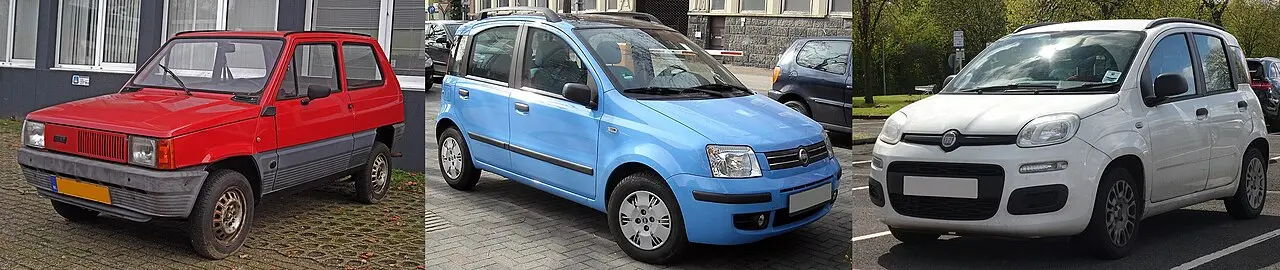
Photo: Dennis Elzinga, Randy43, Harvey Bold, StomboyCarGeek / Wikimedia Commons · CC BY 4.0

The official data lists 49 versions of the Innocenti Panda (2011–2018), in the European Union. Each market publishes its own figures, measured on its own test procedure.

At a glance

Years in the data
2011–2018
Markets
European Union
Engines
0.9 L to 1.4 L
Power
40 kW (54 PS) to 70 kW (95 PS)
Fuels
Petrol, LPG, Diesel, Natural gas
New registrations in the EU
854,314

What is the Fiat Panda?

The Fiat Panda is a small, practical hatchback with an upright shape and a focus on everyday usefulness. It sits among the compact models in Fiat’s range, with a body designed to make good use of its interior space.

Panda II, produced from 2003 to 2012, brought a rounded exterior and a taller stance to the name. Panda III followed from 2012 to 2024, retaining the upright outline while giving it a softer, more rounded look. Across both generations, the Panda kept its practical character in a small-car format.

Engines and power

In EU and EEA registrations from 2011 to 2018, the Panda was available with petrol, LPG, diesel and natural gas. Engine sizes ranged from 0.9 L to 1.4 L, and outputs from 40 kW (54 PS) to 70 kW (95 PS). The 1.2 L petrol with 51 kW (69 PS) was a prominent configuration in the listed years.

Fuel consumption and CO₂

Fuel consumption and CO₂ emissions vary by engine and version. European ratings use the applicable test procedure: NEDC was used before the transition to WLTP, which measures vehicles differently. Check the rating for the specific version to see its official result.

Where was the Fiat Panda sold?

The Fiat Panda recorded 854,314 EU and EEA registrations from 2011 to 2018.

Questions and answers

Which Panda generations are covered?

Panda II ran from 2003 to 2012, followed by Panda III from 2012 to 2024.

Which fuels were available in EU and EEA registrations?

Petrol, LPG, diesel and natural gas versions appear in the 2011–2018 figures.

How powerful was the Panda range?

The listed EU and EEA versions ranged from 40 kW (54 PS) to 70 kW (95 PS).

Panda Panda II (2003–2012)

Model codes: 169 · References: media.stellantis.com

Show all 18 versions

Panda Panda III (2012–2024)

Model codes: 319 · References: media.stellantis.com, it.wikipedia.org

European Union 39 versions

New cars registered in the EU (plus Norway and Iceland), from the European Environment Agency. Figures on the NEDC procedure until 2020 and on WLTP from 2021; versions are grouped by engine and power, with their number of registrations.

Years and versionEnginePowerFuelCO₂EU registrations
20181.2 L51 kW (69 PS)Petrol122 g/km166,406
20181.2 L51 kW (69 PS)LPG122 g/km60,964
20181.2 L70 kW (95 PS)Diesel104 g/km34,982
20180.9 L63 kW (86 PS)Natural gas85 g/km8,106
20180.9 L63 kW (86 PS)Petrol119 g/km7,148
20180.9 L62 kW (84 PS)Natural gas119 g/km4,536
20180.9 L66 kW (90 PS)Petrol114 g/km2,220
20181.2 L59 kW (80 PS)Diesel99 g/km234
20151.2 L51 kW (69 PS)Petrol117 g/km68,942
20150.9 L63 kW (86 PS)Natural gas86 g/km19,458
20151.2 L55 kW (75 PS)Diesel114 g/km14,360
20151.2 L51 kW (69 PS)LPG107 g/km9,792
20151.2 L70 kW (95 PS)Diesel108 g/km6,144
20150.9 L63 kW (86 PS)Petrol105 g/km3,825
20151.2 L59 kW (80 PS)Diesel125 g/km3,105
2014–20150.9 L66 kW (90 PS)Petrol114 g/km819
20151.2 L44 kW (60 PS)Petrol137 g/km17
20141.2 L51 kW (69 PS)Petrol119 g/km44,082
20141.2 L55 kW (75 PS)Diesel109 g/km25,803
20140.9 L63 kW (86 PS)Natural gas86 g/km22,415
20141.2 L51 kW (69 PS)LPG107 g/km7,862
20140.9 L63 kW (86 PS)Petrol105 g/km2,956
20141.2 L59 kW (80 PS)Diesel125 g/km1,018
20141.2 L44 kW (60 PS)Petrol135 g/km17
20141.1 L40 kW (54 PS)Petrol129 g/km10
20131.2 L51 kW (69 PS)Petrol120 g/km45,149
20130.9 L63 kW (86 PS)Natural gas106 g/km23,202
20131.2 L55 kW (75 PS)Diesel114 g/km20,247
20131.2 L51 kW (69 PS)LPG120 g/km8,321
20130.9 L63 kW (86 PS)Petrol103 g/km4,461
20131.4 L57 kW (77 PS)Natural gas107 g/km267
20121.2 L51 kW (69 PS)Petrol116 g/km60,630
20121.4 L57 kW (77 PS)Natural gas107 g/km21,411
20121.2 L55 kW (75 PS)Diesel114 g/km15,961
20121.2 L51 kW (69 PS)LPG105 g/km13,231
20120.9 L63 kW (86 PS)Natural gas86 g/km8,862
20120.9 L63 kW (86 PS)Petrol100 g/km2,023
20121.0 L48 kW (65 PS)Petrol99 g/km25
20121.2 L44 kW (60 PS)Petrol133 g/km11

Official figures are measured on standard test procedures and differ between markets. Your consumption depends on how, where and in what conditions you drive.