Innocenti

Innocenti Bravo

Innocenti Bravo
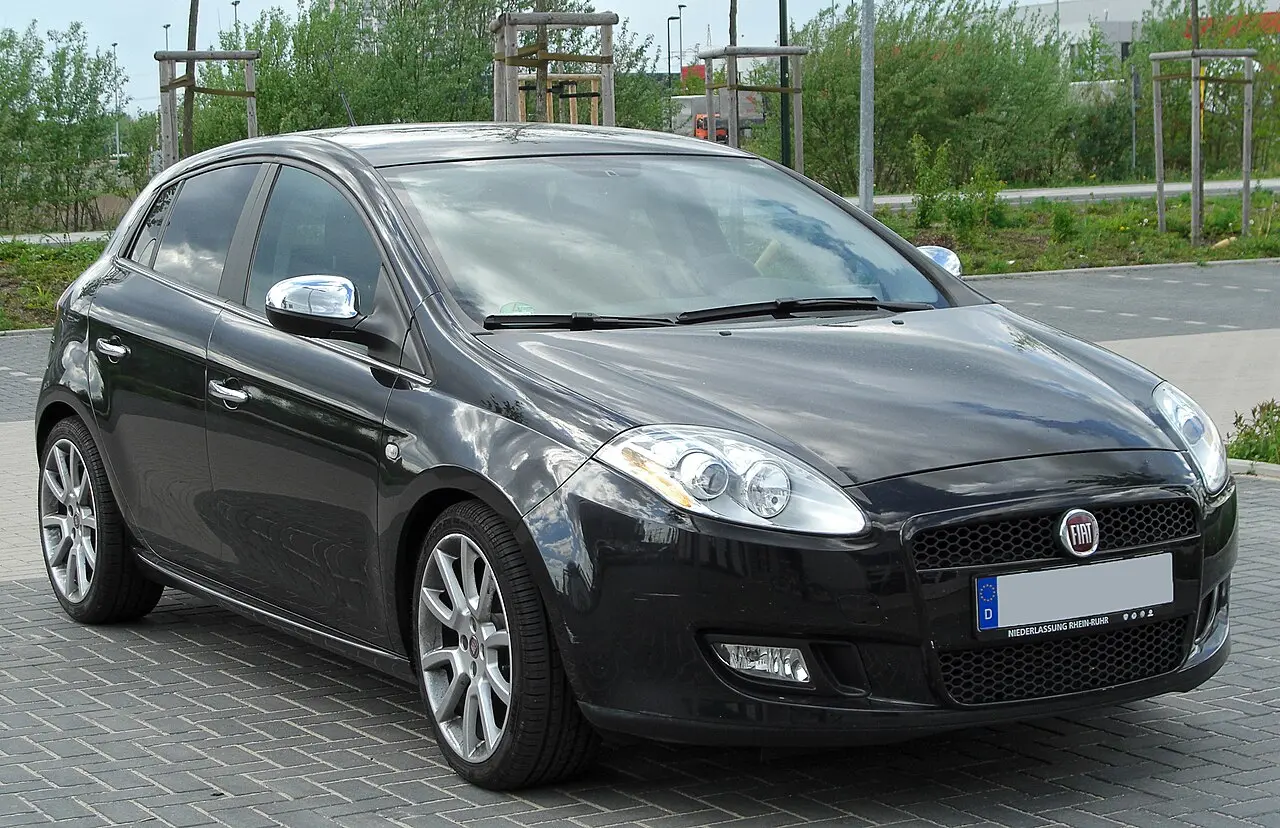
Photo: M 93 / Wikimedia Commons · Attribution

The official data lists 28 versions of the Innocenti Bravo (2011–2015), in the European Union. Each market publishes its own figures, measured on its own test procedure.

At a glance

Years in the data
2011–2015
Markets
European Union
Engines
1.4 L to 2.0 L
Power
66 kW (90 PS) to 121 kW (165 PS)
Fuels
Diesel, Petrol, LPG
New registrations in the EU
37,578

What is the Fiat Bravo?

The Bravo is a five-door family hatchback, with a flowing shape and room for passengers and luggage. It occupied the heart of Fiat’s passenger-car range as a practical everyday car.

Fiat revived the Bravo name for this generation, which brought a fresh design to its compact hatchback range. The exterior was developed by Fiat’s Style Centre, with smooth lines and styling that carried the brand’s visual identity. The EU range offered petrol, diesel and LPG engines.

Generations, engines and power

The second-generation Bravo, known as Bravo II, ran from 2007 to 2014. Official EU registration figures cover 2011 to 2015 and include 28 versions.

Engine sizes in the EU range ran from 1.4 to 2.0 litres, with petrol, diesel and LPG options. Power ranged from 66 kW (90 PS) to 121 kW (165 PS). The 1.6-litre diesel with 88 kW (120 PS) was the leading configuration in official EU registrations.

How economical is the Fiat Bravo?

Fuel consumption and CO₂ emissions vary by version and test procedure. European ratings may use WLTP or the earlier NEDC test, so results from different procedures are not directly comparable.

Where was the Fiat Bravo sold?

The Bravo was Fiat’s five-door family hatchback, designed for the European compact-car market. Official EU and EEA registrations from 2011 to 2015 totalled 37,578 cars.

Questions and answers

Which generation of Fiat Bravo is covered here?

The Bravo II generation, which ran from 2007 to 2014.

What engines were available in the EU range?

The range included 1.4- to 2.0-litre petrol, diesel and LPG engines.

How much power did the Fiat Bravo produce?

EU versions ranged from 66 kW (90 PS) to 121 kW (165 PS).

How many Bravo versions were registered in the EU?

Official EU registration figures include 28 versions.

Bravo Bravo II (2007–2014)

Model codes: 198 · References: autobild.de, en.wikipedia.org

European Union 27 versions

New cars registered in the EU (plus Norway and Iceland), from the European Environment Agency. Figures on the NEDC procedure until 2020 and on WLTP from 2021; versions are grouped by engine and power, with their number of registrations.

Years and versionEnginePowerFuelCO₂EU registrations
2014–20151.6 L88 kW (120 PS)Diesel122 g/km847
20141.6 L77 kW (105 PS)Diesel114 g/km763
20141.4 L103 kW (140 PS)Petrol132 g/km134
20141.4 L66 kW (90 PS)LPG134 g/km84
20131.6 L88 kW (120 PS)Diesel121 g/km1,971
20131.6 L77 kW (105 PS)Diesel115 g/km1,843
20131.4 L66 kW (90 PS)LPG134 g/km945
20131.4 L66 kW (90 PS)Petrol146 g/km773
20131.4 L103 kW (140 PS)Petrol132 g/km301
20131.4 L88 kW (120 PS)Petrol146 g/km78
20121.6 L88 kW (120 PS)Diesel122 g/km5,817
20121.6 L77 kW (105 PS)Diesel119 g/km2,105
20121.4 L66 kW (90 PS)LPG134 g/km1,458
20121.4 L66 kW (90 PS)Petrol149 g/km916
20121.4 L103 kW (140 PS)Petrol132 g/km116
20121.4 L88 kW (120 PS)Petrol146 g/km98
20121.6 L66 kW (90 PS)Diesel115 g/km77
20122.0 L121 kW (165 PS)Diesel135 g/km41
20121.9 L110 kW (150 PS)Diesel149 g/km10
20111.6 L88 kW (120 PS)Diesel–11,999
20111.6 L77 kW (105 PS)Diesel115 g/km3,760
20111.4 L66 kW (90 PS)Petrol–1,159
20111.4 L66 kW (90 PS)LPG–783
20111.6 L66 kW (90 PS)Diesel–588
20111.4 L103 kW (140 PS)Petrol–347
20111.4 L88 kW (120 PS)Petrol–291
20112.0 L121 kW (165 PS)Diesel–241

Versions outside these generations

European Union 1 version

New cars registered in the EU (plus Norway and Iceland), from the European Environment Agency. Figures on the NEDC procedure until 2020 and on WLTP from 2021; versions are grouped by engine and power, with their number of registrations.

Years and versionEnginePowerFuelCO₂EU registrations
20151.6 L77 kW (105 PS)Diesel118 g/km33

Official figures are measured on standard test procedures and differ between markets. Your consumption depends on how, where and in what conditions you drive.