Innocenti

Innocenti 500X

Innocenti 500X
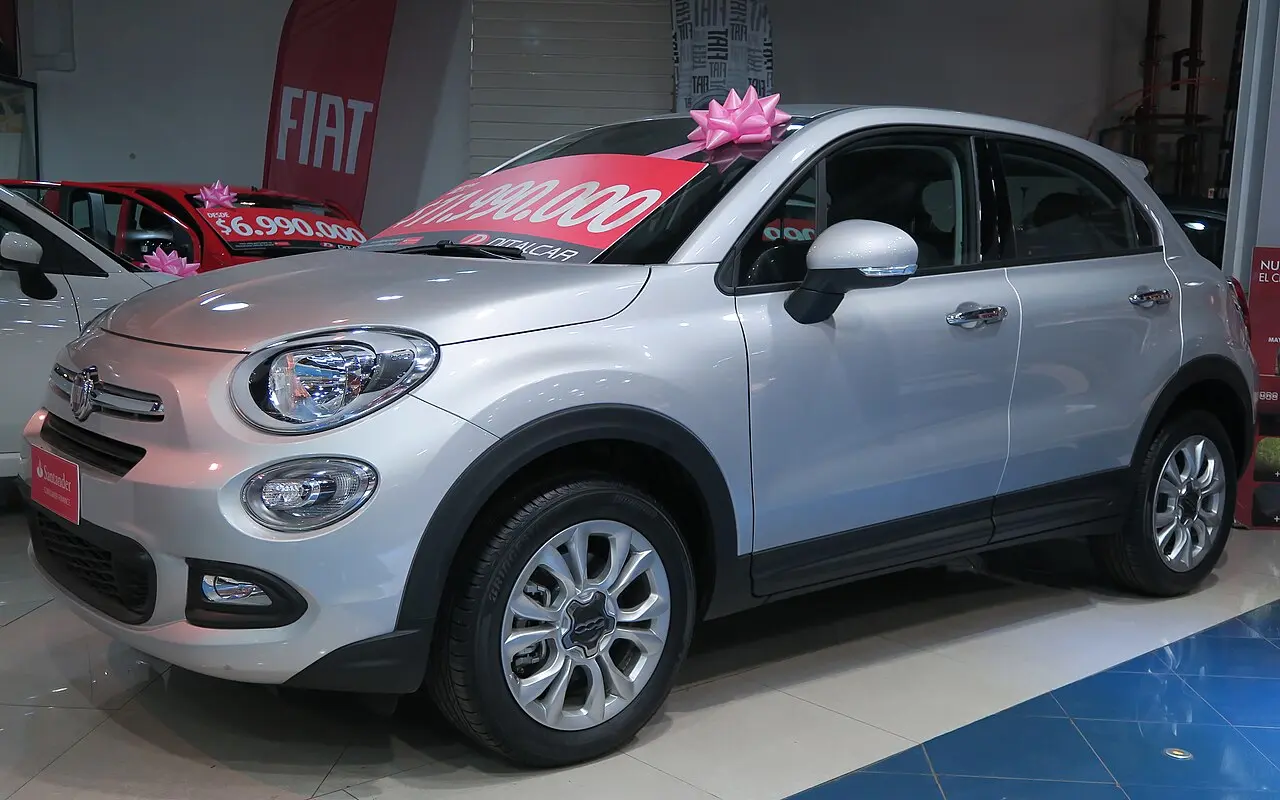
Photo: RL GNZLZ from Chile / Wikimedia Commons · CC BY-SA 2.0

The official data lists 20 versions of the Innocenti 500X (2014–2018), in the European Union. Each market publishes its own figures, measured on its own test procedure.

At a glance

Years in the data
2014–2018
Markets
European Union
Engines
1.0 L to 2.0 L
Power
70 kW (95 PS) to 125 kW (170 PS)
Fuels
Diesel, LPG, Petrol
New registrations in the EU
131,920

What is the Fiat 500X?

The Fiat 500X is a compact crossover in the 500 family. Its rounded styling echoes the smaller 500, while its taller body gives it a higher driving position and a more versatile cabin.

The 500X brought the 500 name into a crossover shape, adding a different kind of car to Fiat’s range.

Generations and design

The 500X had one generation, sold from 2014 to 2024 and identified by internal code 334. Fiat introduced it as a crossover in the 500 family. Its rounded front and sculpted body carry through the family’s visual style, with a taller stance and a cabin suited to everyday journeys.

Engines and power

EU registration figures cover the 500X from 2014 to 2018, with petrol, diesel and LPG versions. Engine sizes range from 1.0 L to 2.0 L, and power from 70 kW (95 PS) to 125 kW (170 PS). The most registered versions included a 1.2 L diesel with 70 kW (95 PS) and 1.6 L diesels with 88 kW (120 PS).

EU registrations

The 500X recorded 131,920 registrations across 20 versions in the European Union from 2014 to 2018. Its generation ran from 2014 to 2024.

Questions and answers

How many generations of the Fiat 500X were made?

One generation, sold from 2014 to 2024 and identified by code 334.

What fuels were available for the 500X?

The EU registration range includes petrol, diesel and LPG versions.

What was the power range of the Fiat 500X?

The listed EU versions ranged from 70 kW (95 PS) to 125 kW (170 PS).

Was the 500X sold as an Innocenti?

No. The 500X was a Fiat model.

500X 500X (2014–2024)

Model codes: 334 · References: en.wikipedia.org, auto-motor-und-sport.de

European Union 20 versions

New cars registered in the EU (plus Norway and Iceland), from the European Environment Agency. Figures on the NEDC procedure until 2020 and on WLTP from 2021; versions are grouped by engine and power, with their number of registrations.

Years and versionEnginePowerFuelCO₂EU registrations
20181.2 L70 kW (95 PS)Diesel108 g/km35,036
20181.6 L88 kW (120 PS)Diesel112 g/km29,792
20181.4 L88 kW (120 PS)LPG145 g/km11,768
20181.6 L81 kW (110 PS)Petrol149 g/km9,254
20181.4 L103 kW (140 PS)Petrol138 g/km4,960
20181.0 L88 kW (120 PS)Petrol134 g/km4,208
20182.0 L103 kW (140 PS)Diesel137 g/km2,594
20181.3 L111 kW (151 PS)Petrol142 g/km624
20181.6 L82 kW (111 PS)Petrol163 g/km452
20181.4 L125 kW (170 PS)Petrol157 g/km370
20181.4 L100 kW (136 PS)Petrol137 g/km142
20182.0 L110 kW (150 PS)Diesel166 g/km60
2014–20151.6 L88 kW (120 PS)Diesel109 g/km17,628
20152.0 L103 kW (140 PS)Diesel139 g/km6,065
20151.2 L70 kW (95 PS)Diesel107 g/km3,948
20151.4 L103 kW (140 PS)Petrol137 g/km3,382
20151.6 L81 kW (110 PS)Petrol143 g/km1,491
20151.4 L125 kW (170 PS)Petrol157 g/km79
20142.0 L103 kW (140 PS)Diesel144 g/km44
20141.4 L103 kW (140 PS)Petrol139 g/km23

Official figures are measured on standard test procedures and differ between markets. Your consumption depends on how, where and in what conditions you drive.