Innocenti

Innocenti 500L

Innocenti 500L
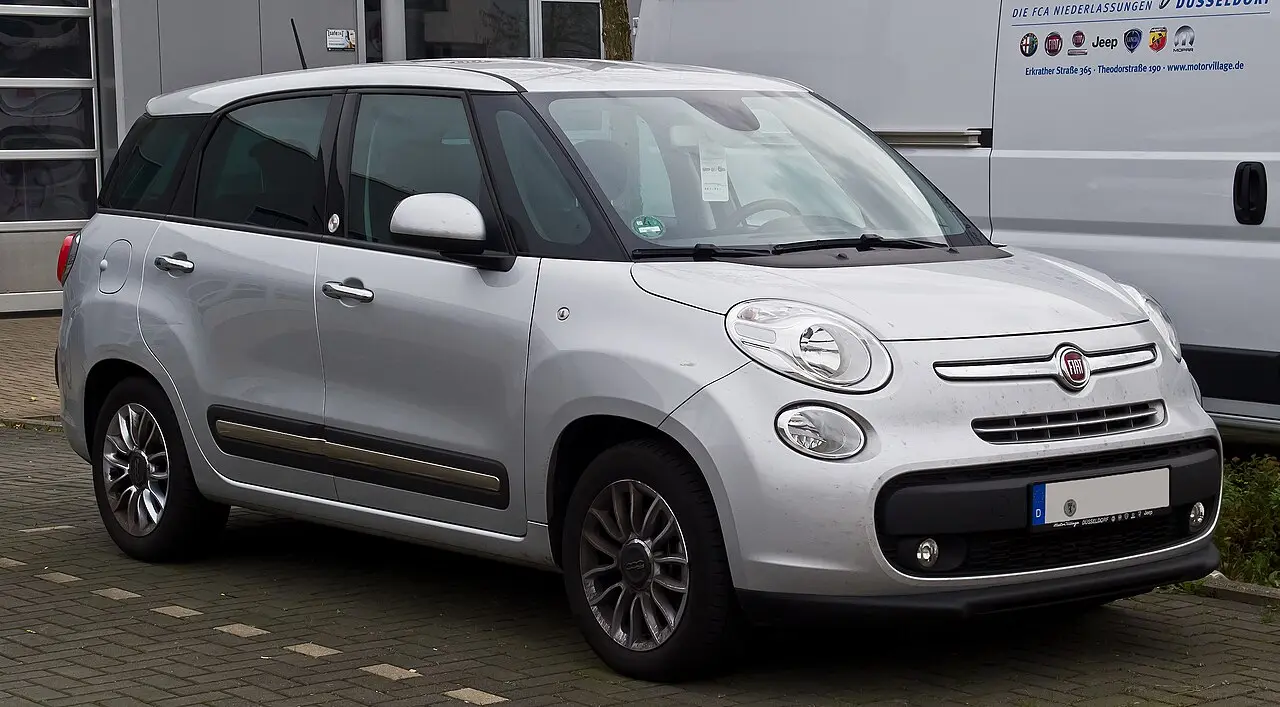
Photo: M 93 / Wikimedia Commons · CC BY-SA 3.0 de

The official data lists 33 versions of the Innocenti 500L (2012–2018), in the European Union. Each market publishes its own figures, measured on its own test procedure.

At a glance

Years in the data
2012–2018
Markets
European Union
Engines
0.9 L to 1.6 L
Power
62 kW (84 PS) to 88 kW (120 PS)
Fuels
Diesel, Petrol, LPG, Natural gas
New registrations in the EU
210,420

What is the Fiat 500L?

The Fiat 500L is a five-door people carrier with the rounded styling of the 500 and a taller, roomier body. It gives the 500 family a practical option for drivers who want a higher seating position and flexible cabin space.

The 500L was part of Fiat’s range, alongside the smaller 500. Its name and styling connect it to that family, while its shape gives it a distinct, more spacious role.

Generations and design

The 500L had one generation, sold from 2012 to 2022 and identified by internal codes 330 and 351. Fiat carried the 500’s rounded design into a taller body with more room inside. The range also included the longer 500L Living, which added another row of seats.

Its upright shape and broad doors give the cabin an open feel. The 500L was designed for everyday family use, with more interior space than the small 500.

Engines and power

In European Union registration figures, the 500L appears from 2012 to 2018 with petrol, diesel, LPG and natural-gas engines. Engine sizes range from 0.9 L to 1.6 L, and power from 62 kW (84 PS) to 88 kW (120 PS). Among the most registered versions were 1.2 L diesels, including outputs of 62 kW (84 PS) and 70 kW (95 PS).

EU registrations

The 500L recorded 210,420 registrations across 33 versions in the European Union from 2012 to 2018. Its generation ran from 2012 to 2022.

Questions and answers

How many generations of the Fiat 500L were there?

One generation, sold from 2012 to 2022 and identified by the codes 330 and 351.

What engines and fuels did the 500L have?

The EU registration range included petrol, diesel, LPG and natural gas, with engines from 0.9 L to 1.6 L.

How powerful was the Fiat 500L?

The listed EU versions ranged from 62 kW (84 PS) to 88 kW (120 PS).

Was the 500L an Innocenti?

No. The 500L was a Fiat model.

500L 500L (2012–2022)

Model codes: 330, 351 · References: en.wikipedia.org

European Union 33 versions

New cars registered in the EU (plus Norway and Iceland), from the European Environment Agency. Figures on the NEDC procedure until 2020 and on WLTP from 2021; versions are grouped by engine and power, with their number of registrations.

Years and versionEnginePowerFuelCO₂EU registrations
20181.2 L70 kW (95 PS)Diesel108 g/km29,310
20181.4 L70 kW (95 PS)Petrol145 g/km17,166
20181.4 L88 kW (120 PS)LPG141 g/km8,464
20181.6 L88 kW (120 PS)Diesel114 g/km8,048
20180.9 L63 kW (86 PS)Natural gas108 g/km1,090
20181.4 L88 kW (120 PS)Petrol156 g/km724
20180.9 L77 kW (105 PS)Petrol111 g/km56
20181.2 L62 kW (84 PS)Diesel111 g/km12
20151.2 L62 kW (84 PS)Diesel109 g/km20,974
2014–20151.6 L77 kW (105 PS)Diesel118 g/km17,840
20151.4 L70 kW (95 PS)Petrol145 g/km6,785
20151.2 L70 kW (95 PS)Diesel106 g/km4,479
20150.9 L63 kW (86 PS)Natural gas103 g/km4,035
20151.6 L88 kW (120 PS)Diesel119 g/km3,269
20151.4 L88 kW (120 PS)LPG144 g/km2,267
20151.4 L88 kW (120 PS)Petrol159 g/km728
20150.9 L77 kW (105 PS)Petrol113 g/km118
20141.2 L62 kW (84 PS)Diesel109 g/km24,551
20140.9 L63 kW (86 PS)Natural gas102 g/km6,221
20141.4 L70 kW (95 PS)Petrol146 g/km4,018
20141.6 L88 kW (120 PS)Diesel121 g/km2,832
20141.4 L88 kW (120 PS)LPG146 g/km2,106
20141.4 L88 kW (120 PS)Petrol161 g/km669
20140.9 L77 kW (105 PS)Petrol114 g/km282
20131.2 L62 kW (84 PS)Diesel109 g/km22,545
20131.6 L77 kW (105 PS)Diesel118 g/km6,906
20131.4 L70 kW (95 PS)Petrol145 g/km5,335
20130.9 L63 kW (86 PS)Natural gas136 g/km2,874
20130.9 L77 kW (105 PS)Petrol113 g/km353
20131.6 L88 kW (120 PS)Diesel122 g/km202
20121.2 L62 kW (84 PS)Diesel110 g/km4,162
20121.4 L70 kW (95 PS)Petrol145 g/km1,920
20120.9 L77 kW (105 PS)Petrol112 g/km79

Official figures are measured on standard test procedures and differ between markets. Your consumption depends on how, where and in what conditions you drive.