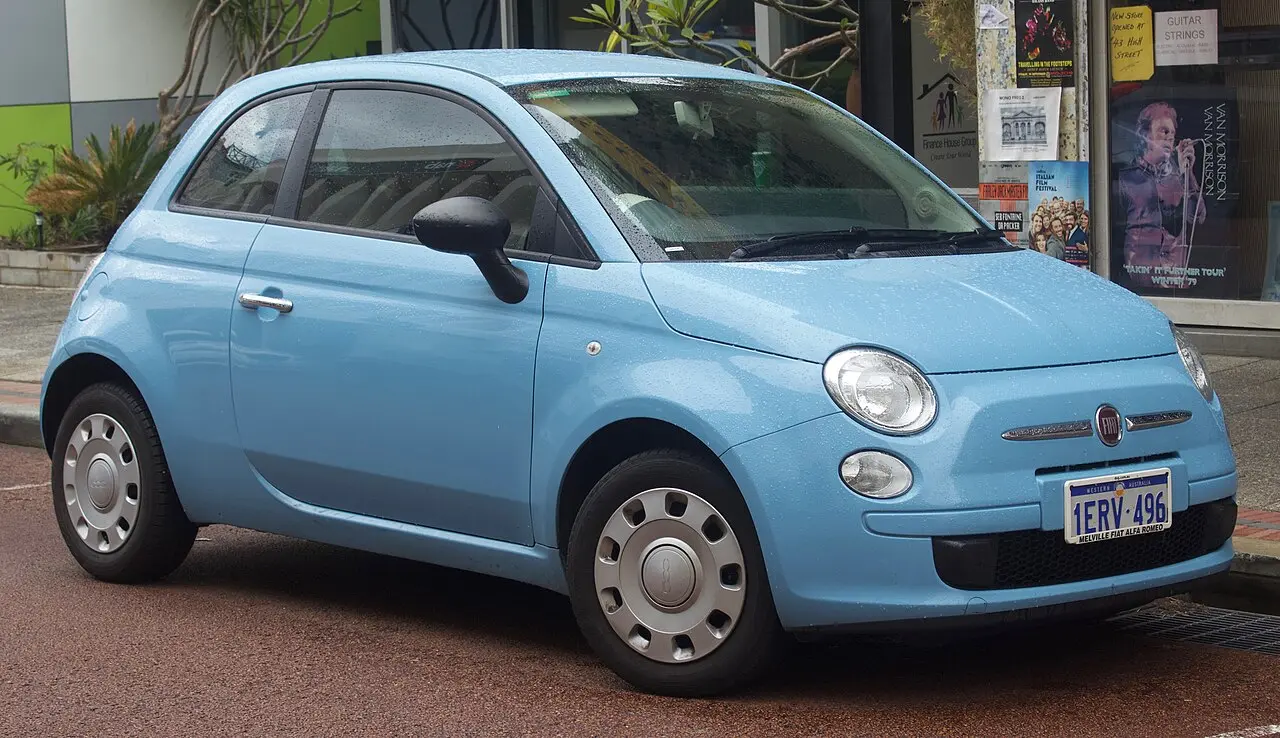
Innocenti

Innocenti 500

Innocenti 500
Photo: EurovisionNim / Wikimedia Commons · CC BY-SA 4.0

The official data lists 63 versions of the Innocenti 500 (2011–2018), in the European Union. Each market publishes its own figures, measured on its own test procedure.

At a glance

Years in the data
2011–2018
Markets
European Union
Engines
0.9 L to 1.4 L
Power
51 kW (69 PS) to 132 kW (179 PS)
Fuels
Petrol, LPG, Diesel, Electric
New registrations in the EU
326,886

What is the Fiat 500?

The Fiat 500 is a small city car with rounded styling inspired by the classic Fiat 500. Its compact shape and characterful design suit everyday urban driving. Fiat brought the modern 500 back in 2007, fifty years after the original was introduced, giving the familiar look a contemporary update.

The 312 generation ran from 2007 to 2024. It kept a clear visual link to its namesake while bringing modern equipment and a more individual cabin to Fiat’s small-car range.

Engines and power

In European Union and EEA registrations from 2011 to 2018, the 500 was available with petrol, LPG, diesel and electric power. Engine sizes ranged from 0.9 L to 1.4 L, and outputs from 51 kW (69 PS) to 132 kW (179 PS). The 1.2 L petrol with 51 kW (69 PS) was a popular configuration in the listed years.

Fuel consumption and CO₂

Fuel consumption and CO₂ emissions vary by version. European ratings use the applicable test procedure: NEDC was used before the transition to WLTP, which measures vehicles differently. Check the rating for the specific version to see its official result.

Where was the Fiat 500 sold?

The Fiat 500 recorded 326,886 EU and EEA registrations from 2011 to 2018.

Questions and answers

How many generations of the Fiat 500 are covered?

The 312 generation ran from 2007 to 2024.

Which fuels were available in EU and EEA registrations?

Petrol, LPG, diesel and electric versions appear in the 2011–2018 figures.

Which Fiat 500 version was most common?

The 1.2 L petrol with 51 kW (69 PS) led among the listed versions.

500 500 (2007–2024)

Model codes: 312 · References: en.wikipedia.org

European Union 63 versions

New cars registered in the EU (plus Norway and Iceland), from the European Environment Agency. Figures on the NEDC procedure until 2020 and on WLTP from 2021; versions are grouped by engine and power, with their number of registrations.

Years and versionEnginePowerFuelCO₂EU registrations
20181.2 L51 kW (69 PS)Petrol113 g/km60,326
20181.2 L51 kW (69 PS)LPG113 g/km12,004
20181.2 L70 kW (95 PS)Diesel89 g/km10,386
20181.4 L107 kW (145 PS)Petrol140 g/km2,458
20181.4 L121 kW (165 PS)Petrol142 g/km2,076
20181.4 L132 kW (179 PS)Petrol142 g/km2,030
20181.4 L118 kW (160 PS)Petrol141 g/km1,930
20180.9 L63 kW (86 PS)Petrol95 g/km386
20180.9 L77 kW (105 PS)Petrol99 g/km134
20181.2 L57 kW (77 PS)Diesel89 g/km54
20180.9 L59 kW (80 PS)Petrol88 g/km28
20151.2 L51 kW (69 PS)Petrol114 g/km30,923
20151.2 L70 kW (95 PS)Diesel95 g/km5,727
20151.2 L51 kW (69 PS)LPG105 g/km3,427
20151.4 L118 kW (160 PS)Petrol149 g/km1,151
20151.4 L99 kW (135 PS)Petrol151 g/km823
20151.4 L103 kW (140 PS)Petrol144 g/km767
20150.9 L63 kW (86 PS)Petrol90 g/km594
20151.4 L132 kW (179 PS)Petrol137 g/km537
20150.9 L77 kW (105 PS)Petrol99 g/km158
20151.4 L139 kW (189 PS)Petrol145 g/km49
2015Electric motor59 kW (80 PS)Electric0 g/km20
20150.9 L59 kW (80 PS)Petrol88 g/km10
20141.2 L51 kW (69 PS)Petrol116 g/km32,590
20141.2 L51 kW (69 PS)LPG106 g/km5,366
20141.2 L70 kW (95 PS)Diesel98 g/km4,962
20141.4 L118 kW (160 PS)Petrol153 g/km965
20141.4 L99 kW (135 PS)Petrol155 g/km815
20140.9 L63 kW (86 PS)Petrol91 g/km520
20141.4 L103 kW (140 PS)Petrol151 g/km228
20140.9 L77 kW (105 PS)Petrol99 g/km161
20141.4 L132 kW (179 PS)Petrol151 g/km84
20141.4 L139 kW (189 PS)Petrol155 g/km20
20131.2 L51 kW (69 PS)Petrol117 g/km28,541
20131.2 L51 kW (69 PS)LPG119 g/km6,686
20131.2 L70 kW (95 PS)Diesel97 g/km4,470
20130.9 L63 kW (86 PS)Petrol91 g/km761
20131.4 L118 kW (160 PS)Petrol153 g/km742
20131.4 L99 kW (135 PS)Petrol155 g/km562
20131.4 L132 kW (179 PS)Petrol151 g/km243
20131.4 L103 kW (140 PS)Petrol151 g/km218
20131.4 L74 kW (101 PS)Petrol138 g/km128
20131.2 L55 kW (75 PS)Diesel110 g/km12
20121.2 L51 kW (69 PS)Petrol115 g/km27,836
20121.2 L51 kW (69 PS)LPG106 g/km7,079
20121.2 L70 kW (95 PS)Diesel103 g/km4,264
20120.9 L63 kW (86 PS)Petrol91 g/km2,134
20121.4 L99 kW (135 PS)Petrol155 g/km766
20121.4 L103 kW (140 PS)Petrol151 g/km434
20121.4 L118 kW (160 PS)Petrol153 g/km278
20121.4 L74 kW (101 PS)Petrol138 g/km137
20121.4 L132 kW (179 PS)Petrol151 g/km77
20121.2 L55 kW (75 PS)Diesel110 g/km13
20111.2 L51 kW (69 PS)Petrol–36,377
20111.2 L70 kW (95 PS)Diesel–11,451
20110.9 L63 kW (86 PS)Petrol–6,729
20111.4 L99 kW (135 PS)Petrol–1,159
20111.2 L55 kW (75 PS)Diesel–989
20111.2 L51 kW (69 PS)LPG–978
20111.4 L103 kW (140 PS)Petrol–645
20111.4 L132 kW (179 PS)Petrol–622
20111.4 L118 kW (160 PS)Petrol153 g/km488
20111.4 L74 kW (101 PS)Petrol–358

Official figures are measured on standard test procedures and differ between markets. Your consumption depends on how, where and in what conditions you drive.