Hyundai

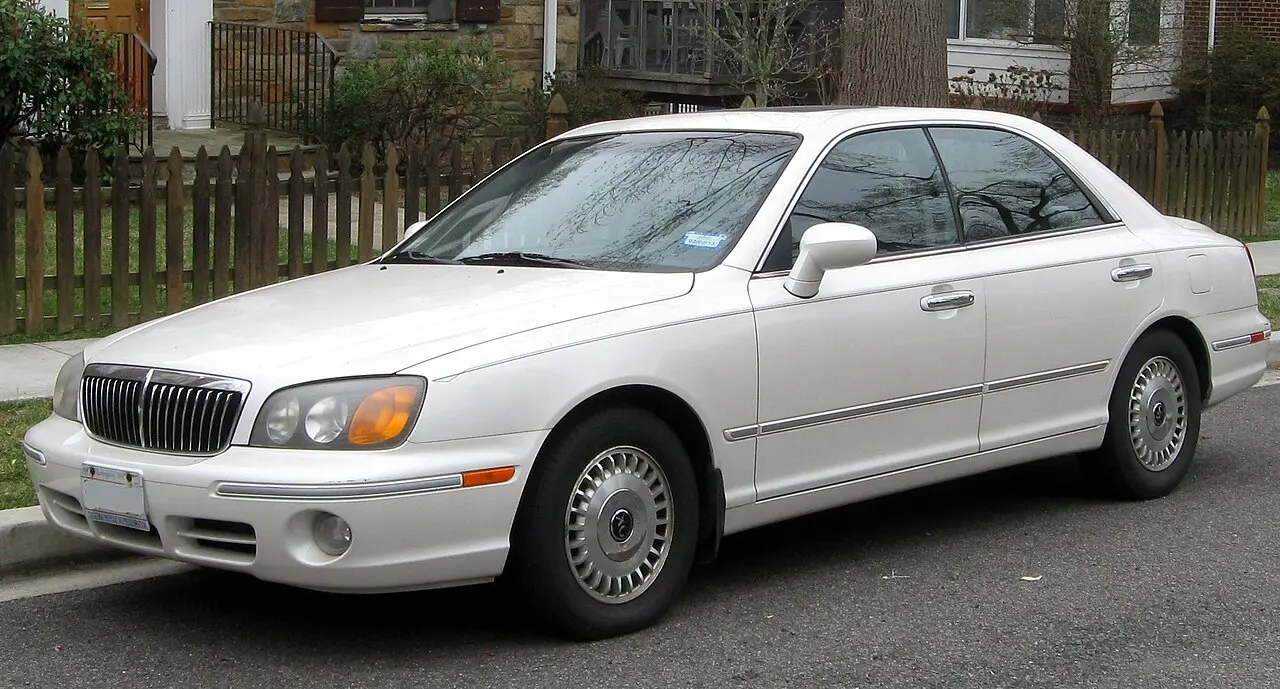
Hyundai XG

Hyundai XG
Photo: IFCAR / Wikimedia Commons · Public domain

The official data lists 11 versions of the Hyundai XG (2000–2005), in the United Kingdom, the United States, and Canada. Each market publishes its own figures, measured on its own test procedure.

At a glance

Years in the data
2000–2005
Markets
United Kingdom, United States, Canada
Engines
3.0 L to 3.5 L
Fuels
Petrol
Lowest consumption (United Kingdom)
10.7 L/100 km (NEDC)
Lowest consumption (United States)
11.8 L/100 km (EPA)
Lowest consumption (Canada)
12.1 L/100 km (5-cycle)

What is the Hyundai XG?

The XG is a large four-door Hyundai sedan from the Grandeur line. It was the name used for this generation in export markets, where its roomy cabin and petrol V6 engines gave it an upmarket place in the range.

The XG is the third generation of the Grandeur line. Its listed years differ by market: 2000 to 2003 in the UK, and 2001 to 2005 in the US and Canada.

Engines and power

UK figures cover a 3.0 L petrol engine. US and Canadian listings span 3.0 L to 3.5 L, also using petrol. Power varied by version.

How economical is the Hyundai XG?

The UK VCA figure for the 3.0 L version is 10.7 L/100 km on the NEDC test. In the US, the lowest listed figure is 11.8 L/100 km, with an EPA rating of 20 MPG combined. Canada lists 12.1 L/100 km under its NRCan 5-cycle procedure. NEDC figures in Europe, EPA results in the US and Canada’s 5-cycle ratings use different procedures, so the numbers are not directly equivalent.

Where was the XG sold?

The XG appears in official UK figures for 2000–2003, US EPA figures for 2001–2005 and Canadian NRCan figures for 2001–2005. The listed versions across these markets are petrol-powered.

Questions and answers

What years was the Hyundai XG sold?

The UK listing covers 2000–2003, while US and Canadian listings cover 2001–2005.

What engine sizes did it use?

UK figures cover a 3.0 L petrol engine; US and Canadian versions span 3.0 L to 3.5 L.

What is the lowest listed XG consumption?

The UK NEDC figure is 10.7 L/100 km. US EPA figures list 11.8 L/100 km, and Canada’s 5-cycle figure is 12.1 L/100 km.
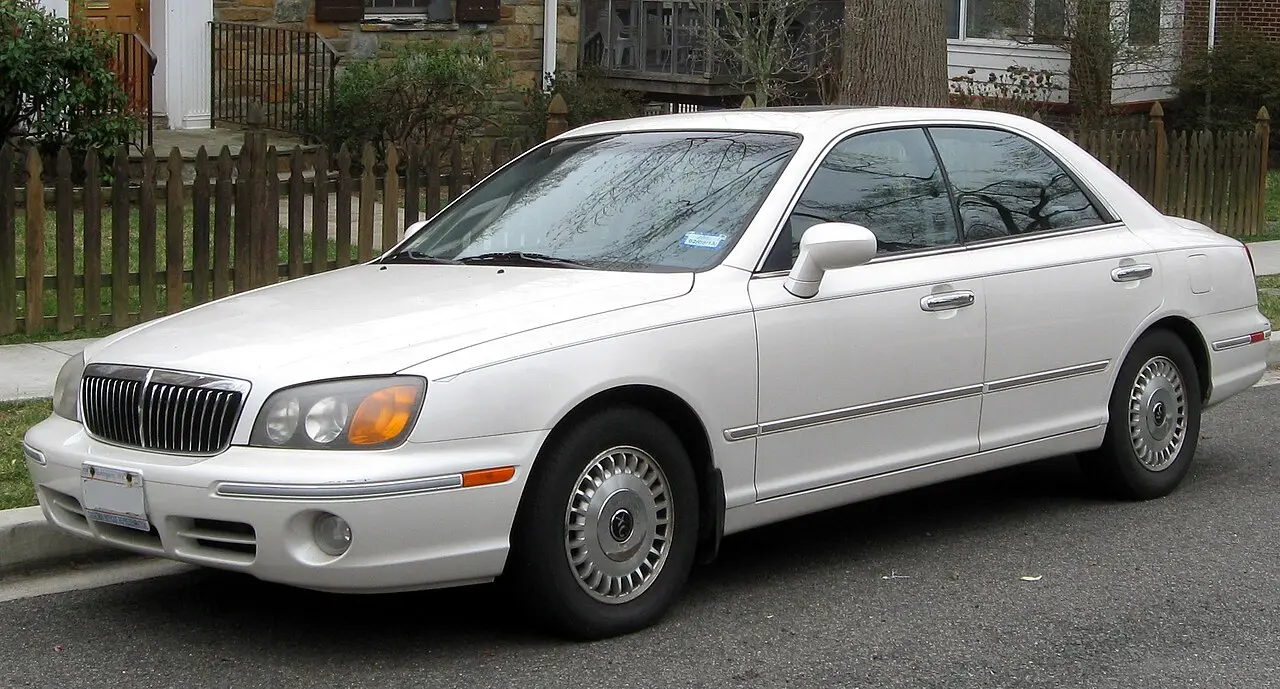
XG third generation (2000–2003)

Hyundai XG third generation
Photo: IFCAR / Wikimedia Commons · Public domain

Model codes: XG · Sold in: United Kingdom · References: exchangeandmart.co.uk, en.wikipedia.org

Show all 3 versions

XG third generation (2001–2005)

Hyundai XG third generation
Photo: IFCAR / Wikimedia Commons · Public domain

Model codes: XG · Sold in: United States and Canada · References: en.wikipedia.org, en.wikipedia.org

United States 4 versions

Model years sold in the USA, from the EPA and the Department of Energy (fueleconomy.gov). MPG on the EPA test; litres per 100 km = 235.215 ÷ MPG.

Years and versionEngineFuelGearboxDriveConsumption (combined)CO₂
2005CLKUP3.5 LPetrol5-speed automaticFront-wheel drive19 MPG (12.4 L/100 km) EPA291 g/km
2003–2004CLKUP3.5 LPetrol5-speed automaticFront-wheel drive18 MPG (13.1 L/100 km) EPA307 g/km
2002CLKUP3.5 LPetrol5-speed automaticFront-wheel drive19 MPG (12.4 L/100 km) EPA291 g/km
2001CLKUP3.0 LPetrol5-speed automaticFront-wheel drive20 MPG (11.8 L/100 km) EPA276 g/km

Canada 4 versions

Model years sold in Canada, from Natural Resources Canada fuel consumption ratings (5-cycle test).

Years and versionEngineFuelGearboxConsumption (combined)CO₂
2005Mid-size3.5 LPetrol5-speed automatic12.5 L/100 km 5-cycle288 g/km
2003–2004Mid-size3.5 LPetrol5-speed automatic13.0 L/100 km 5-cycle299 g/km
2002Mid-size3.5 LPetrol5-speed automatic12.6 L/100 km 5-cycle290 g/km
2001Mid-size3.0 LPetrol5-speed automatic12.1 L/100 km 5-cycle278 g/km

Official figures are measured on standard test procedures and differ between markets. Your consumption depends on how, where and in what conditions you drive.