Hyundai

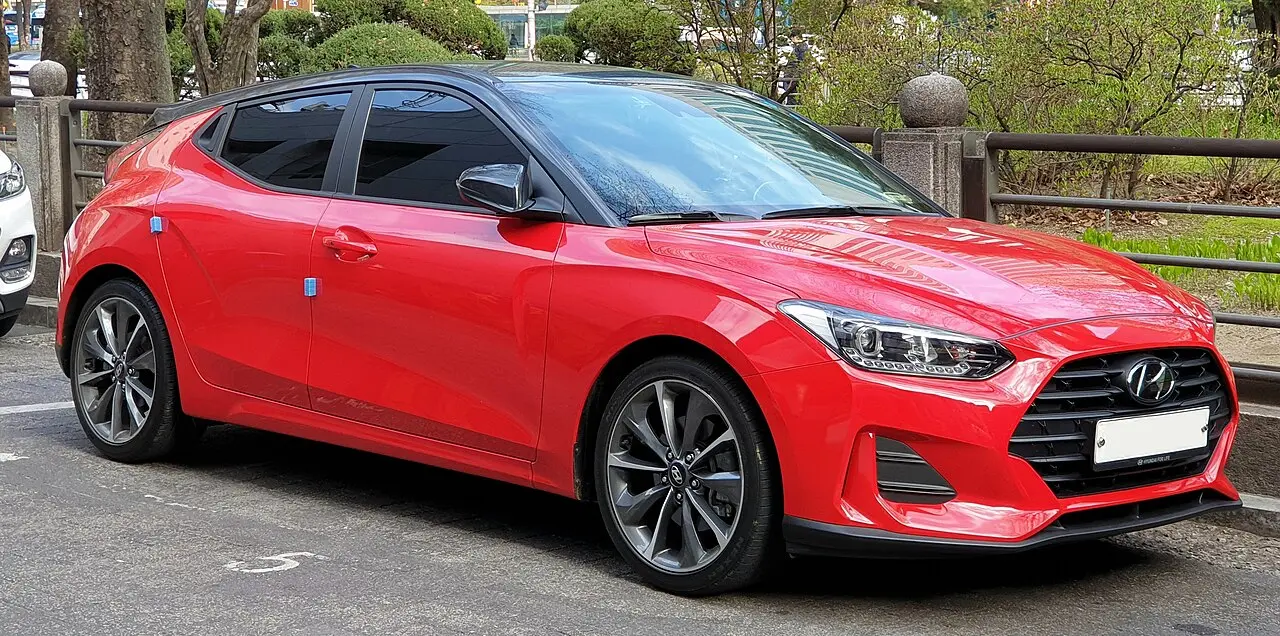
Hyundai Veloster

Hyundai Veloster
Photo: Damian B Oh / Wikimedia Commons · CC BY-SA 4.0

The official data lists 85 versions of the Hyundai Veloster (2011–2022), in the European Union, the United Kingdom, France, the United States, and Canada. Each market publishes its own figures, measured on its own test procedure.

At a glance

Years in the data
2011–2022
Markets
European Union, United Kingdom, France, United States, Canada
Engines
1.6 L to 2.0 L
Power
97 kW (132 PS) to 137 kW (186 PS)
Fuels
Petrol
Lowest consumption (United Kingdom)
5.9 L/100 km (NEDC)
Lowest consumption (France)
6.2 L/100 km (NEDC)
Lowest consumption (Canada)
7.5 L/100 km (5-cycle)
New registrations in the EU
23,188

What is the Hyundai Veloster?

The Veloster is a compact hatchback with coupe-like styling and an unusual door layout: one door on the driver’s side and two on the passenger’s side. The extra rear door gives passengers access to the back seat while preserving the car’s distinctive profile.

That asymmetric layout remained a defining feature of the second generation, which brought revised styling and updates to the powertrain and infotainment. The Veloster has a sportier character than a conventional family hatchback.

Veloster generations

The first generation (FS) ran from 2012 to 2018, followed by the second generation (JS) from 2019 to 2022. EU registrations begin in 2011.

The second generation retained the asymmetric door arrangement and brought a redesigned exterior and interior, along with powertrain and infotainment updates. The blend of coupe-like styling and hatchback access remained central to the Veloster’s character.

Engines and power

EU versions listed from 2011 to 2018 use a 1.6-litre engine, with power from 97 kW (132 PS) to 137 kW (186 PS). The 103 kW (140 PS) petrol version appears among the leading EU registrations. UK figures list 1.6-litre petrol models; US and Canadian listings extend to 2.0-litre petrol engines.

The lowest listed UK consumption is 5.9 L/100 km on NEDC. France records 6.2 L/100 km, also on NEDC. The US EPA low is 7.6 L/100 km, with a best combined rating of 31 MPG; Canada’s lowest figure is 7.5 L/100 km on the NRCan 5-cycle test. European NEDC, US EPA and Canadian 5-cycle procedures differ, so these results are not direct comparisons.

Where was the Veloster sold?

The Veloster appears in official figures for the EU, the UK, France, the US and Canada. EU registrations cover 2011–2018; UK figures cover 2012–2014, French figures 2012–2015, and US and Canadian listings 2012–2022. Engine choices and official consumption figures vary by market.

Questions and answers

How many doors does the Hyundai Veloster have?

Its asymmetric layout has one door on the driver’s side and two on the passenger’s side.

What are the Veloster generations?

The first generation (FS) ran from 2012 to 2018; the second generation (JS) ran from 2019 to 2022.

What is the lowest listed Veloster consumption?

The lowest listed figure is 5.9 L/100 km in the UK on NEDC. US EPA and Canadian 5-cycle figures use different test procedures.

What power does the EU Veloster lineup offer?

EU figures list 1.6-litre engines with power from 97 kW (132 PS) to 137 kW (186 PS).
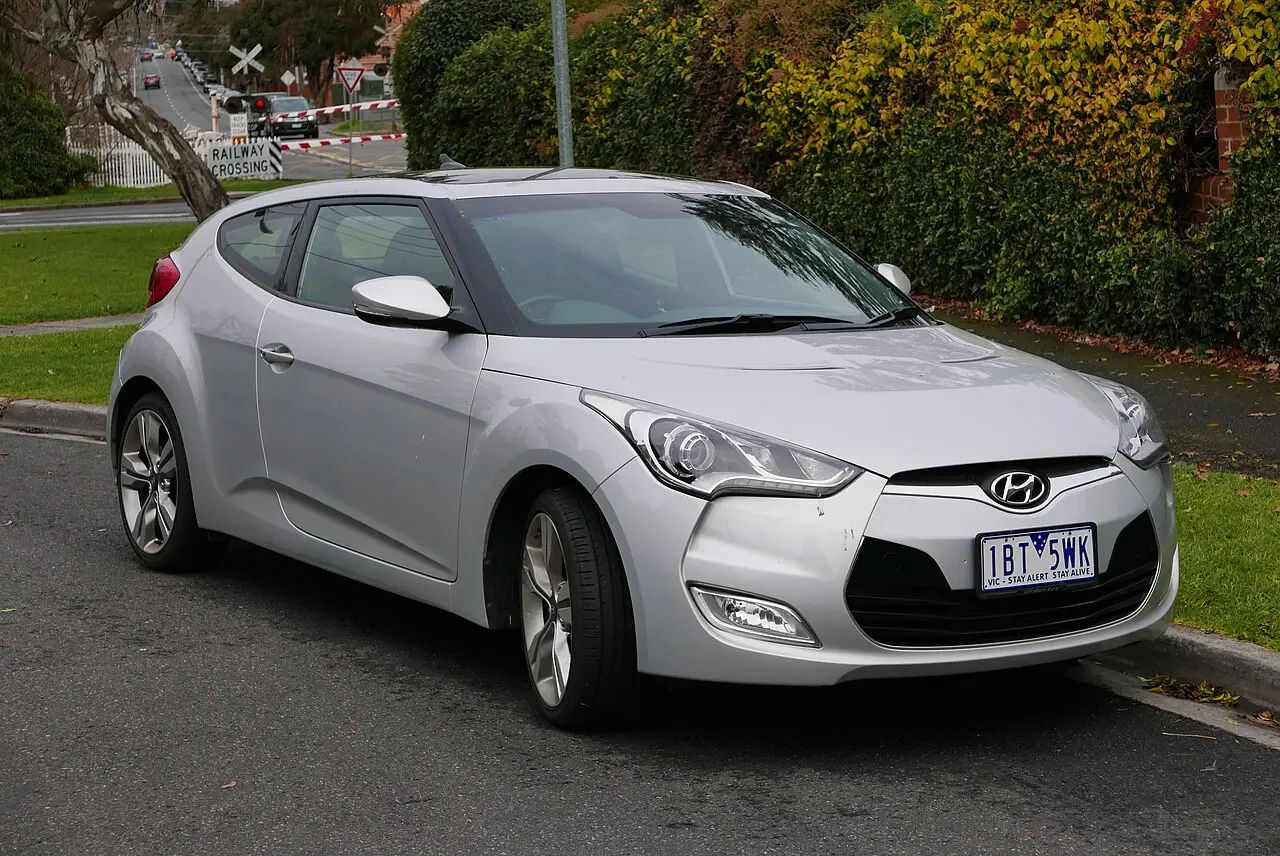
Veloster first generation (2012–2018)

Hyundai Veloster first generation
Photo: OSX / Wikimedia Commons · Public domain

Model codes: FS · References: en.wikipedia.org, carwiki.co.kr

Show all 69 versions

Veloster second generation (2019–2022)

Hyundai Veloster second generation
Photo: Damian B Oh / Wikimedia Commons · CC BY-SA 4.0

Model codes: JS · References: en.wikipedia.org, carwiki.co.kr

United States 8 versions

Model years sold in the USA, from the EPA and the Department of Energy (fueleconomy.gov). MPG on the EPA test; litres per 100 km = 235.215 ÷ MPG.

Years and versionEngineFuelGearboxDriveConsumption (combined)CO₂
2021–2022SIDI2.0 LPetrol6-speed manualFront-wheel drive25 MPG (9.4 L/100 km) EPA226 g/km
2021–2022SIDI2.0 LPetrol8-speed automated manualFront-wheel drive22 MPG (10.7 L/100 km) EPA249 g/km
2019–2021SIDI1.6 LPetrol7-speed automated manualFront-wheel drive30 MPG (7.8 L/100 km) EPA184 g/km
2019–2021SIDI1.6 LPetrol6-speed manualFront-wheel drive29 MPG (8.1 L/100 km) EPA191 g/km
2019–20212.0 LPetrol6-speed automaticFront-wheel drive30 MPG (7.8 L/100 km) EPA186 g/km
2019–20212.0 LPetrol6-speed manualFront-wheel drive28 MPG (8.4 L/100 km) EPA197 g/km
2020SIDI2.0 LPetrol6-speed manualFront-wheel drive25 MPG (9.4 L/100 km) EPA226 g/km
2019SIDI2.0 LPetrol6-speed manualFront-wheel drive25 MPG (9.4 L/100 km) EPA226 g/km

Canada 7 versions

Model years sold in Canada, from Natural Resources Canada fuel consumption ratings (5-cycle test).

Years and versionEngineFuelGearboxConsumption (combined)CO₂
2019–2022Compact2.0 LPetrol6-speed manual9.5 L/100 km 5-cycle226 g/km
2021–2022Compact2.0 LPetrol8-speed automated manual10.5 L/100 km 5-cycle248 g/km
2019–2020Compact1.6 LPetrol7-speed automated manual7.8 L/100 km 5-cycle184 g/km
2020Compact1.6 LPetrol6-speed manual8.3 L/100 km 5-cycle196 g/km
2019–2020Compact2.0 LPetrol6-speed automatic8.2 L/100 km 5-cycle193 g/km
2019Compact1.6 LPetrol6-speed manual8.3 L/100 km 5-cycle197 g/km
2019Compact2.0 LPetrol6-speed manual8.4 L/100 km 5-cycle198 g/km

Versions outside these generations

European Union 1 version

New cars registered in the EU (plus Norway and Iceland), from the European Environment Agency. Figures on the NEDC procedure until 2020 and on WLTP from 2021; versions are grouped by engine and power, with their number of registrations.

Years and versionEnginePowerFuelCO₂EU registrations
20111.6 L103 kW (140 PS)Petrol142 g/km5,312

Official figures are measured on standard test procedures and differ between markets. Your consumption depends on how, where and in what conditions you drive.