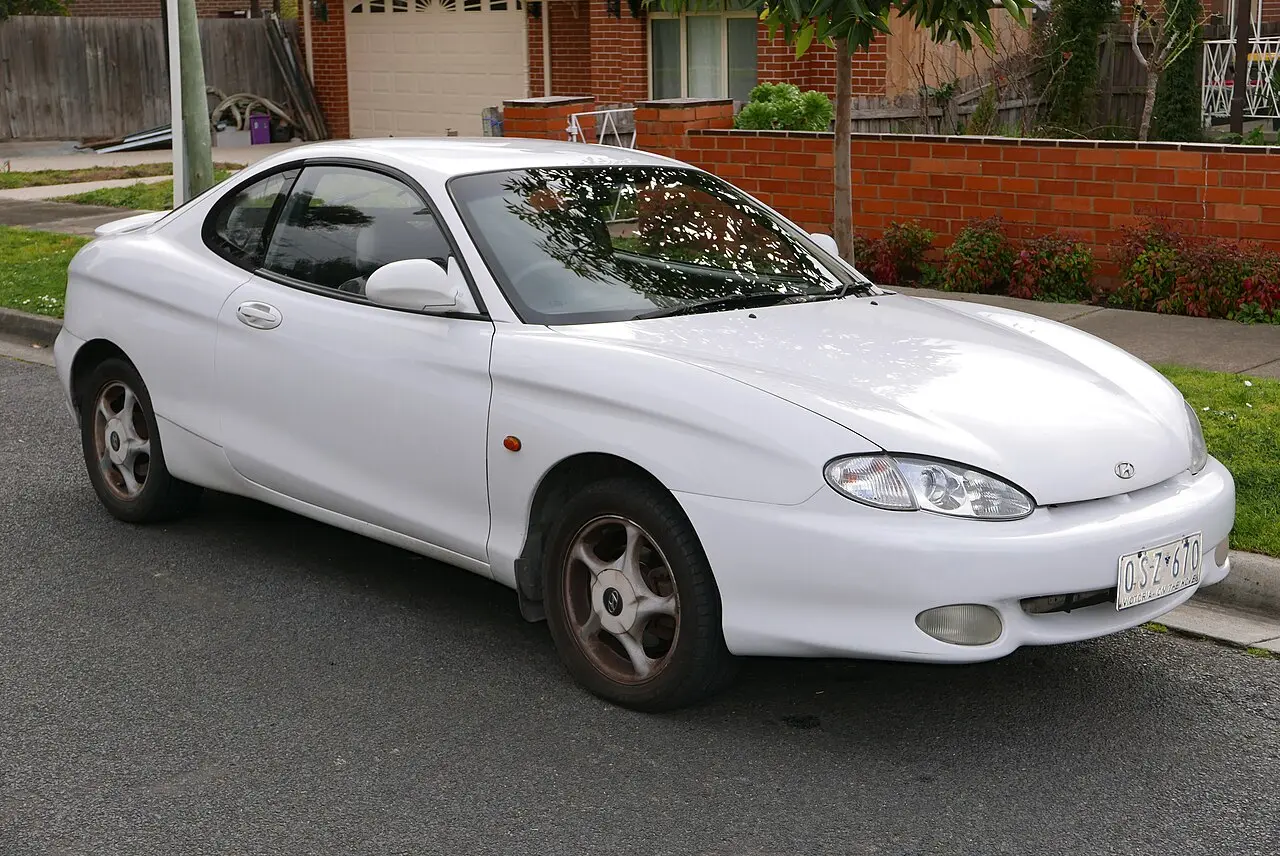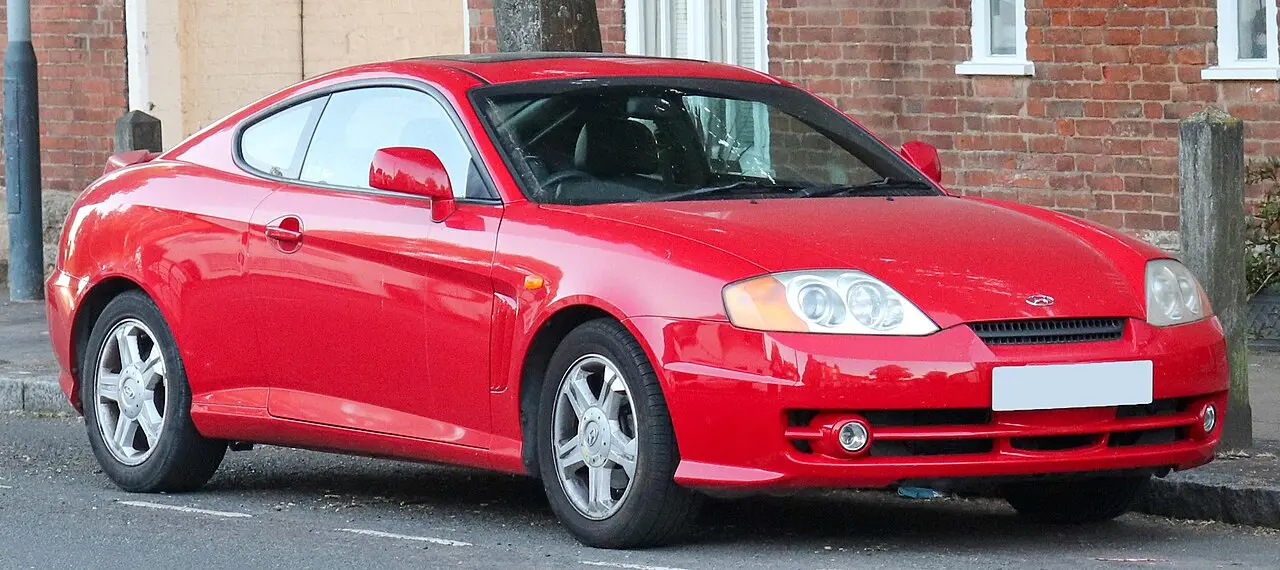
What is the Hyundai Tiburon?
The Tiburon is a two-door sports coupe that gave Hyundai a distinctive, driver-focused model alongside its more practical cars. In Europe, the same car was generally called the Hyundai Coupé. Its low roof and swept-back shape set it apart from the ordinary family-car silhouettes of its time, while its front-wheel-drive layout kept it familiar to everyday drivers. Hyundai’s own history describes the Tiburon as an independently developed sports car, part of the company’s effort to establish a stronger identity beyond basic transport.
Tiburon generations
The first generation, known by the code RD, ran from 1997 to 2001 in the United States and Canada. It followed the model’s 1996 debut and introduced Hyundai’s sporty coupe idea to North American buyers.
The second generation, code GK, followed for 2003–2008. It carried the Tiburon name forward with a more developed coupe design and remained the final generation represented in the US and Canadian market years here.
Engines and fuel consumption
North American Tiburons used petrol engines ranging from 1.8 L to 2.7 L. The engine range gave buyers a choice within the coupe line-up, though the official figures vary by version and year.
For US models, the EPA figures show a best combined rating of 24 MPG, with the lowest listed consumption at 9.8 L/100 km. Canadian models reach a lowest listed figure of 9.9 L/100 km on NRCan’s 5-cycle test. EPA and NRCan test methods differ, so the two markets’ numbers are best read within their own systems.
Where was the Tiburon sold?
The Tiburon was sold in the United States and Canada from 1997 through 2008. European buyers knew this Hyundai coupe by another name.
Questions and answers
How many Tiburon generations were sold in North America?
Two: the RD first generation, dated 1997–2001, and the GK second generation, dated 2003–2008.
What engines did the Tiburon have?
The US and Canadian range included petrol engines from 1.8 L to 2.7 L.
What is the Tiburon’s best EPA fuel economy?
Its best combined EPA rating is 24 MPG. The EPA’s test procedure differs from NRCan’s Canadian 5-cycle method.