Hyundai

Hyundai Inster

Hyundai Inster
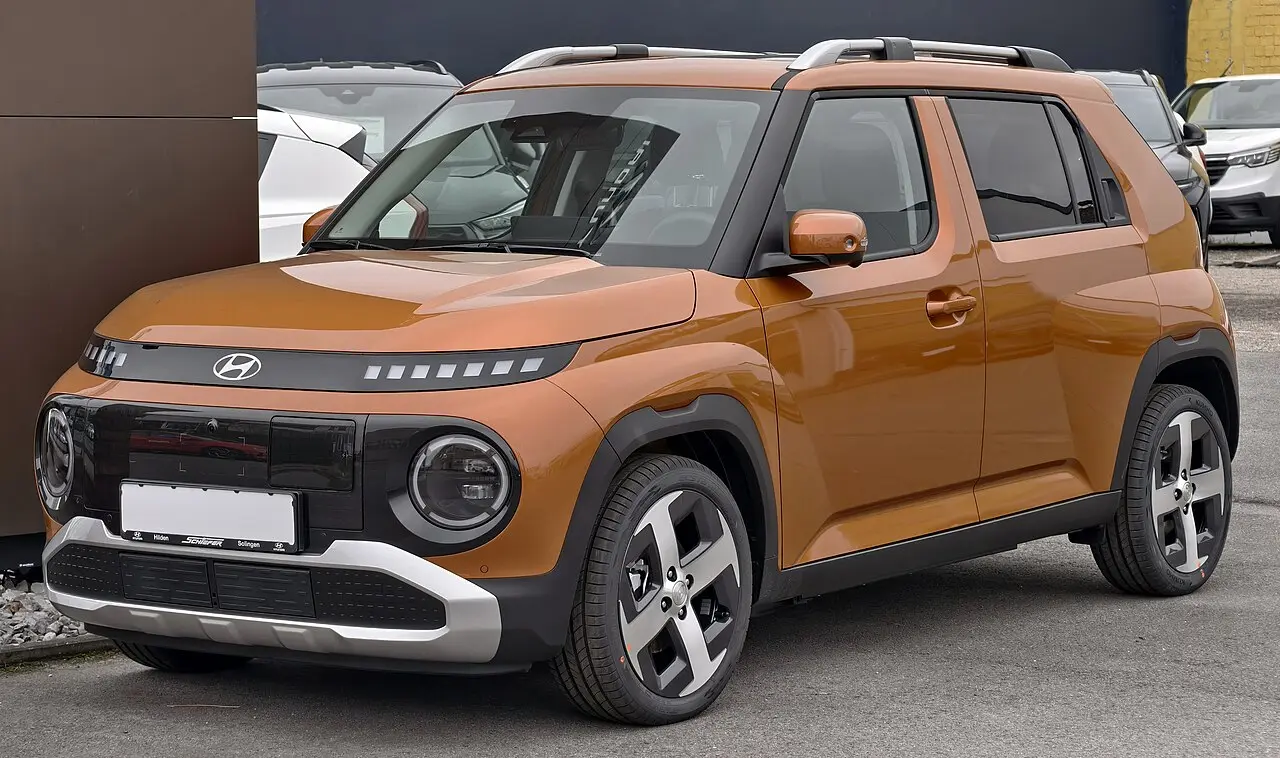
Photo: © M 93 / Wikimedia Commons · CC BY-SA 3.0 de

The official data lists 10 versions of the Hyundai Inster (2024–2026), in the European Union and the United Kingdom. Each market publishes its own figures, measured on its own test procedure.

At a glance

Years in the data
2024–2026
Markets
European Union, United Kingdom
Power
24 kW (33 PS) to 85 kW (116 PS)
Fuels
Electric
New registrations in the EU
29,447

What is the Hyundai Inster?

The Inster is a small electric car with an upright, SUV-inspired shape. Hyundai positions it between city cars and larger compact models, combining an easy-to-manoeuvre footprint with a flexible cabin. Pixel-style lights give it a distinctive look, and the seats can fold flat to make better use of the interior.

The Inster is part of Hyundai’s electric-car range, alongside the IONIQ models. Its first generation, code AX1, began in 2024.

Engines and power

Every listed Inster is electric. In EU registration figures, power ranges from 24 kW (33 PS) to 85 kW (116 PS). UK VCA figures cover versions from 71 kW (97 PS) to 84 kW (114 PS).

How economical is the Hyundai Inster?

The Inster has no petrol or diesel consumption figure because it is electric. EU registration figures for 2024–2025 total 29,447. The most registered versions were the 85 kW (116 PS) model in 2025, with 11,692 registrations; the 71 kW (97 PS) model, with 8,848; and the 84 kW (114 PS) model, with 7,747.

Electricity use and CO₂ figures depend on the market and test procedure, so figures from different regions should be read in their own context.

Where was the Hyundai Inster sold?

The Inster appears in EU registration figures for 2024–2025 and UK VCA figures for 2025–2026. Hyundai introduced it as a small electric car for markets including Europe, extending its range of battery-electric models.

Questions and answers

Is the Hyundai Inster electric?

Yes. The versions listed for the EU and UK are all electric.

How powerful is the Hyundai Inster?

EU-listed versions range from 24 kW (33 PS) to 85 kW (116 PS); UK versions range from 71 kW (97 PS) to 84 kW (114 PS).

When did the first-generation Inster arrive?

Its first generation, code AX1, began in 2024.

Inster first generation (since 2024)

Hyundai Inster first generation
Photo: © M 93 / Wikimedia Commons · CC BY-SA 3.0 de

Model codes: AX1 · Sold in: European Union and United Kingdom · References: hyundai.com, goo-net.com

European Union 7 versions

New cars registered in the EU (plus Norway and Iceland), from the European Environment Agency. Figures on the NEDC procedure until 2020 and on WLTP from 2021; versions are grouped by engine and power, with their number of registrations.

Years and versionEnginePowerFuelConsumption (combined)CO₂Electric rangeEU registrations
2025Electric motor85 kW (116 PS)Electric16.7 kWh/100 km WLTP0 g/km348 km11,692
2025Electric motor71 kW (97 PS)Electric15.3 kWh/100 km WLTP0 g/km318 km8,848
2025Electric motor84 kW (114 PS)Electric15.0 kWh/100 km WLTP0 g/km364 km7,747
2025Electric motor28 kW (38 PS)Electric15.0 kWh/100 km WLTP0 g/km367 km698
2025Electric motor24 kW (33 PS)Electric14.3 kWh/100 km WLTP0 g/km327 km328
2024Electric motor84 kW (114 PS)Electric15.0 kWh/100 km WLTP0 g/km365 km93
2024Electric motor71 kW (97 PS)Electric14.3 kWh/100 km WLTP0 g/km327 km41

United Kingdom 3 versions

New cars on sale in the UK, from the Vehicle Certification Agency. NEDC figures until 2018 and WLTP figures after; years are the editions a version appeared in.

Years and versionEnginePowerFuelConsumption (combined)CO₂Electric range
2025–2026INSTER 01 42KWH MY25 · INSTER 01 42KWH MY26Electric motor71 kW (97 PS)Electric14.3 kWh/100 km WLTP0 g/km327 km
2025–2026INSTER 01 49KWH MY25 · INSTER 01 49KWH MY26Electric motor84 kW (114 PS)Electric14.9 kWh/100 km WLTP0 g/km370 km
2025–2026INSTER 02 49KWH MY25 · INSTER CROSS 49KWH MY25 · INSTER 02 49KWH MY26 and 1 more trimElectric motor84 kW (114 PS)Electric15.1 kWh/100 km WLTP0 g/km360 km

Official figures are measured on standard test procedures and differ between markets. Your consumption depends on how, where and in what conditions you drive.