Hyundai

Hyundai Equus

Hyundai Equus
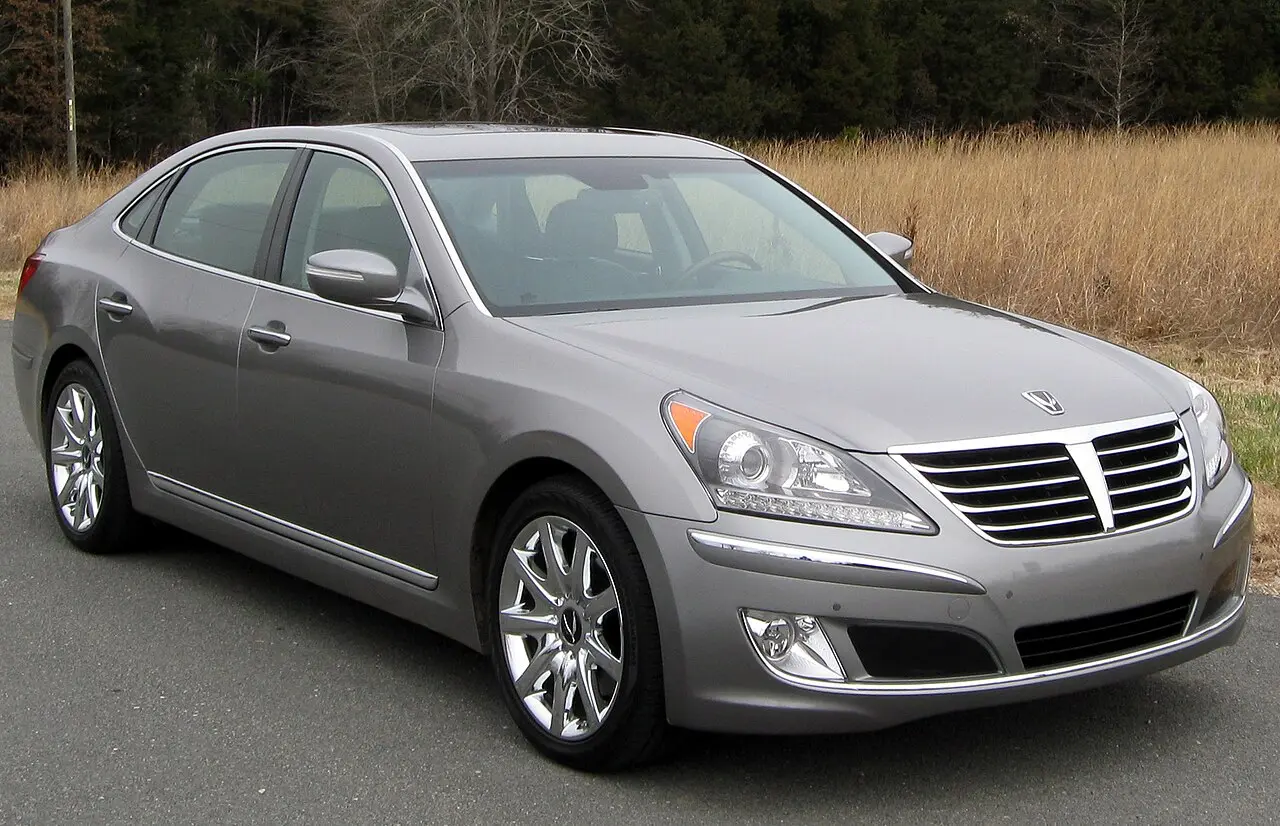
Photo: IFCAR / Wikimedia Commons · Public domain

The official data lists 11 versions of the Hyundai Equus (2011–2016), in the European Union, the United States, and Canada. Each market publishes its own figures, measured on its own test procedure.

At a glance

Years in the data
2011–2016
Markets
European Union, United States, Canada
Engines
4.6 L to 5.0 L
Fuels
Petrol
Lowest consumption (Canada)
12.6 L/100 km (5-cycle)
Lowest consumption (United States)
13.1 L/100 km (EPA)
New registrations in the EU
22

What kind of car is the Hyundai Equus?

The Hyundai Equus was a full-size luxury saloon at the top of the company’s range. Known as the Centennial in some markets, it offered a spacious cabin and a more formal, comfort-focused character than Hyundai’s mainstream models.

Generations and engines

The Equus name spans two generations. The second generation, code VI, ran from 2010 to 2014 and adopted a front-engine, rear-wheel-drive layout. In the United States and Canada, the petrol engines ranged from 4.6 L to 5.0 L. EU registration entries identify a 5.0 L petrol version producing 316 kW (430 PS).

How economical is the Hyundai Equus?

The lowest listed US consumption is 13.1 L/100 km, and the best combined EPA rating is 18 MPG. Canada’s lowest listed figure is 12.6 L/100 km on NRCan’s 5-cycle test. These results use different procedures: EPA testing in the United States, the 5-cycle test in Canada, and WLTP or NEDC testing in Europe. EU registrations list 22 Equus cars across 2012 and 2013.

Where was the Hyundai Equus sold?

The Equus appears in US EPA and Canadian NRCan figures from 2011 to 2016, and in EU registration figures for 2012 and 2013. The US figures include 4 versions and the Canadian figures include 5.

Questions and answers

Which Equus generation is covered here?

The EU registration entries identify the second generation, code VI, whose generation years are 2010 to 2014.

What engine and power are listed in EU registrations?

The EU entries identify a 5.0 L petrol engine producing 316 kW (430 PS).

What is the lowest listed Equus consumption in Canada?

It is 12.6 L/100 km on NRCan’s 5-cycle test.

Why do US and Canadian fuel figures differ?

The EPA and NRCan 5-cycle tests use different procedures, so their results can differ.

Equus second generation (2010–2014)

Hyundai Equus second generation
Photo: IFCAR / Wikimedia Commons · Public domain

Model codes: VI · Sold in: European Union · References: en.wikipedia.org

European Union 2 versions

New cars registered in the EU (plus Norway and Iceland), from the European Environment Agency. Figures on the NEDC procedure until 2020 and on WLTP from 2021; versions are grouped by engine and power, with their number of registrations.

Years and versionEnginePowerFuelCO₂EU registrations
20135.0 L316 kW (430 PS)Petrol281 g/km12
20125.0 L316 kW (430 PS)Petrol276 g/km10

Versions outside these generations

United States 4 versions

Model years sold in the USA, from the EPA and the Department of Energy (fueleconomy.gov). MPG on the EPA test; litres per 100 km = 235.215 ÷ MPG.

Years and versionEngineFuelGearboxDriveConsumption (combined)CO₂
2014–2016SIDI5.0 LPetrol8-speed automaticRear-wheel drive18 MPG (13.1 L/100 km) EPA312 g/km
2013SIDI5.0 LPetrol8-speed automaticRear-wheel drive18 MPG (13.1 L/100 km) EPA306 g/km
2012SIDI5.0 LPetrol8-speed automaticRear-wheel drive18 MPG (13.1 L/100 km) EPA307 g/km
20114.6 LPetrol6-speed automaticRear-wheel drive18 MPG (13.1 L/100 km) EPA307 g/km

Canada 5 versions

Model years sold in Canada, from Natural Resources Canada fuel consumption ratings (5-cycle test).

Years and versionEngineFuelGearboxConsumption (combined)CO₂
2016Full-size5.0 LPetrol8-speed automatic13.3 L/100 km 5-cycle312 g/km
2015Full-size5.0 LPetrol8-speed automatic13.3 L/100 km 5-cycle306 g/km
2014Full-size5.0 LPetrol8-speed automatic13.2 L/100 km 5-cycle304 g/km
2012–2013Full-size5.0 LPetrol8-speed automatic13.0 L/100 km 5-cycle299 g/km
2011Full-size4.6 LPetrol6-speed automatic12.6 L/100 km 5-cycle290 g/km

Official figures are measured on standard test procedures and differ between markets. Your consumption depends on how, where and in what conditions you drive.