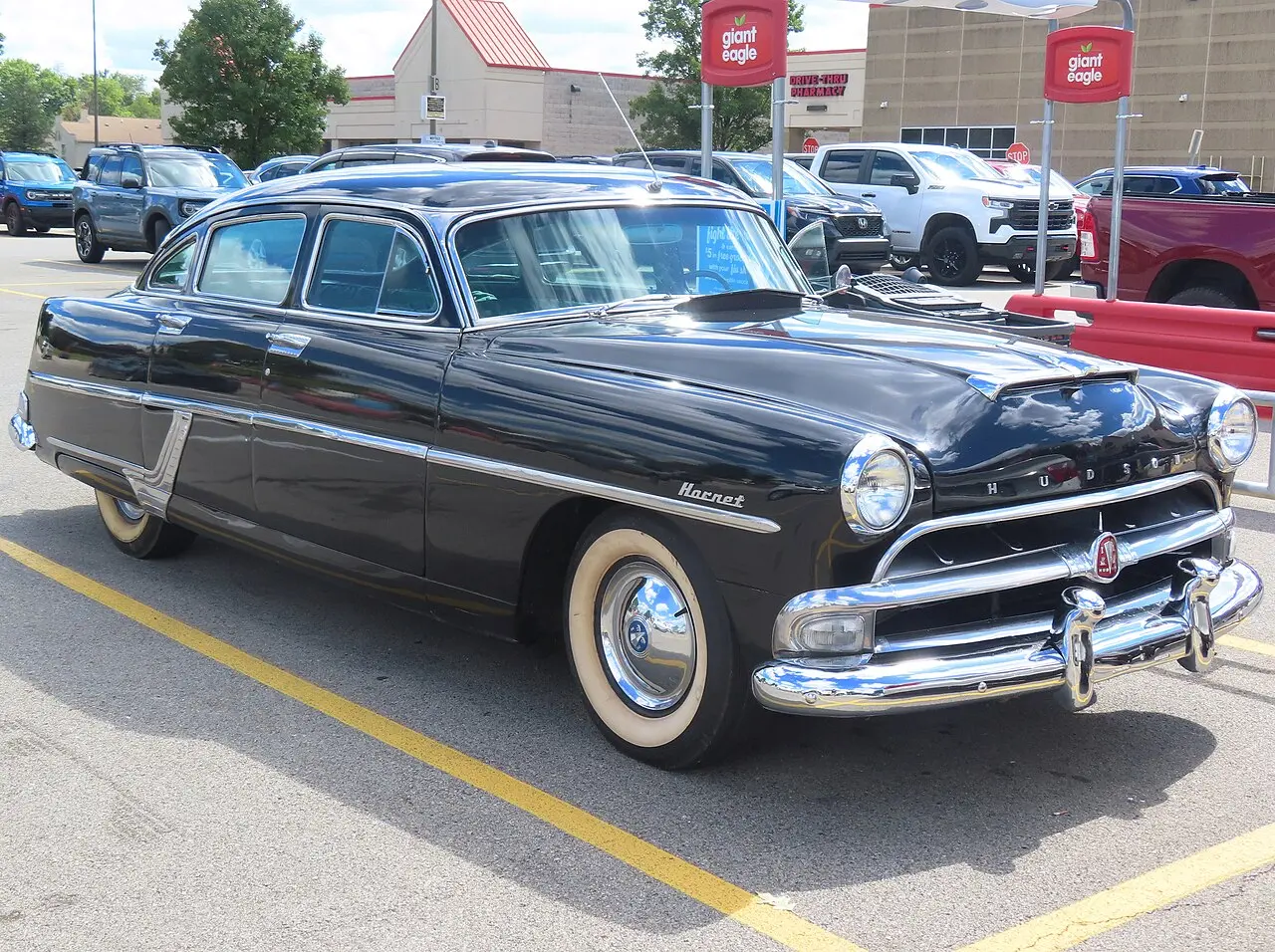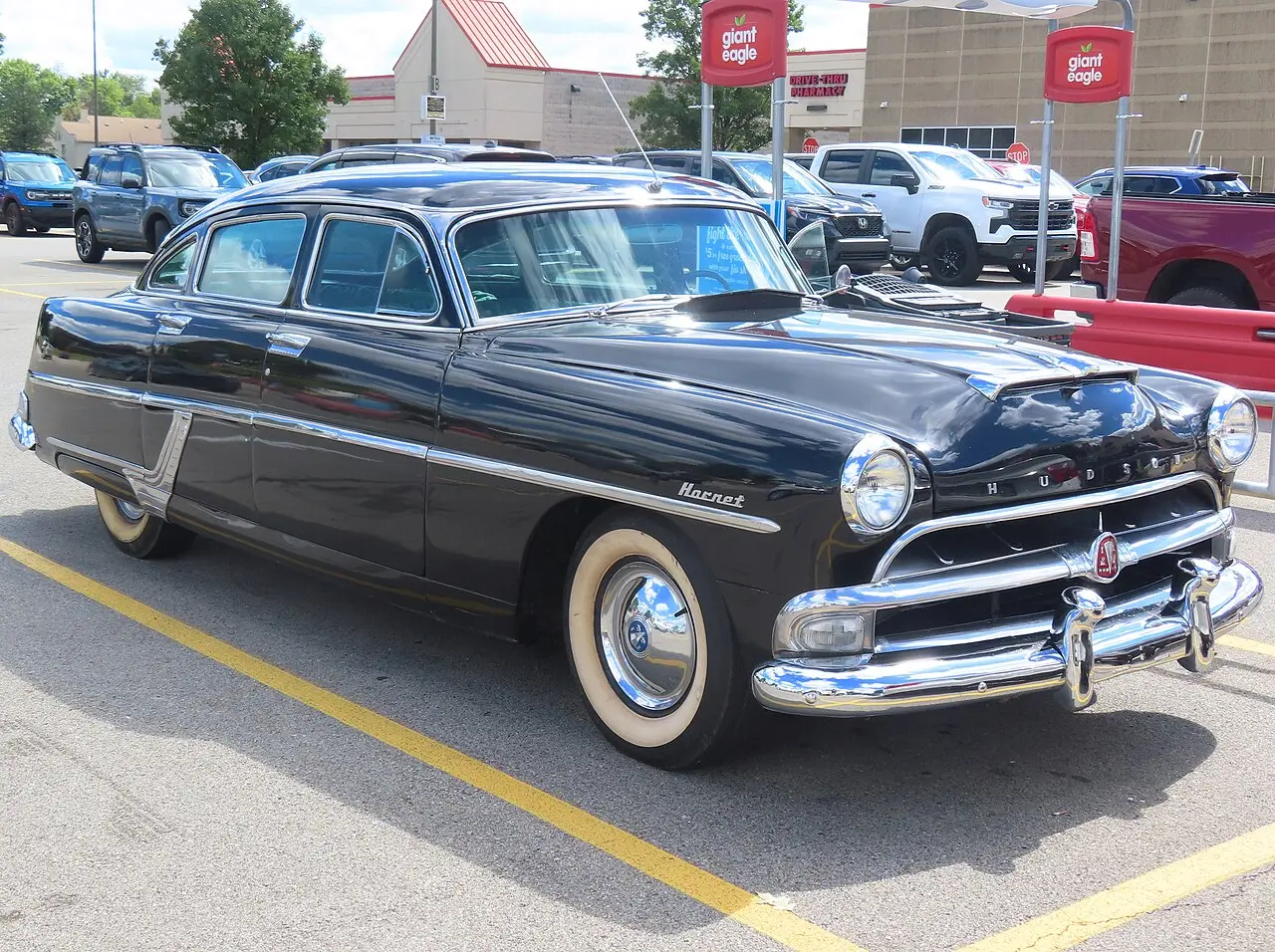
What is the Hudson Hornet?
The Hornet was a large Hudson passenger car introduced for the 1951 model year. It came in several body styles, including sedans, coupes, a hardtop and a convertible. The Hornet became known for its low-slung design and its role in American stock-car racing.
Generations and design
The early Hornet used Hudson’s “step-down” layout, introduced in 1948. Its cabin floor sat within the frame rails, creating a low profile. After Hudson merged with Nash-Kelvinator to form American Motors Corporation in 1954, the Hornet name continued on cars with a different underlying design.
Engines and official figures
The early Hornet used a straight-six engine. Its low-slung layout helped make it a distinctive presence in stock-car racing. Engine specifications varied by version.
Where was it sold?
The Hornet was part of Hudson’s American passenger-car range. Hudson was based in Detroit; after the 1954 merger, the brand continued under American Motors.
Questions and answers
What kind of car was the Hudson Hornet?
It was a large passenger car offered as a sedan, coupe, hardtop and convertible.
What made the early Hornet’s design distinctive?
Its step-down layout placed the cabin floor within the frame rails, giving the car a low profile.
What engine did the early Hornet use?
It used a straight-six engine; specifications varied by version.
What happened to the Hornet after Hudson merged with Nash-Kelvinator?
The Hornet name continued under American Motors on cars with a different underlying design.