Honda

Honda Ridgeline

Honda Ridgeline
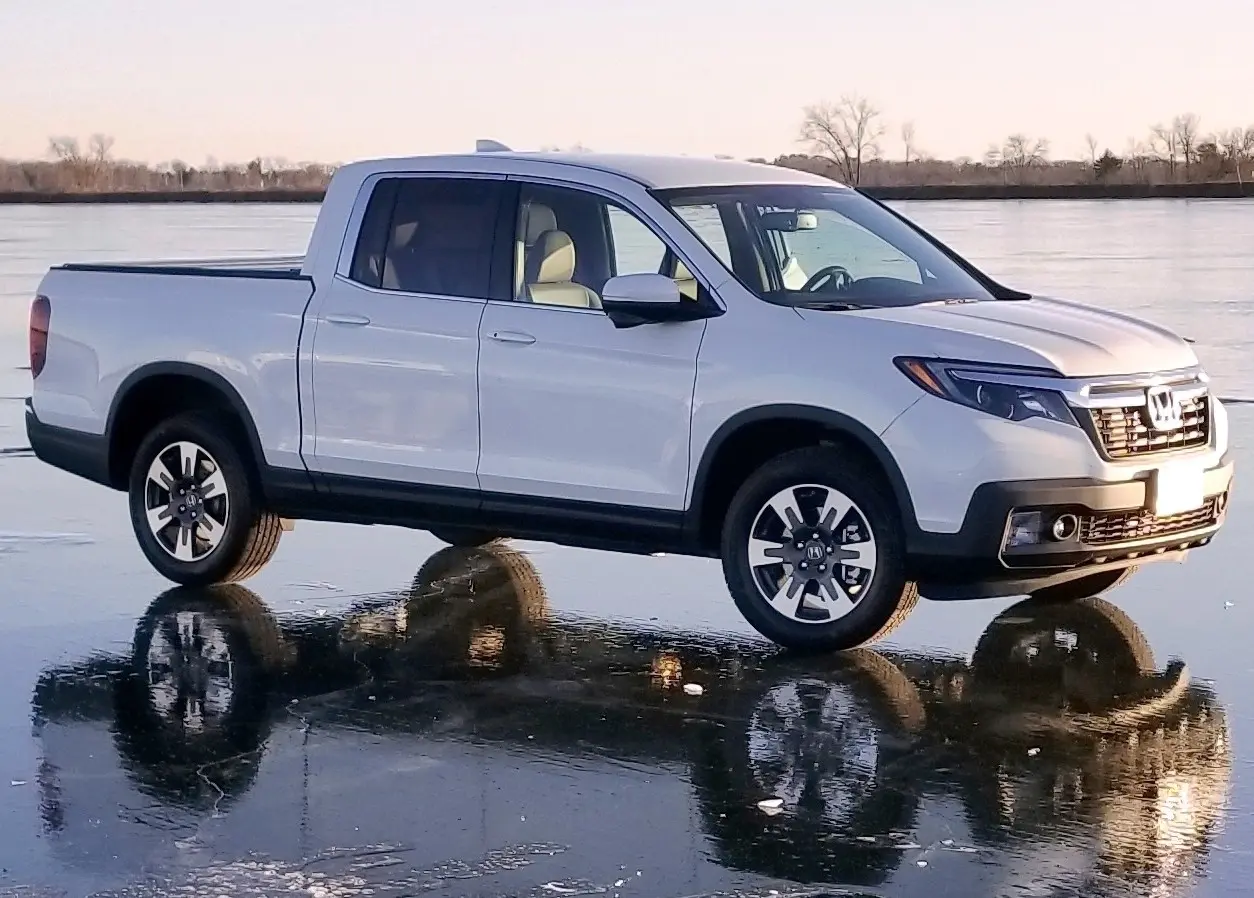
Photo: Paul Albrechtcrop: McChizzle / Wikimedia Commons · CC BY 4.0

The official data lists 21 versions of the Honda Ridgeline (2006–2026), in the United States and Canada. Each market publishes its own figures, measured on its own test procedure.

At a glance

Years in the data
2006–2026
Markets
United States, Canada
Engines
3.5 L
Fuels
Petrol
Lowest consumption (United States)
10.7 L/100 km (EPA)
Lowest consumption (Canada)
11.3 L/100 km (5-cycle)

What is the Honda Ridgeline?

The Honda Ridgeline is a midsize pickup with a crew cab and open cargo bed. Its unibody construction is a distinctive part of the design. Practical touches include a lockable trunk beneath the bed and a tailgate that opens downward or swings to the side.

The Ridgeline is Honda’s pickup for the United States and Canada. Its passenger cabin and flexible cargo bed suit people who need room for both passengers and loads.

Generations and engines

The first generation, code YK1, ran from 2006 to 2014. The second generation, code YK2, began in 2017. It retained the unibody construction, under-bed trunk and dual-action tailgate, while receiving a full redesign.

The listed engine is a 3.5 L petrol engine. Official figures list petrol versions in both markets.

How economical is the Honda Ridgeline?

US EPA figures give the Ridgeline a best combined rating of 22 MPG and a lowest listed consumption of 10.7 L/100 km. Canada’s NRCan figures list a lowest consumption of 11.3 L/100 km on the 5-cycle test. The procedures differ: the EPA uses its own test in the USA, while Canada uses the 5-cycle procedure.

The US and Canadian figures cover 2006–2026. They list 12 versions in the USA and 9 in Canada.

Where was the Honda Ridgeline sold?

Official figures list the Ridgeline in the United States and Canada. The first generation ran from 2006 to 2014, followed by the second generation, which began in 2017. Its pickup format pairs a passenger-carrying cab with an open bed.

Questions and answers

What kind of vehicle is the Honda Ridgeline?

It is a midsize pickup with a crew cab, open bed and unibody construction.

What engine does the Ridgeline use?

The listed engine is a 3.5 L petrol engine.

What is its best EPA fuel economy?

The best combined EPA rating listed is 22 MPG. Canada’s lowest listed figure is 11.3 L/100 km on the 5-cycle test.

Which Ridgeline generations are covered?

The first generation ran from 2006 to 2014, and the second began in 2017.
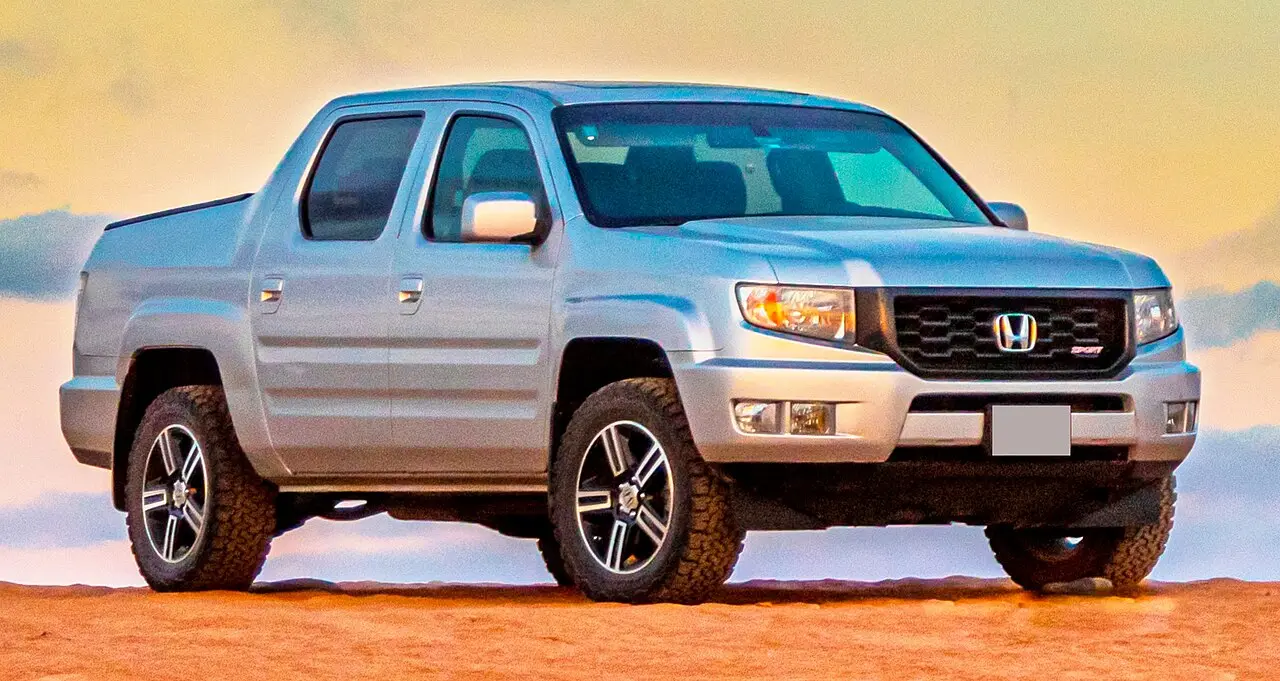
Ridgeline first generation (2006–2014)

Honda Ridgeline first generation
Photo: Julio Herrera / Wikimedia Commons · CC BY-SA 4.0

Model codes: YK1 · Sold in: United States and Canada · References: en.wikipedia.org

Show all 8 versions

Ridgeline second generation (since 2017)

Honda Ridgeline second generation
Photo: Paul Albrechtcrop: McChizzle / Wikimedia Commons · CC BY 4.0

Model codes: YK2 · Sold in: United States and Canada · References: en.wikipedia.org

United States 8 versions

Model years sold in the USA, from the EPA and the Department of Energy (fueleconomy.gov). MPG on the EPA test; litres per 100 km = 235.215 ÷ MPG.

Years and versionEngineFuelGearboxDriveConsumption (combined)CO₂
2026SIDI3.5 LPetrol9-speed automaticAll-wheel drive21 MPG (11.2 L/100 km) EPA274 g/km
2024–2026SIDI3.5 LPetrol9-speed automaticAll-wheel drive20 MPG (11.8 L/100 km) EPA277 g/km
2025SIDI3.5 LPetrol9-speed automaticAll-wheel drive21 MPG (11.2 L/100 km) EPA267 g/km
2021–2024SIDI3.5 LPetrol9-speed automaticAll-wheel drive21 MPG (11.2 L/100 km) EPA274 g/km
2020SIDI3.5 LPetrol9-speed automaticFront-wheel drive22 MPG (10.7 L/100 km) EPA253 g/km
2020SIDI3.5 LPetrol9-speed automaticAll-wheel drive21 MPG (11.2 L/100 km) EPA269 g/km
2017–2019SIDI3.5 LPetrol6-speed automaticFront-wheel drive22 MPG (10.7 L/100 km) EPA255 g/km
2017–2019SIDI3.5 LPetrol6-speed automaticAll-wheel drive21 MPG (11.2 L/100 km) EPA263 g/km

Canada 5 versions

Model years sold in Canada, from Natural Resources Canada fuel consumption ratings (5-cycle test).

Years and versionEngineFuelGearboxConsumption (combined)CO₂
2021–2026Pickup truck: Standard3.5 LPetrol9-speed automatic11.5 L/100 km 5-cycle271 g/km
2024–2026Pickup truck: Standard3.5 LPetrol9-speed automatic11.6 L/100 km 5-cycle273 g/km
2020Pickup truck: Standard3.5 LPetrol9-speed automatic11.4 L/100 km 5-cycle269 g/km
2019Pickup truck: Standard3.5 LPetrol6-speed automatic11.3 L/100 km 5-cycle263 g/km
2017–2018Pickup truck: Standard3.5 LPetrol6-speed automatic11.3 L/100 km 5-cycle264 g/km

Official figures are measured on standard test procedures and differ between markets. Your consumption depends on how, where and in what conditions you drive.