Honda

Honda Prelude

Honda Prelude
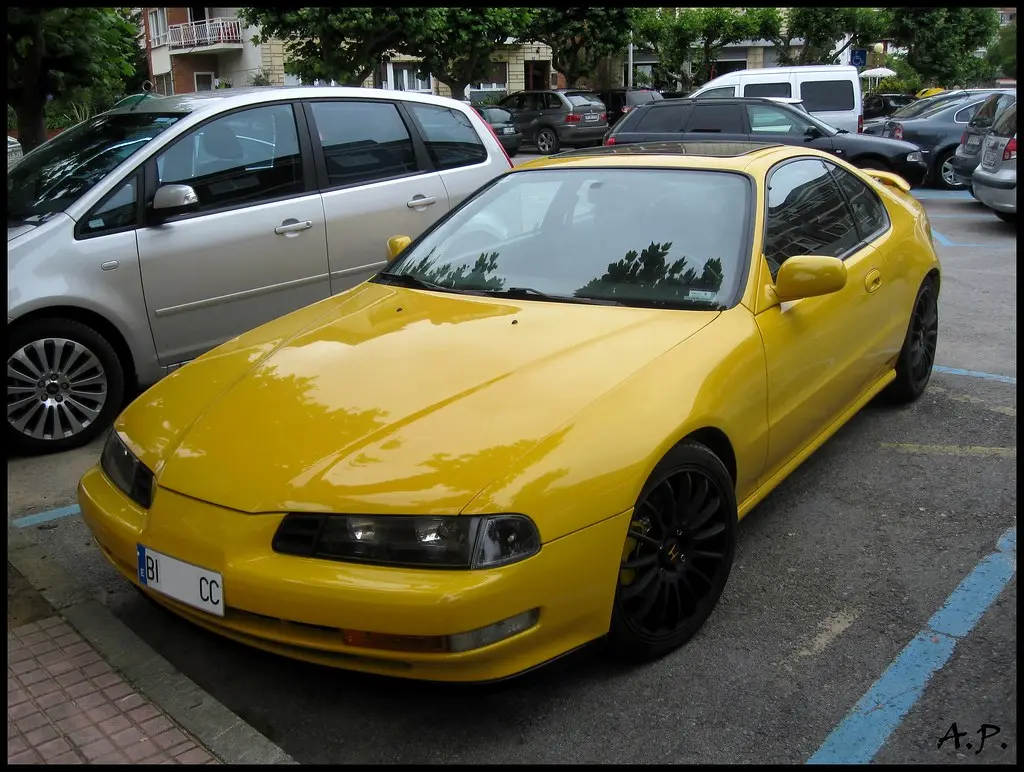
Photo: Spanish Coches / Wikimedia Commons · CC BY 2.0

The official data lists 62 versions of the Honda Prelude (1984–2027), in the United Kingdom, the United States, and Canada. Each market publishes its own figures, measured on its own test procedure.

At a glance

Years in the data
1984–2027
Markets
United Kingdom, United States, Canada
Engines
1.8 L to 2.3 L
Fuels
Hybrid, Petrol
Lowest consumption (United States)
5.3 L/100 km (EPA)
Lowest consumption (Canada)
5.4 L/100 km (5-cycle)
Lowest consumption (United Kingdom)
9.2 L/100 km (NEDC)

What is the Honda Prelude?

The Prelude is Honda’s sporty coupé, with a low roofline and a driver-focused character. Across its generations, Honda used the model to introduce notable technology, including available four-wheel steering on earlier versions. The newest Prelude brings the name back as a hybrid sports car.

Prelude generations

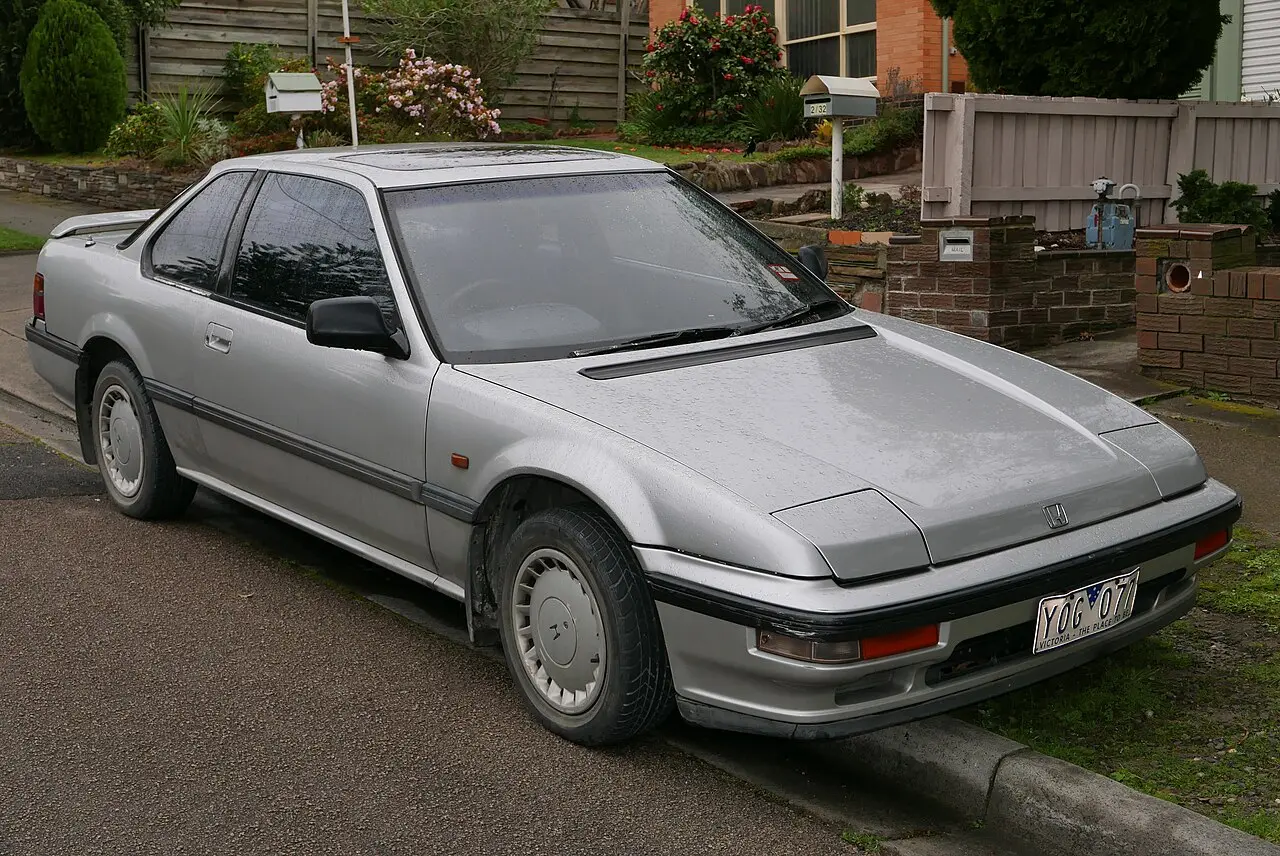
The third generation (BA) ran from 1988 to 1991, followed by the fourth generation (BB) from 1992 to 1996 and the fifth generation (BB) from 1997 to 2001. The sixth generation (BF) begins in 2026. Honda describes the latest Prelude as a hybrid sports car.

Engines and power

Across the listed markets, Prelude engine sizes range from 1.8 L to 2.3 L. The UK versions had 2.0 L to 2.2 L petrol engines. The sixth-generation Prelude is a hybrid; its engine size and power output are not specified here.

How economical is the Honda Prelude?

The lowest listed consumption is 5.3 L/100 km in the United States, 5.4 L/100 km in Canada and 9.2 L/100 km in the UK. The US EPA rating also reaches 44 MPG combined. These figures come from different test procedures: Europe uses WLTP or NEDC, the US uses EPA testing, and Canada uses its 5-cycle procedure. The listed US years run from 1984 to 2027, the Canadian years from 1995 to 2026, and the UK listing is for 2000.

Questions and answers

How many Prelude generations are covered?

The listed generations are the third, fourth, fifth and sixth.

Is the latest Prelude hybrid?

Yes. Honda describes the sixth-generation Prelude as a hybrid sports car.

What is the lowest listed Prelude consumption?

It is 5.3 L/100 km under the US EPA procedure.

Where was the Prelude sold?

The listed figures cover the United States, Canada and the UK.
Prelude third generation (1988–1991)

Honda Prelude third generation
Photo: OSX / Wikimedia Commons · Public domain

Model codes: BA · Sold in: United States and Canada · References: en.wikipedia.org

Show all 10 versions

Prelude fourth generation (1992–1996)

Honda Prelude fourth generation
Photo: Spanish Coches / Wikimedia Commons · CC BY 2.0

Model codes: BB · Sold in: United States and Canada · References: en.wikipedia.org

Show all 20 versions

Prelude fifth generation (1997–2001)

Model codes: BB · Sold in: United States, Canada, and United Kingdom · References: en.wikipedia.org

Show all 16 versions

Prelude sixth generation (since 2026)

Model codes: BF · Sold in: United States, Canada, European Union, and United Kingdom · References: global.honda, hondanews.eu

United States 1 version

Model years sold in the USA, from the EPA and the Department of Energy (fueleconomy.gov). MPG on the EPA test; litres per 100 km = 235.215 ÷ MPG.

Years and versionEngineFuelGearboxDriveConsumption (combined)CO₂
2026–2027SIDI; Hybrid2.0 LHybridContinuously variable (CVT)Front-wheel drive44 MPG (5.3 L/100 km) EPA126 g/km

Canada 1 version

Model years sold in Canada, from Natural Resources Canada fuel consumption ratings (5-cycle test).

Years and versionEngineFuelGearboxConsumption (combined)CO₂
2026Subcompact2.0 LPetrolContinuously variable (CVT)5.4 L/100 km 5-cycle127 g/km

Versions outside these generations

United States 14 versions

Model years sold in the USA, from the EPA and the Department of Energy (fueleconomy.gov). MPG on the EPA test; litres per 100 km = 235.215 ÷ MPG.

Years and versionEngineFuelGearboxDriveConsumption (combined)CO₂
1985–1987(FFS)1.8 LPetrol4-speed automaticFront-wheel drive23 MPG (10.2 L/100 km) EPA240 g/km
1987(FFS)1.8 LPetrol5-speed manualFront-wheel drive25 MPG (9.4 L/100 km) EPA221 g/km
1987(FFS)2.0 LPetrol4-speed automaticFront-wheel drive23 MPG (10.2 L/100 km) EPA240 g/km
1987(FFS)2.0 LPetrol5-speed manualFront-wheel drive25 MPG (9.4 L/100 km) EPA221 g/km
1986(FFS)1.8 LPetrol5-speed manualFront-wheel drive24 MPG (9.8 L/100 km) EPA230 g/km
1986(FFS), 3LKUP2.0 LPetrol4-speed automaticFront-wheel drive23 MPG (10.2 L/100 km) EPA240 g/km
1986(FFS)2.0 LPetrol5-speed manualFront-wheel drive24 MPG (9.8 L/100 km) EPA230 g/km
1985(FFS) CA model1.8 LPetrol5-speed manualFront-wheel drive24 MPG (9.8 L/100 km) EPA230 g/km
1985(FFS)1.8 LPetrol5-speed manualFront-wheel drive24 MPG (9.8 L/100 km) EPA230 g/km
1985(FFS), VLKUP2.0 LPetrol4-speed automaticFront-wheel drive21 MPG (11.2 L/100 km) EPA263 g/km
1985(FFS)2.0 LPetrol5-speed manualFront-wheel drive22 MPG (10.7 L/100 km) EPA251 g/km
1984(FFS) · (FFS) CA model1.8 LPetrol4-speed automatic–23 MPG (10.2 L/100 km) EPA240 g/km
1984(FFS)1.8 LPetrol5-speed manual–24 MPG (9.8 L/100 km) EPA230 g/km
1984(FFS) CA model1.8 LPetrol5-speed manual–25 MPG (9.4 L/100 km) EPA221 g/km

Official figures are measured on standard test procedures and differ between markets. Your consumption depends on how, where and in what conditions you drive.