Honda

Honda Passport

Honda Passport
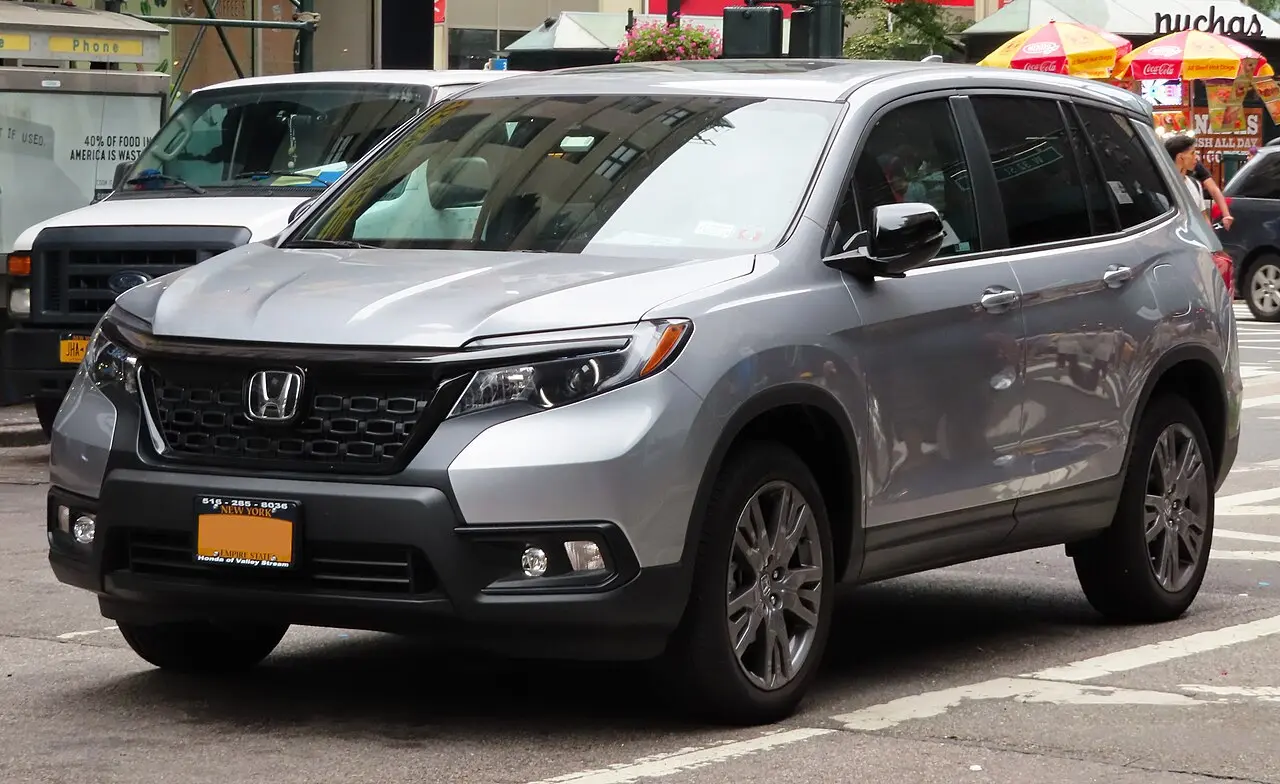
Photo: Kevauto / Wikimedia Commons · CC BY-SA 4.0

The official data lists 31 versions of the Honda Passport (1994–2026), in the United States and Canada. Each market publishes its own figures, measured on its own test procedure.

At a glance

Years in the data
1994–2026
Markets
United States, Canada
Engines
2.6 L to 3.5 L
Fuels
Petrol
Lowest consumption (United States)
10.7 L/100 km (EPA)
Lowest consumption (Canada)
10.8 L/100 km (5-cycle)

What is the Honda Passport?

The Passport is a utility-focused Honda SUV with a more rugged character than a typical city-focused model. Its place in Honda’s North American range is as a midsize SUV suited to everyday driving and time on rougher roads. The name first appeared for the 1994 model year, and the US listing runs from 1994 through 2026.

Honda Passport generations

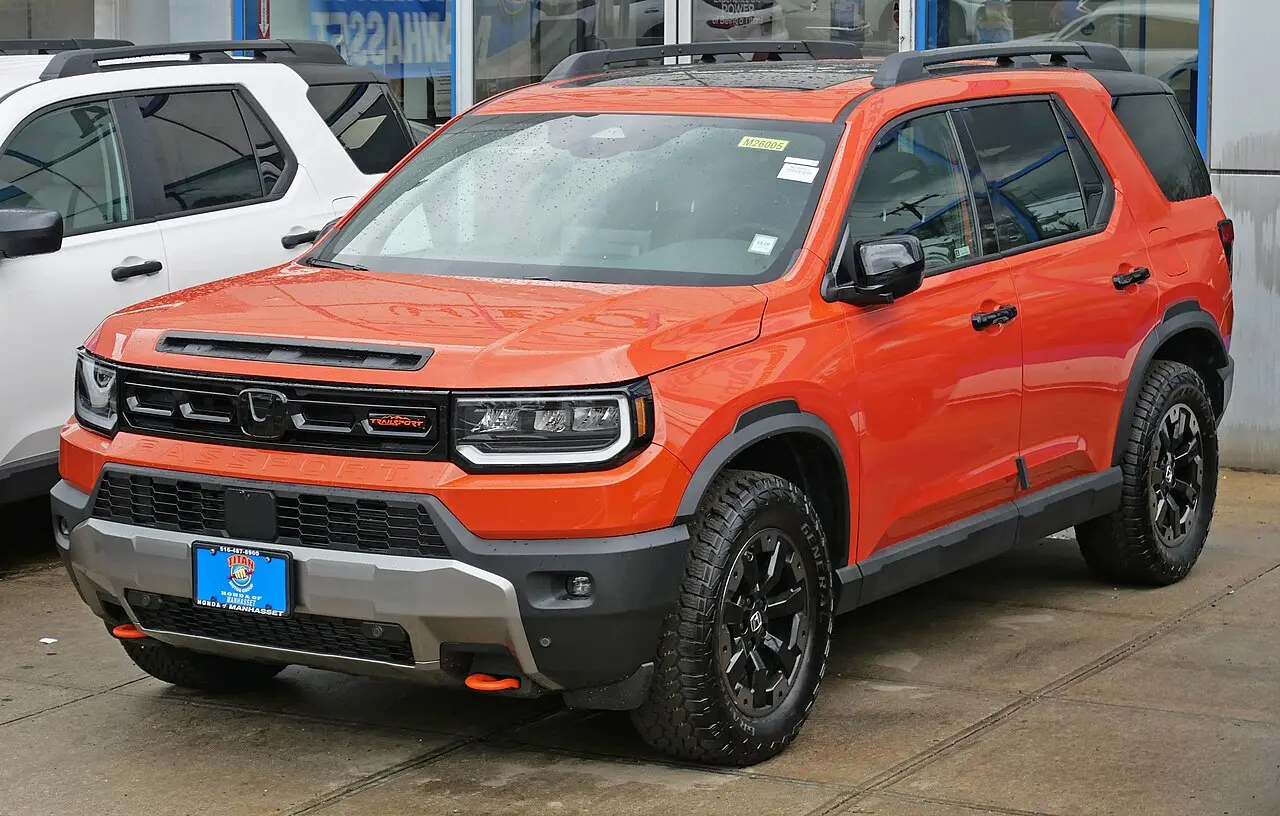
The first-generation Passport arrived for 1994 as a collaboration between Honda and Isuzu. The second generation, code CK, ran from 1998 to 2002. After a gap, the third generation, codes YF7 and YF8, returned for 2019–2025 as a Honda-developed SUV. The fourth generation, code YG, begins in 2026.

Engines and fuel consumption

US petrol versions span 2.6 L to 3.5 L engines; Canadian versions use a 3.5 L petrol engine. The best combined EPA rating is 22 MPG, with a lowest listed consumption of 10.7 L/100 km. Canada’s lowest listed figure is 10.8 L/100 km on the NRCan 5-cycle test. The EPA and Canadian 5-cycle procedures differ, so results are best read within their own markets.

Where was the Passport sold?

The Passport is listed in the United States and Canada. The US model years run from 1994 to 2026, while Canada’s run from 2019 to 2026. The listed versions in both markets use petrol.

Questions and answers

What kind of car is the Honda Passport?

It is a utility-focused Honda SUV sold in North America.

When did the Passport return after its second generation?

The third generation began in 2019, following the second generation’s 1998–2002 run.

What is the Passport’s best EPA fuel economy?

The best combined EPA rating is 22 MPG.

Which engine is listed for Canadian Passport versions?

The Canadian versions use a 3.5 L petrol engine.
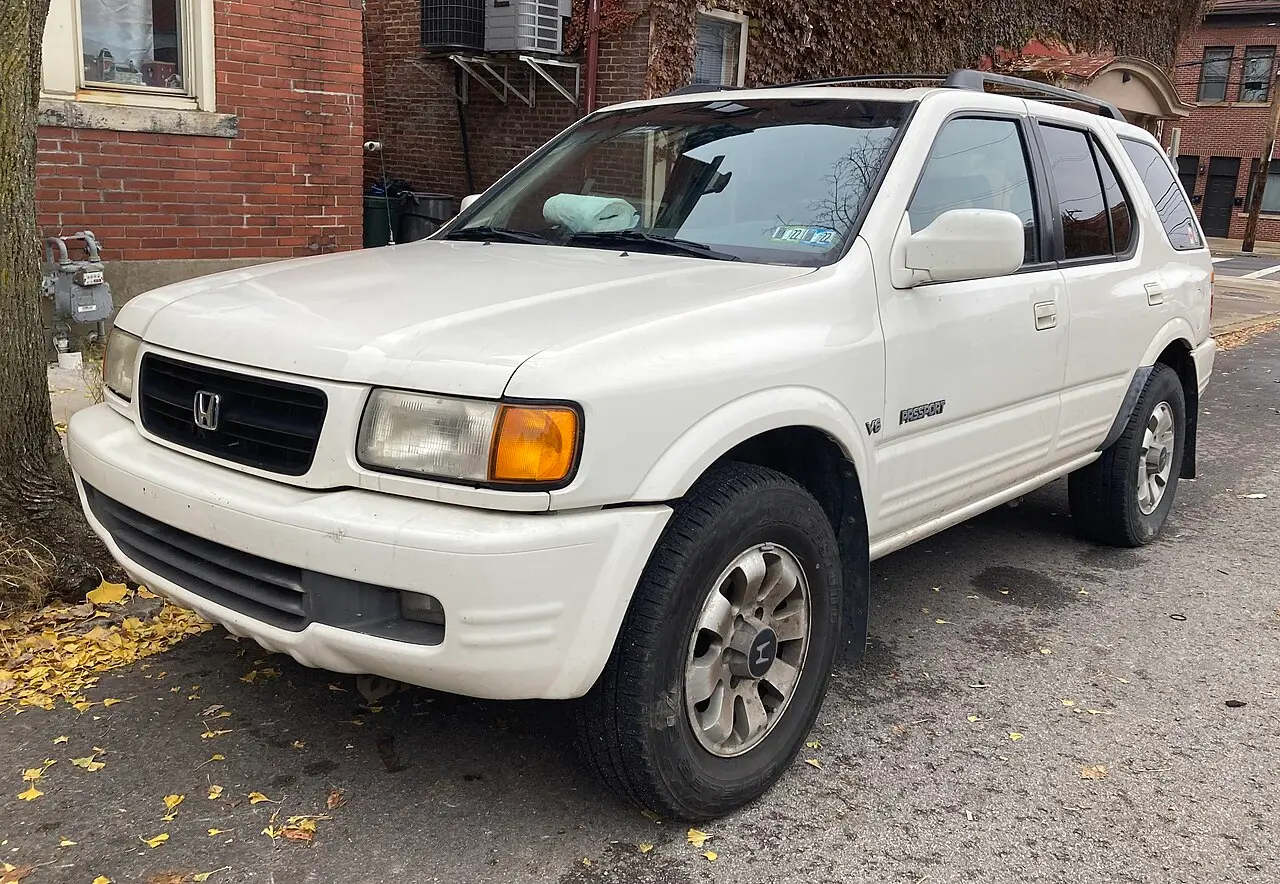
Passport second generation (1998–2002)

Honda Passport second generation
Photo: Cutlass / Wikimedia Commons · CC0

Model codes: CK · Sold in: United States and Canada · References: en.wikipedia.org

Show all 11 versions

Passport third generation (2019–2025)

Honda Passport third generation
Photo: Kevauto / Wikimedia Commons · CC BY-SA 4.0

Model codes: YF7, YF8 · Sold in: United States and Canada · References: en.wikipedia.org

Show all 5 versions

Passport fourth generation (since 2026)

Honda Passport fourth generation
Photo: Kevauto / Wikimedia Commons · CC BY-SA 4.0

Model codes: YG · Sold in: United States and Canada · References: en.wikipedia.org

United States 2 versions

Model years sold in the USA, from the EPA and the Department of Energy (fueleconomy.gov). MPG on the EPA test; litres per 100 km = 235.215 ÷ MPG.

Years and versionEngineFuelGearboxDriveConsumption (combined)CO₂
2026SIDI3.5 LPetrol10-speed automaticAll-wheel drive21 MPG (11.2 L/100 km) EPA263 g/km
2026SIDI3.5 LPetrol10-speed automaticAll-wheel drive20 MPG (11.8 L/100 km) EPA277 g/km

Canada 2 versions

Model years sold in Canada, from Natural Resources Canada fuel consumption ratings (5-cycle test).

Years and versionEngineFuelGearboxConsumption (combined)CO₂
2026Sport utility vehicle: Small3.5 LPetrol10-speed automatic10.8 L/100 km 5-cycle254 g/km
2026Sport utility vehicle: Small3.5 LPetrol10-speed automatic11.4 L/100 km 5-cycle269 g/km

Versions outside these generations

United States 11 versions

Model years sold in the USA, from the EPA and the Department of Energy (fueleconomy.gov). MPG on the EPA test; litres per 100 km = 235.215 ÷ MPG.

Years and versionEngineFuelGearboxDriveConsumption (combined)CO₂
1996–1997(FFS), SIL2.6 LPetrol5-speed manualRear-wheel drive18 MPG (13.1 L/100 km) EPA307 g/km
1996–1997(FFS), SIL3.2 LPetrol5-speed manualRear-wheel drive16 MPG (14.7 L/100 km) EPA345 g/km
1994–1997(FFS), 2MODE CLKUP3.2 LPetrol4-speed automaticFour- or all-wheel drive15 MPG (15.7 L/100 km) EPA368 g/km
1994–1997(FFS), SIL3.2 LPetrol5-speed manualFour- or all-wheel drive16 MPG (14.7 L/100 km) EPA345 g/km
1996–1997(FFS), 2MODE CLKUP3.2 LPetrol4-speed automaticRear-wheel drive15 MPG (15.7 L/100 km) EPA368 g/km
1995(FFS)2.6 LPetrol5-speed manualRear-wheel drive18 MPG (13.1 L/100 km) EPA307 g/km
1995(FFS), SIL3.2 LPetrol5-speed manualRear-wheel drive16 MPG (14.7 L/100 km) EPA345 g/km
1995(FFS), 2MODE CLKUP3.2 LPetrol4-speed automaticRear-wheel drive16 MPG (14.7 L/100 km) EPA345 g/km
1994(FFS)2.6 LPetrol5-speed manualRear-wheel drive16 MPG (14.7 L/100 km) EPA345 g/km
1994(FFS), 2MODE CLKUP3.2 LPetrol4-speed automaticRear-wheel drive16 MPG (14.7 L/100 km) EPA345 g/km
1994(FFS), SIL3.2 LPetrol5-speed manualRear-wheel drive16 MPG (14.7 L/100 km) EPA345 g/km

Official figures are measured on standard test procedures and differ between markets. Your consumption depends on how, where and in what conditions you drive.