GMC

GMC Yukon

GMC Yukon
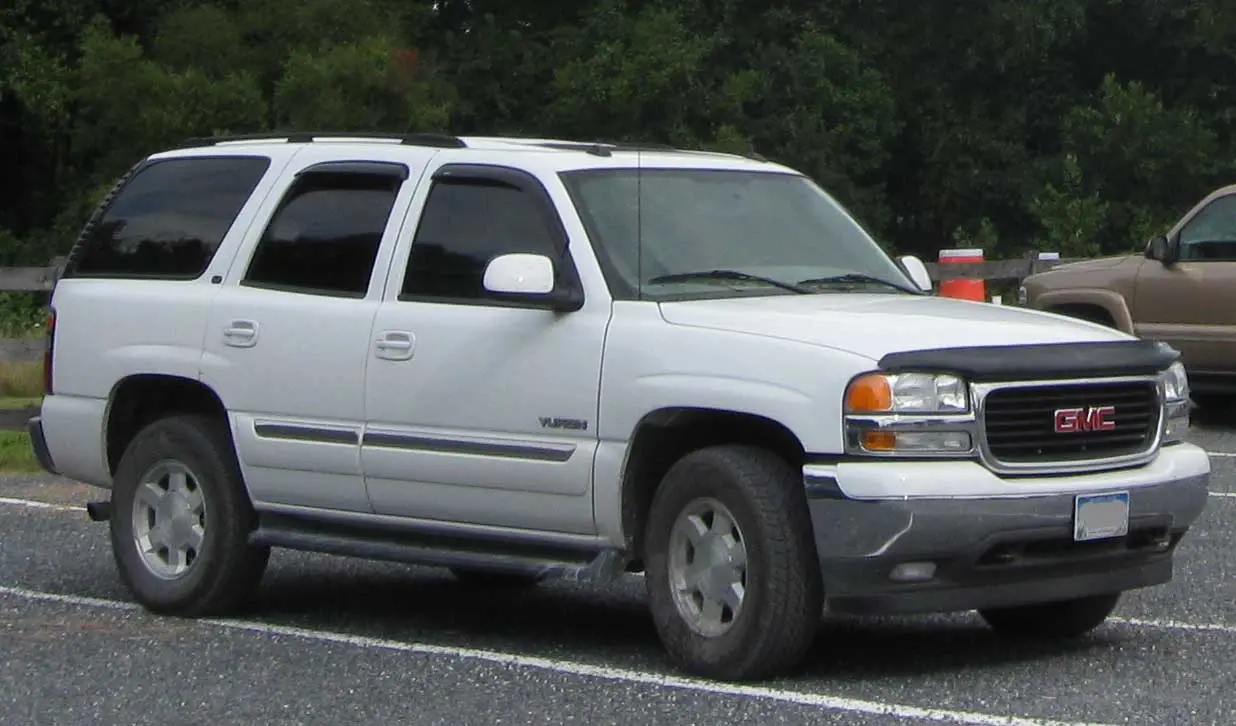
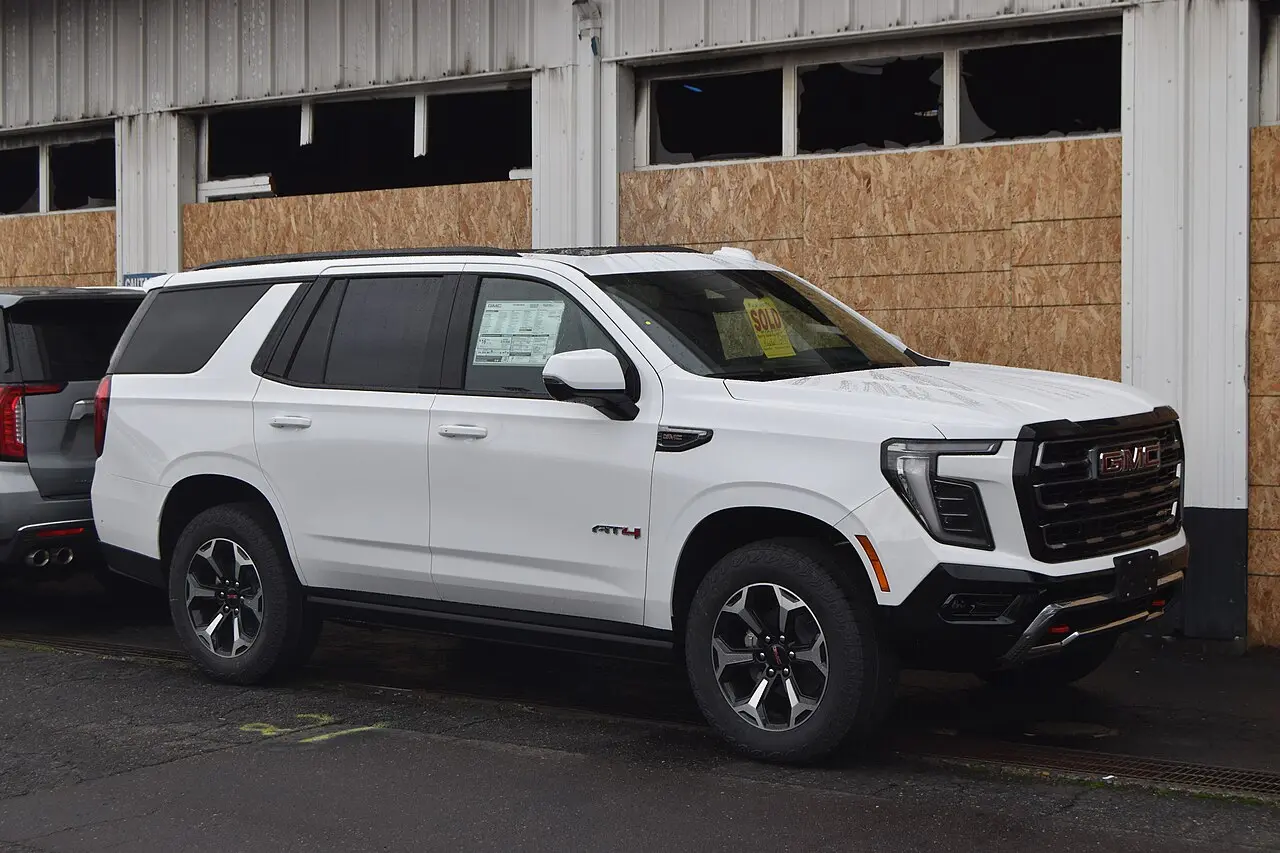
Photo: Wlb5V / Wikimedia Commons · CC BY-SA 4.0

The official data lists 274 versions of the GMC Yukon (1992–2027), in the European Union, the United States, and Canada. Each market publishes its own figures, measured on its own test procedure.

At a glance

Years in the data
1992–2027
Markets
European Union, United States, Canada
Engines
3.0 L to 6.5 L
Fuels
Petrol, Diesel, Flex fuel (E85), Hybrid
Lowest consumption (Canada)
10.1 L/100 km (5-cycle)
Lowest consumption (United States)
10.2 L/100 km (EPA)
New registrations in the EU
19

What is the GMC Yukon?

The GMC Yukon is a full-size SUV that brings the brand’s truck-focused character to a passenger vehicle. It has been part of GMC’s range since the early 1990s. Denali, first introduced on the Yukon for the 1999 model year, gives the SUV a more premium look and cabin.

The Yukon is also recorded in European Union registration figures. In 2025, the EU recorded 19 petrol Yukons: the listed model had a 6.2 L engine rated at 313 kW (426 PS).

Yukon generations

The first generation, GMT430, ran from 1992 to 1999. GMT800 was the second generation, covering 2000–2006; it brought more rounded exterior styling and a redesigned cabin. The third generation, GMT900, followed for 2007–2014 with a more angular appearance. The fourth generation, K2XX, ran from 2015 to 2020, and the fifth, T1XX, began in 2021 and continues today.

The Yukon has remained a full-size SUV through these generations. Denali has been part of its story since the late 1990s, adding distinctive styling and a more premium cabin.

Engines, power and fuel consumption

US EPA listings cover Yukon engines from 3.0 L to 6.5 L and include diesel, petrol, E85 flex-fuel and hybrid versions. Canadian NRCan listings cover the same engine-size range and include diesel, petrol and E85 flex-fuel versions. The EU’s 2025 listing is for a petrol Yukon with 313 kW (426 PS).

The lowest stated US consumption is 10.2 L/100 km, and the best combined EPA rating is 23 MPG. Canada’s lowest stated figure is 10.1 L/100 km under the NRCan 5-cycle test. European ratings use WLTP or, for some older vehicles, NEDC; these procedures differ from the EPA and Canadian 5-cycle tests, so ratings across markets are not directly equivalent.

Where is the GMC Yukon sold?

The Yukon has a long-standing presence in the United States and Canada, and it also appears in European Union registration figures. Test procedures differ by market: WLTP or NEDC in Europe, EPA in the United States and the 5-cycle test in Canada.

Questions and answers

How many Yukon generations are there?

The Yukon has five generations in this timeline, from GMT430 (1992–1999) through T1XX (2021–today).

What is the lowest stated Yukon consumption?

The lowest stated figure is 10.2 L/100 km in US EPA ratings. Canada’s lowest stated NRCan 5-cycle figure is 10.1 L/100 km.

What Yukon was recorded in the EU in 2025?

The EU recorded 19 petrol Yukons. The listed model had a 6.2 L engine rated at 313 kW (426 PS).
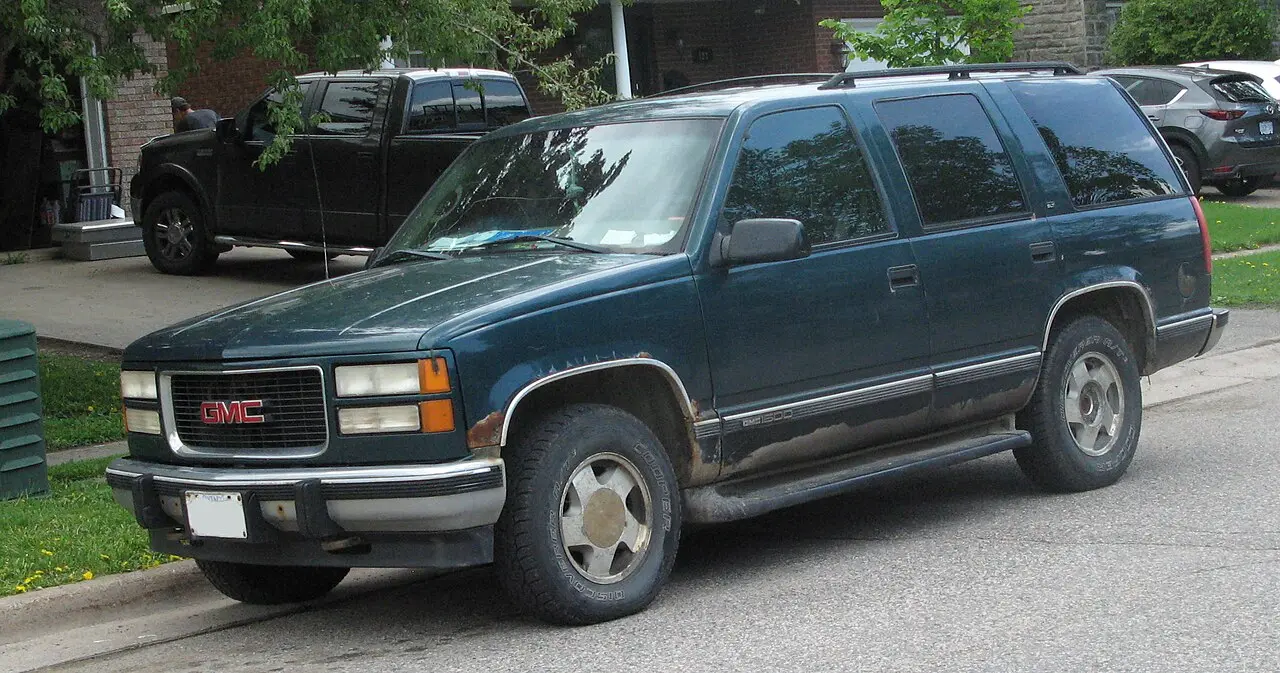
Yukon First generation (1992–1999)

GMC Yukon First generation
Photo: SsmIntrigue / Wikimedia Commons · CC BY-SA 4.0

Model codes: GMT430 · References: gmc.com, en.wikipedia.org

Show all 31 versions

Yukon Second generation (2000–2006)

GMC Yukon Second generation
Photo: IFCAR / Wikimedia Commons · Public domain

Model codes: GMT800 · References: gmc.com, autofiles.com

Show all 77 versions

Yukon Third generation (2007–2014)

Model codes: GMT900 · References: autofiles.com, gmauthority.com

Show all 65 versions

Yukon Fourth generation (2015–2020)

Model codes: K2XX · References: vindecoderplus.com, en.wikipedia.org

Show all 46 versions

Yukon Fifth generation (since 2021)

GMC Yukon Fifth generation
Photo: Wlb5V / Wikimedia Commons · CC BY-SA 4.0

Model codes: T1XX · References: gmauthority.com, en.wikipedia.org

European Union 1 version

New cars registered in the EU (plus Norway and Iceland), from the European Environment Agency. Figures on the NEDC procedure until 2020 and on WLTP from 2021; versions are grouped by engine and power, with their number of registrations.

Years and versionEnginePowerFuelCO₂EU registrations
20256.2 L313 kW (426 PS)Petrol374 g/km19

United States 31 versions

Model years sold in the USA, from the EPA and the Department of Energy (fueleconomy.gov). MPG on the EPA test; litres per 100 km = 235.215 ÷ MPG.

Years and versionEngineFuelGearboxDriveConsumption (combined)CO₂
2025–20273.0 LDiesel10-speed automaticRear-wheel drive23 MPG (10.2 L/100 km) EPA275 g/km
2026–20273.0 LDiesel10-speed automaticFour-wheel drive22 MPG (10.7 L/100 km) EPA286 g/km
2025–2027SIDI5.3 LPetrol10-speed automaticRear-wheel drive17 MPG (13.8 L/100 km) EPA329 g/km
2026–2027SIDI5.3 LPetrol10-speed automaticFour-wheel drive17 MPG (13.8 L/100 km) EPA333 g/km
2027SIDI6.2 LPetrol10-speed automaticRear-wheel drive17 MPG (13.8 L/100 km) EPA326 g/km
2025–2027SIDI6.2 LPetrol10-speed automaticFour-wheel drive16 MPG (14.7 L/100 km) EPA355 g/km
2025–2026SIDI6.2 LPetrol10-speed automaticRear-wheel drive17 MPG (13.8 L/100 km) EPA325 g/km
20253.0 LDiesel10-speed automaticFour-wheel drive22 MPG (10.7 L/100 km) EPA283 g/km
2025SIDI5.3 LPetrol10-speed automaticFour-wheel drive17 MPG (13.8 L/100 km) EPA332 g/km
2022–20243.0 LDiesel10-speed automaticRear-wheel drive23 MPG (10.2 L/100 km) EPA275 g/km
2022–20243.0 LDiesel10-speed automaticFour-wheel drive22 MPG (10.7 L/100 km) EPA287 g/km
2022–2024SIDI; Stop-Start · SIDI5.3 LPetrol10-speed automaticRear-wheel drive17 MPG (13.8 L/100 km) EPA327 g/km
2022–2024SIDI; Stop-Start · SIDI5.3 LPetrol10-speed automaticFour-wheel drive17 MPG (13.8 L/100 km) EPA327 g/km
2023–2024SIDI6.2 LPetrol10-speed automaticRear-wheel drive16 MPG (14.7 L/100 km) EPA345 g/km
2023–2024SIDI6.2 LPetrol10-speed automaticFour-wheel drive16 MPG (14.7 L/100 km) EPA350 g/km
2022SIDI5.3 LPetrol10-speed automaticRear-wheel drive17 MPG (13.8 L/100 km) EPA332 g/km
2022SIDI5.3 LPetrol10-speed automaticFour-wheel drive16 MPG (14.7 L/100 km) EPA345 g/km
2022SIDI6.2 LPetrol10-speed automaticRear-wheel drive16 MPG (14.7 L/100 km) EPA337 g/km
2022SIDI6.2 LPetrol10-speed automaticFour-wheel drive16 MPG (14.7 L/100 km) EPA353 g/km
2022SIDI; Stop-Start6.2 LPetrol10-speed automaticRear-wheel drive16 MPG (14.7 L/100 km) EPA340 g/km
2022SIDI; Stop-Start6.2 LPetrol10-speed automaticFour-wheel drive16 MPG (14.7 L/100 km) EPA345 g/km
20213.0 LDiesel10-speed automaticRear-wheel drive23 MPG (10.2 L/100 km) EPA272 g/km
20213.0 LDiesel10-speed automaticFour-wheel drive22 MPG (10.7 L/100 km) EPA276 g/km
2021SIDI; Stop-Start5.3 LPetrol10-speed automaticRear-wheel drive18 MPG (13.1 L/100 km) EPA306 g/km
2021SIDI; Stop-Start5.3 LPetrol10-speed automaticFour-wheel drive18 MPG (13.1 L/100 km) EPA308 g/km
2021SIDI5.3 LPetrol10-speed automaticRear-wheel drive17 MPG (13.8 L/100 km) EPA325 g/km
2021SIDI5.3 LPetrol10-speed automaticFour-wheel drive17 MPG (13.8 L/100 km) EPA325 g/km
2021SIDI; Stop-Start6.2 LPetrol10-speed automaticRear-wheel drive17 MPG (13.8 L/100 km) EPA326 g/km
2021SIDI; Stop-Start6.2 LPetrol10-speed automaticFour-wheel drive16 MPG (14.7 L/100 km) EPA347 g/km
2021SIDI6.2 LPetrol10-speed automaticRear-wheel drive16 MPG (14.7 L/100 km) EPA338 g/km
2021SIDI6.2 LPetrol10-speed automaticFour-wheel drive16 MPG (14.7 L/100 km) EPA354 g/km

Canada 23 versions

Model years sold in Canada, from Natural Resources Canada fuel consumption ratings (5-cycle test).

Years and versionEngineFuelGearboxConsumption (combined)CO₂
2025–2026Sport utility vehicle: Standard3.0 LDiesel10-speed automatic10.7 L/100 km 5-cycle287 g/km
2026Sport utility vehicle: Standard3.0 LDiesel10-speed automatic10.2 L/100 km 5-cycle274 g/km
2025–2026Sport utility vehicle: Standard5.3 LPetrol10-speed automatic14.0 L/100 km 5-cycle329 g/km
2026Sport utility vehicle: Standard5.3 LPetrol10-speed automatic14.2 L/100 km 5-cycle333 g/km
2025–2026Sport utility vehicle: Standard6.2 LPetrol10-speed automatic15.0 L/100 km 5-cycle352 g/km
2025Sport utility vehicle: Standard5.3 LPetrol10-speed automatic14.4 L/100 km 5-cycle337 g/km
2022–2024Sport utility vehicle: Standard3.0 LDiesel10-speed automatic10.1 L/100 km 5-cycle272 g/km
2022–2024Sport utility vehicle: Standard3.0 LDiesel10-speed automatic10.5 L/100 km 5-cycle281 g/km
2022–2024Sport utility vehicle: Standard5.3 LPetrol10-speed automatic14.0 L/100 km 5-cycle327 g/km
2024Sport utility vehicle: Standard6.2 LPetrol10-speed automatic15.0 L/100 km 5-cycle350 g/km
2023Sport utility vehicle: Standard6.2 LPetrol10-speed automatic15.0 L/100 km 5-cycle352 g/km
2022Sport utility vehicle: Standard5.3 LPetrol10-speed automatic14.1 L/100 km 5-cycle332 g/km
2022Sport utility vehicle: Standard5.3 LPetrol10-speed automatic15.1 L/100 km 5-cycle354 g/km
2022Sport utility vehicle: Standard6.2 LPetrol10-speed automatic14.7 L/100 km 5-cycle345 g/km
2022Sport utility vehicle: Standard6.2 LPetrol10-speed automatic15.1 L/100 km 5-cycle353 g/km
2021Sport utility vehicle: Standard3.0 LDiesel10-speed automatic10.1 L/100 km 5-cycle272 g/km
2021Sport utility vehicle: Standard3.0 LDiesel10-speed automatic10.6 L/100 km 5-cycle277 g/km
2021Sport utility vehicle: Standard5.3 LPetrol10-speed automatic13.2 L/100 km 5-cycle309 g/km
2021Sport utility vehicle: Standard5.3 LPetrol10-speed automatic13.8 L/100 km 5-cycle325 g/km
2021Sport utility vehicle: Standard5.3 LPetrol10-speed automatic13.5 L/100 km 5-cycle317 g/km
2021Sport utility vehicle: Standard5.3 LPetrol10-speed automatic13.9 L/100 km 5-cycle327 g/km
2021Sport utility vehicle: Standard6.2 LPetrol10-speed automatic14.8 L/100 km 5-cycle347 g/km
2021Sport utility vehicle: Standard6.2 LPetrol10-speed automatic15.3 L/100 km 5-cycle357 g/km

Official figures are measured on standard test procedures and differ between markets. Your consumption depends on how, where and in what conditions you drive.