GMC

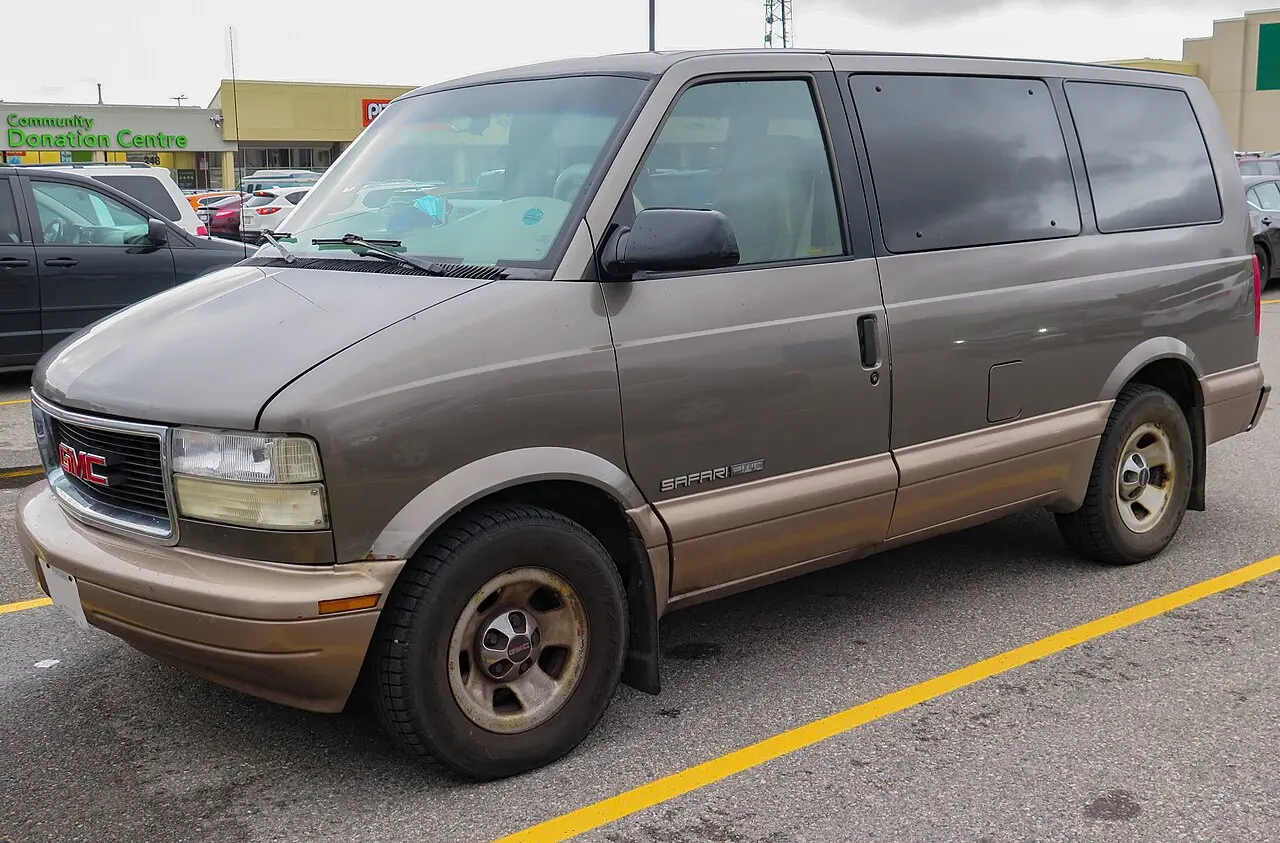
GMC Safari

GMC Safari
Photo: Elise240SX / Wikimedia Commons · CC BY-SA 4.0

The official data lists 100 versions of the GMC Safari (1985–2005), in the United States and Canada. Each market publishes its own figures, measured on its own test procedure.

At a glance

Years in the data
1985–2005
Markets
United States, Canada
Engines
2.5 L to 4.3 L
Fuels
Petrol
Lowest consumption (United States)
10.7 L/100 km (EPA)
Lowest consumption (Canada)
13.6 L/100 km (5-cycle)

What is the GMC Safari?

The GMC Safari was a van offered in passenger and cargo forms. It shared its basic design with the Chevrolet Astro, giving families and businesses a choice of van for people or work gear.

The Safari had rear-wheel drive, and all-wheel drive was also offered during its run. Its two generations ran through the 2005 model year.

GMC Safari generations

The first generation ran from 1985 to 1994 and used the M-body and L-body designations. It was offered as a passenger van or cargo van, with rear-wheel drive and an all-wheel-drive option.

The second generation ran from 1995 to 2005, retaining the M-body and L-body designations. A prominent front-end redesign gave the van a longer nose, while its passenger and cargo roles continued.

Engines and fuel economy

US EPA figures cover petrol engines from 2.5 L to 4.3 L. The best combined EPA rating is 22 MPG, and the lowest listed consumption is 10.7 L/100 km. These figures span different versions over the Safari’s US model-year range.

Canadian NRCan figures cover petrol versions with a 4.3 L engine. The lowest listed consumption is 13.6 L/100 km on Canada’s 5-cycle test. The Canadian 5-cycle procedure and US EPA test differ, so the results are not direct equivalents.

Where was the GMC Safari sold?

The Safari appears in official fuel-economy figures for the United States and Canada. The US EPA model-year range is 1985–2005; the Canadian NRCan range is 1995–2005.

Questions and answers

What body styles did the GMC Safari have?

It was sold as a passenger van and as a cargo van.

When were the GMC Safari generations made?

The first generation ran from 1985–1994 and the second from 1995–2005.

What is the Safari’s best combined EPA rating?

The best combined EPA rating is 22 MPG.

What engine appears in Canadian Safari figures?

Canadian NRCan figures cover petrol versions with a 4.3 L engine.
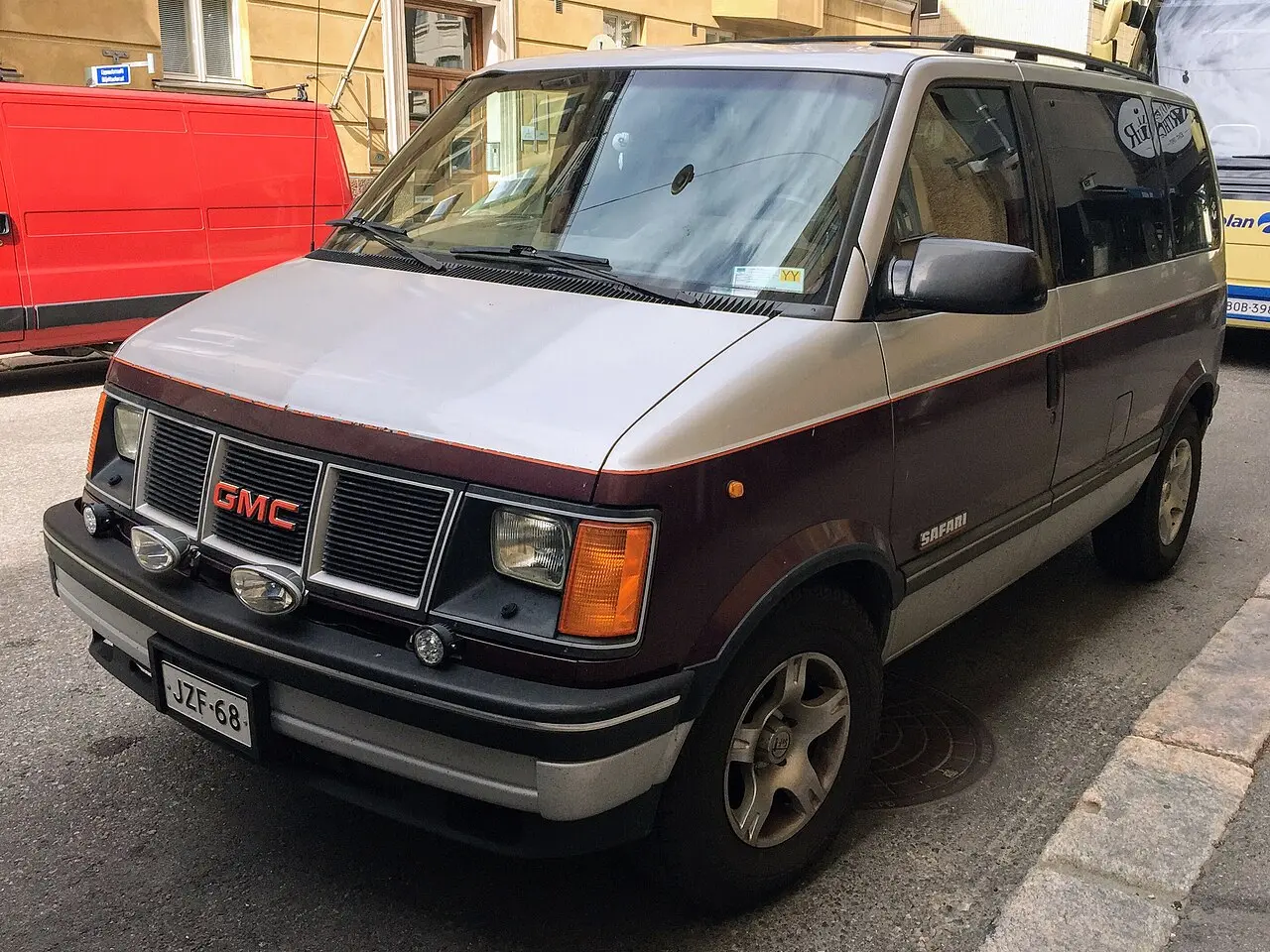
Safari first generation (1985–1994)

GMC Safari first generation
Photo: User3204 / Wikimedia Commons · CC BY-SA 4.0

Model codes: M-body, L-body · Sold in: United States and Canada · References: en.wikipedia.org

Show all 40 versions

Safari second generation (1995–2005)

GMC Safari second generation
Photo: Elise240SX / Wikimedia Commons · CC BY-SA 4.0

Model codes: M-body, L-body · Sold in: United States and Canada · References: en.wikipedia.org

United States 24 versions

Model years sold in the USA, from the EPA and the Department of Energy (fueleconomy.gov). MPG on the EPA test; litres per 100 km = 235.215 ÷ MPG.

Years and versionEngineFuelGearboxDriveConsumption (combined)CO₂
2005CLKUP4.3 LPetrol4-speed automaticRear-wheel drive17 MPG (13.8 L/100 km) EPA325 g/km
2001–2005CLKUP4.3 LPetrol4-speed automaticFour- or all-wheel drive15 MPG (15.7 L/100 km) EPA368 g/km
2003–2005CLKUP4.3 LPetrol4-speed automaticRear-wheel drive16 MPG (14.7 L/100 km) EPA345 g/km
2005CLKUP4.3 LPetrol4-speed automaticRear-wheel drive16 MPG (14.7 L/100 km) EPA345 g/km
2003–2005CLKUP4.3 LPetrol4-speed automaticFour- or all-wheel drive14 MPG (16.8 L/100 km) EPA394 g/km
2004CLKUP4.3 LPetrol4-speed automaticRear-wheel drive15 MPG (15.7 L/100 km) EPA368 g/km
2003CLKUP4.3 LPetrol4-speed automaticRear-wheel drive17 MPG (13.8 L/100 km) EPA325 g/km
2003CLKUP4.3 LPetrol4-speed automaticRear-wheel drive15 MPG (15.7 L/100 km) EPA368 g/km
2000–2002CLKUP4.3 LPetrol4-speed automaticRear-wheel drive17 MPG (13.8 L/100 km) EPA325 g/km
2002CLKUP4.3 LPetrol4-speed automaticRear-wheel drive16 MPG (14.7 L/100 km) EPA345 g/km
2001–2002CLKUP4.3 LPetrol4-speed automaticFour- or all-wheel drive15 MPG (15.7 L/100 km) EPA368 g/km
2000CLKUP4.3 LPetrol4-speed automaticRear-wheel drive16 MPG (14.7 L/100 km) EPA345 g/km
2000CLKUP4.3 LPetrol4-speed automaticFour- or all-wheel drive16 MPG (14.7 L/100 km) EPA345 g/km
2000CLKUP4.3 LPetrol4-speed automaticFour- or all-wheel drive15 MPG (15.7 L/100 km) EPA368 g/km
1999CLKUP4.3 LPetrol4-speed automaticFour- or all-wheel drive15 MPG (15.7 L/100 km) EPA368 g/km
1999CLKUP4.3 LPetrol4-speed automaticRear-wheel drive16 MPG (14.7 L/100 km) EPA345 g/km
1998–1999CLKUP4.3 LPetrol4-speed automaticFour- or all-wheel drive16 MPG (14.7 L/100 km) EPA345 g/km
1998–1999CLKUP4.3 LPetrol4-speed automaticRear-wheel drive16 MPG (14.7 L/100 km) EPA345 g/km
1998CLKUP4.3 LPetrol4-speed automaticRear-wheel drive16 MPG (14.7 L/100 km) EPA345 g/km
1998CLKUP4.3 LPetrol4-speed automaticFour- or all-wheel drive16 MPG (14.7 L/100 km) EPA345 g/km
1997(FFS) (MPFI), CLKUP4.3 LPetrol4-speed automaticRear-wheel drive17 MPG (13.8 L/100 km) EPA325 g/km
1997(FFS) (MPFI), CLKUP4.3 LPetrol4-speed automaticRear-wheel drive16 MPG (14.7 L/100 km) EPA345 g/km
1995–1997(FFS) (MPFI), CLKUP4.3 LPetrol4-speed automaticFour- or all-wheel drive16 MPG (14.7 L/100 km) EPA345 g/km
1995–1996(FFS) (MPFI), CLKUP4.3 LPetrol4-speed automaticRear-wheel drive16 MPG (14.7 L/100 km) EPA345 g/km

Canada 36 versions

Model years sold in Canada, from Natural Resources Canada fuel consumption ratings (5-cycle test).

Years and versionEngineFuelGearboxConsumption (combined)CO₂
2003–2005Van: Passenger · Van: Cargo4.3 LPetrol4-speed automatic17.2 L/100 km 5-cycle396 g/km
2005Van: Cargo4.3 LPetrol4-speed automatic14.5 L/100 km 5-cycle334 g/km
2005Van: Passenger4.3 LPetrol4-speed automatic14.4 L/100 km 5-cycle331 g/km
2004Van: Cargo4.3 LPetrol4-speed automatic15.0 L/100 km 5-cycle345 g/km
2004Van: Passenger4.3 LPetrol4-speed automatic16.4 L/100 km 5-cycle377 g/km
2003Van: Cargo4.3 LPetrol4-speed automatic15.1 L/100 km 5-cycle347 g/km
2003Van: Cargo4.3 LPetrol4-speed automatic15.5 L/100 km 5-cycle357 g/km
2003Van: Passenger4.3 LPetrol4-speed automatic15.7 L/100 km 5-cycle361 g/km
2002Van: Cargo4.3 LPetrol4-speed automatic14.4 L/100 km 5-cycle331 g/km
2002Van: Cargo4.3 LPetrol4-speed automatic15.3 L/100 km 5-cycle352 g/km
2002Van: Passenger4.3 LPetrol4-speed automatic15.1 L/100 km 5-cycle347 g/km
2002Van: Passenger4.3 LPetrol4-speed automatic15.6 L/100 km 5-cycle359 g/km
2001Van: Cargo4.3 LPetrol4-speed automatic13.6 L/100 km 5-cycle313 g/km
2001Van: Cargo4.3 LPetrol4-speed automatic15.2 L/100 km 5-cycle350 g/km
2001Van: Passenger4.3 LPetrol4-speed automatic14.1 L/100 km 5-cycle324 g/km
2001Van: Passenger4.3 LPetrol4-speed automatic16.1 L/100 km 5-cycle370 g/km
2000Van: Cargo4.3 LPetrol4-speed automatic14.6 L/100 km 5-cycle336 g/km
2000Van: Cargo4.3 LPetrol4-speed automatic15.2 L/100 km 5-cycle350 g/km
2000Van: Passenger4.3 LPetrol4-speed automatic16.0 L/100 km 5-cycle368 g/km
2000Van: Passenger4.3 LPetrol4-speed automatic15.6 L/100 km 5-cycle359 g/km
1999Van: Passenger4.3 LPetrol4-speed automatic14.6 L/100 km 5-cycle336 g/km
1996–1999Van: Passenger4.3 LPetrol4-speed automatic15.3 L/100 km 5-cycle352 g/km
1999Van: Cargo4.3 LPetrol4-speed automatic14.3 L/100 km 5-cycle329 g/km
1999Van: Cargo4.3 LPetrol4-speed automatic14.7 L/100 km 5-cycle338 g/km
1998Van: Cargo · Van: Passenger4.3 LPetrol4-speed automatic15.0 L/100 km 5-cycle345 g/km
1998Van: Cargo4.3 LPetrol4-speed automatic15.1 L/100 km 5-cycle347 g/km
1997Van: Cargo4.3 LPetrol4-speed automatic14.0 L/100 km 5-cycle322 g/km
1997Van: Cargo4.3 LPetrol4-speed automatic14.5 L/100 km 5-cycle334 g/km
1997Van: Passenger4.3 LPetrol4-speed automatic14.6 L/100 km 5-cycle336 g/km
1996Van: Cargo4.3 LPetrol4-speed automatic14.5 L/100 km 5-cycle334 g/km
1996Van: Passenger4.3 LPetrol4-speed automatic14.6 L/100 km 5-cycle336 g/km
1995Van: Cargo4.3 LPetrol4-speed automatic14.7 L/100 km 5-cycle338 g/km
1995Van: Cargo4.3 LPetrol4-speed automatic15.1 L/100 km 5-cycle347 g/km
1995Van: Passenger4.3 LPetrol4-speed automatic15.0 L/100 km 5-cycle345 g/km
1995Van: Passenger4.3 LPetrol4-speed automatic15.9 L/100 km 5-cycle366 g/km

Official figures are measured on standard test procedures and differ between markets. Your consumption depends on how, where and in what conditions you drive.