GMC

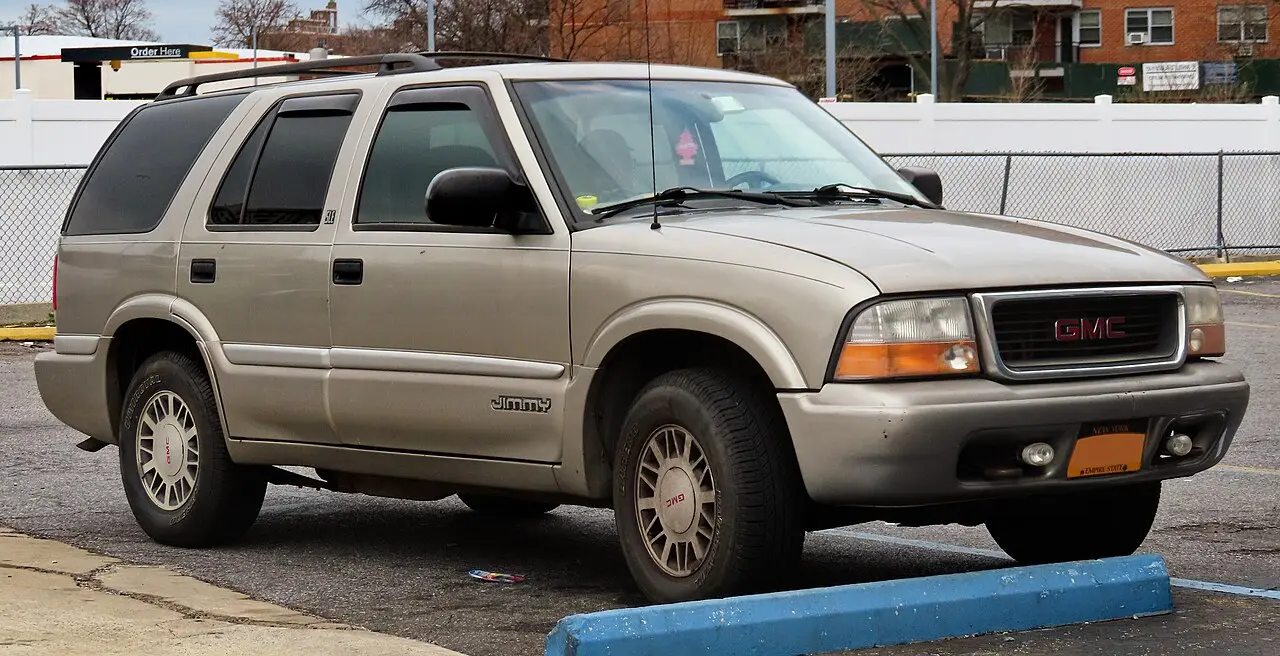
GMC Jimmy

GMC Jimmy
Photo: Kevauto / Wikimedia Commons · CC BY-SA 4.0

The official data lists 159 versions of the GMC Jimmy (1984–2005), in the United States and Canada. Each market publishes its own figures, measured on its own test procedure.

At a glance

Years in the data
1984–2005
Markets
United States, Canada
Engines
2.0 L to 6.2 L
Fuels
Petrol, Diesel
Lowest consumption (United States)
10.2 L/100 km (EPA)
Lowest consumption (Canada)
13.2 L/100 km (5-cycle)

What is the GMC Jimmy?

The GMC Jimmy was a compact, truck-based SUV related to the Chevrolet S-10 Blazer. It came in two- and four-door forms, with rear-wheel drive and four-wheel drive available. Its upright cabin and truck-based layout made it suited to everyday travel as well as carrying people and gear.

The Jimmy name was also used for GMC’s larger SUVs before that line became the Yukon. This article covers the smaller S-series Jimmy, sold in the United States and Canada.

GMC Jimmy generations

The first generation ran from 1983 to 1994 and is identified with the S-series. It began as a two-door SUV, with a four-door version joining later in the generation. GMC also sold a full-size Jimmy during part of this period.

The second generation, known as GMT330, ran from 1995 to 2005. It brought an updated design while keeping the Jimmy’s compact, truck-based SUV role. The US EPA model-year range ends in 2004, while Canada’s runs through 2005.

Engines and fuel economy

US EPA figures span engines from 2.0 L to 6.2 L, with petrol and diesel versions. The best combined EPA rating is 23 MPG, and the lowest listed consumption is 10.2 L/100 km. Both figures cover different versions, so they describe different points in the range.

Canadian NRCan figures cover petrol versions with a 4.3 L engine. The lowest listed consumption is 13.2 L/100 km on Canada’s 5-cycle test. EPA and NRCan test procedures differ, so their results are best read within each market.

Where was the GMC Jimmy sold?

The Jimmy appears in official fuel-economy figures for the United States and Canada. The US EPA model-year range is 1984–2004; the Canadian NRCan range is 1995–2005.

Questions and answers

What kind of vehicle is the GMC Jimmy?

It is a compact, truck-based SUV related to the Chevrolet S-10 Blazer, offered in two- and four-door forms.

How many generations of the S-series Jimmy were there?

Two: the S-series generation from 1983–1994 and the GMT330 generation from 1995–2005.

What is the Jimmy’s best EPA fuel economy?

The best combined EPA rating is 23 MPG.

Was the Jimmy sold in Canada?

Yes. Canadian NRCan figures cover model years 1995–2005 and petrol versions with a 4.3 L engine.
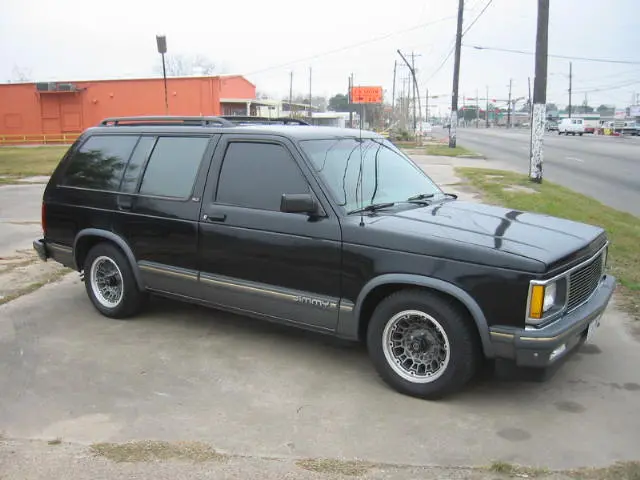
Jimmy first generation (1983–1994)

GMC Jimmy first generation
Photo: Montrose Patriot / Wikimedia Commons · Public domain

Model codes: S-series · Sold in: United States and Canada · References: en.wikipedia.org

Show all 97 versions

Jimmy second generation (1995–2005)

GMC Jimmy second generation
Photo: Kevauto / Wikimedia Commons · CC BY-SA 4.0

Model codes: GMT330 · Sold in: United States and Canada · References: en.wikipedia.org

United States 28 versions

Model years sold in the USA, from the EPA and the Department of Energy (fueleconomy.gov). MPG on the EPA test; litres per 100 km = 235.215 ÷ MPG.

Years and versionEngineFuelGearboxDriveConsumption (combined)CO₂
2003–2004SIL4.3 LPetrol5-speed manualFour- or all-wheel drive15 MPG (15.7 L/100 km) EPA368 g/km
2004SIL4.3 LPetrol5-speed manualRear-wheel drive16 MPG (14.7 L/100 km) EPA345 g/km
2003CLKUP4.3 LPetrol4-speed automaticRear-wheel drive17 MPG (13.8 L/100 km) EPA325 g/km
2001–2003SIL4.3 LPetrol5-speed manualRear-wheel drive16 MPG (14.7 L/100 km) EPA345 g/km
2001–2003CLKUP4.3 LPetrol4-speed automaticFour- or all-wheel drive15 MPG (15.7 L/100 km) EPA368 g/km
2000–2002CLKUP4.3 LPetrol4-speed automaticRear-wheel drive17 MPG (13.8 L/100 km) EPA325 g/km
2002SIL4.3 LPetrol5-speed manualFour- or all-wheel drive14 MPG (16.8 L/100 km) EPA394 g/km
2001SIL4.3 LPetrol5-speed manualFour- or all-wheel drive14 MPG (16.8 L/100 km) EPA394 g/km
2000SIL4.3 LPetrol5-speed manualRear-wheel drive18 MPG (13.1 L/100 km) EPA307 g/km
2000CLKUP4.3 LPetrol4-speed automaticFour- or all-wheel drive16 MPG (14.7 L/100 km) EPA345 g/km
2000SIL4.3 LPetrol5-speed manualFour- or all-wheel drive15 MPG (15.7 L/100 km) EPA368 g/km
1998–1999CLKUP4.3 LPetrol4-speed automaticFour- or all-wheel drive16 MPG (14.7 L/100 km) EPA345 g/km
1999CLKUP4.3 LPetrol4-speed automaticRear-wheel drive16 MPG (14.7 L/100 km) EPA345 g/km
1999SIL4.3 LPetrol5-speed manualRear-wheel drive17 MPG (13.8 L/100 km) EPA325 g/km
1999SIL4.3 LPetrol5-speed manualFour- or all-wheel drive14 MPG (16.8 L/100 km) EPA394 g/km
1998CLKUP4.3 LPetrol4-speed automaticRear-wheel drive16 MPG (14.7 L/100 km) EPA345 g/km
1998SIL4.3 LPetrol5-speed manualRear-wheel drive18 MPG (13.1 L/100 km) EPA307 g/km
1998SIL4.3 LPetrol5-speed manualFour- or all-wheel drive16 MPG (14.7 L/100 km) EPA345 g/km
1996–1997(FFS) (MPFI), CLKUP4.3 LPetrol4-speed automaticFour- or all-wheel drive16 MPG (14.7 L/100 km) EPA345 g/km
1996–1997(FFS) (MPFI), SIL4.3 LPetrol5-speed manualFour- or all-wheel drive17 MPG (13.8 L/100 km) EPA325 g/km
1997(FFS) (MPFI), CLKUP4.3 LPetrol4-speed automaticRear-wheel drive17 MPG (13.8 L/100 km) EPA325 g/km
1997(FFS) (MPFI), SIL4.3 LPetrol5-speed manualRear-wheel drive19 MPG (12.4 L/100 km) EPA291 g/km
1996(FFS) (MPFI), SIL4.3 LPetrol5-speed manualRear-wheel drive18 MPG (13.1 L/100 km) EPA307 g/km
1996(FFS) (MPFI), CLKUP4.3 LPetrol4-speed automaticFour- or all-wheel drive17 MPG (13.8 L/100 km) EPA325 g/km
1995–1996(FFS) (MPFI), CLKUP4.3 LPetrol4-speed automaticRear-wheel drive17 MPG (13.8 L/100 km) EPA325 g/km
1995(FFS) (MPFI), SIL4.3 LPetrol5-speed manualRear-wheel drive18 MPG (13.1 L/100 km) EPA307 g/km
1995(FFS) (MPFI), CLKUP4.3 LPetrol4-speed automaticFour- or all-wheel drive16 MPG (14.7 L/100 km) EPA345 g/km
1995(FFS) (MPFI), SIL5.2 LPetrol5-speed manualFour- or all-wheel drive17 MPG (13.8 L/100 km) EPA325 g/km

Canada 34 versions

Model years sold in Canada, from Natural Resources Canada fuel consumption ratings (5-cycle test).

Years and versionEngineFuelGearboxConsumption (combined)CO₂
2005Sport utility vehicle4.3 LPetrol4-speed automatic17.2 L/100 km 5-cycle396 g/km
2005Sport utility vehicle4.3 LPetrol5-speed manual15.3 L/100 km 5-cycle352 g/km
2004Sport utility vehicle4.3 LPetrol4-speed automatic16.9 L/100 km 5-cycle389 g/km
2004Sport utility vehicle4.3 LPetrol5-speed manual16.9 L/100 km 5-cycle389 g/km
2003Sport utility vehicle4.3 LPetrol4-speed automatic15.5 L/100 km 5-cycle357 g/km
2003Sport utility vehicle4.3 LPetrol5-speed manual17.3 L/100 km 5-cycle398 g/km
2002Sport utility vehicle4.3 LPetrol4-speed automatic15.3 L/100 km 5-cycle352 g/km
2002Sport utility vehicle4.3 LPetrol5-speed manual17.6 L/100 km 5-cycle405 g/km
2001Sport utility vehicle4.3 LPetrol5-speed manual14.9 L/100 km 5-cycle343 g/km
2000–2001Sport utility vehicle4.3 LPetrol5-speed manual16.8 L/100 km 5-cycle386 g/km
2001Sport utility vehicle4.3 LPetrol4-speed automatic13.6 L/100 km 5-cycle313 g/km
2001Sport utility vehicle4.3 LPetrol4-speed automatic15.2 L/100 km 5-cycle350 g/km
2000Sport utility vehicle4.3 LPetrol4-speed automatic14.6 L/100 km 5-cycle336 g/km
2000Sport utility vehicle4.3 LPetrol5-speed manual14.2 L/100 km 5-cycle327 g/km
2000Sport utility vehicle4.3 LPetrol4-speed automatic15.2 L/100 km 5-cycle350 g/km
1999Sport utility vehicle4.3 LPetrol4-speed automatic14.3 L/100 km 5-cycle329 g/km
1999Sport utility vehicle4.3 LPetrol5-speed manual13.8 L/100 km 5-cycle317 g/km
1999Sport utility vehicle4.3 LPetrol4-speed automatic14.7 L/100 km 5-cycle338 g/km
1999Sport utility vehicle4.3 LPetrol5-speed manual15.8 L/100 km 5-cycle363 g/km
1998Sport utility vehicle4.3 LPetrol4-speed automatic15.0 L/100 km 5-cycle345 g/km
1998Sport utility vehicle4.3 LPetrol5-speed manual14.1 L/100 km 5-cycle324 g/km
1998Sport utility vehicle4.3 LPetrol4-speed automatic15.1 L/100 km 5-cycle347 g/km
1998Sport utility vehicle4.3 LPetrol5-speed manual16.6 L/100 km 5-cycle382 g/km
1996–1997Sport utility vehicle4.3 LPetrol4-speed automatic14.5 L/100 km 5-cycle334 g/km
1997Sport utility vehicle4.3 LPetrol4-speed automatic14.0 L/100 km 5-cycle322 g/km
1997Sport utility vehicle4.3 LPetrol5-speed manual13.2 L/100 km 5-cycle304 g/km
1997Sport utility vehicle4.3 LPetrol5-speed manual14.2 L/100 km 5-cycle327 g/km
1996Sport utility vehicle4.3 LPetrol4-speed automatic14.5 L/100 km 5-cycle334 g/km
1996Sport utility vehicle4.3 LPetrol5-speed manual14.0 L/100 km 5-cycle322 g/km
1996Sport utility vehicle4.3 LPetrol4-speed automatic14.5 L/100 km 5-cycle334 g/km
1995Sport utility vehicle4.3 LPetrol4-speed automatic14.7 L/100 km 5-cycle338 g/km
1995Sport utility vehicle4.3 LPetrol5-speed manual14.9 L/100 km 5-cycle343 g/km
1995Sport utility vehicle4.3 LPetrol4-speed automatic15.1 L/100 km 5-cycle347 g/km
1995Sport utility vehicle4.3 LPetrol5-speed manual15.1 L/100 km 5-cycle347 g/km

Official figures are measured on standard test procedures and differ between markets. Your consumption depends on how, where and in what conditions you drive.