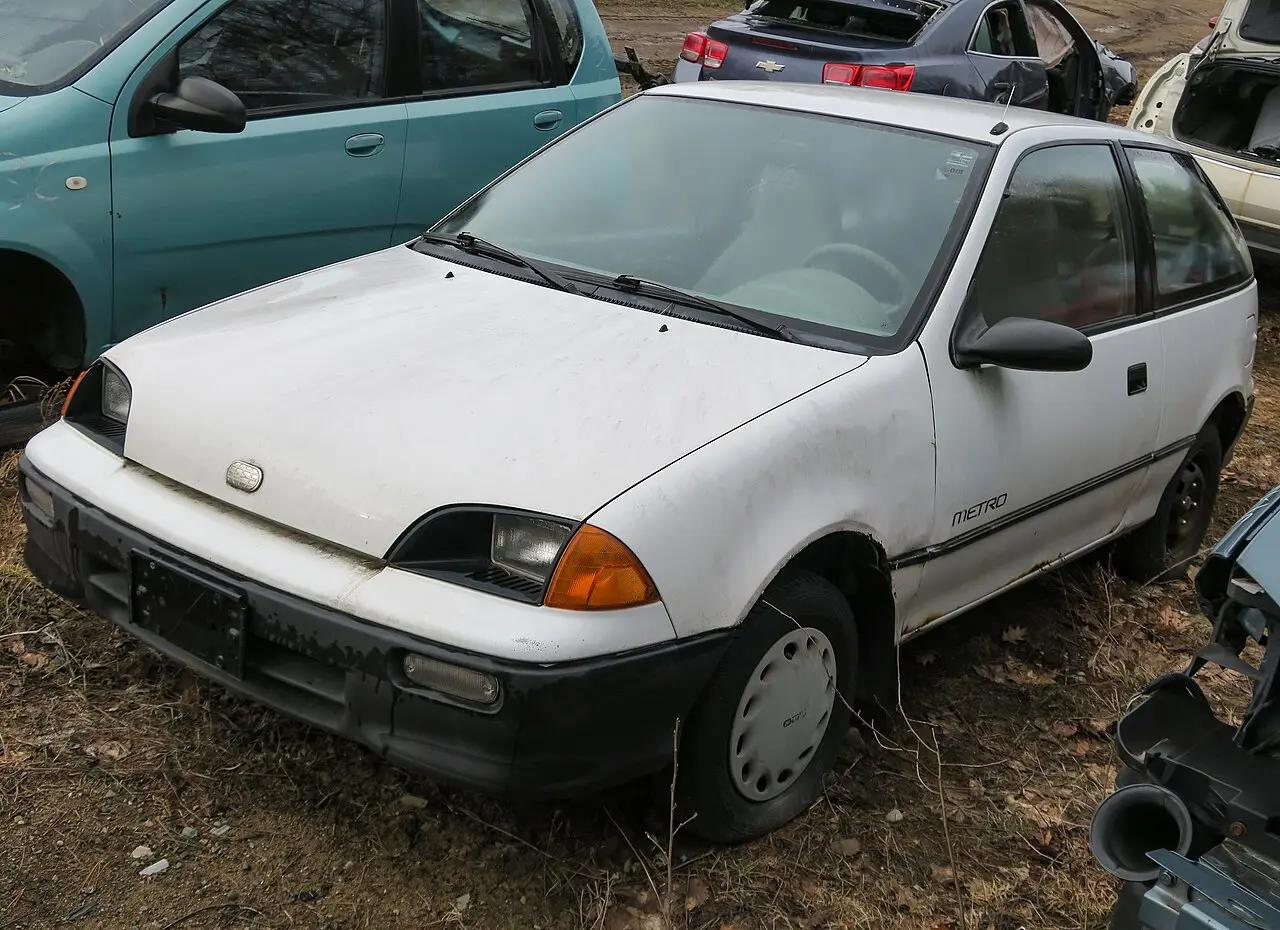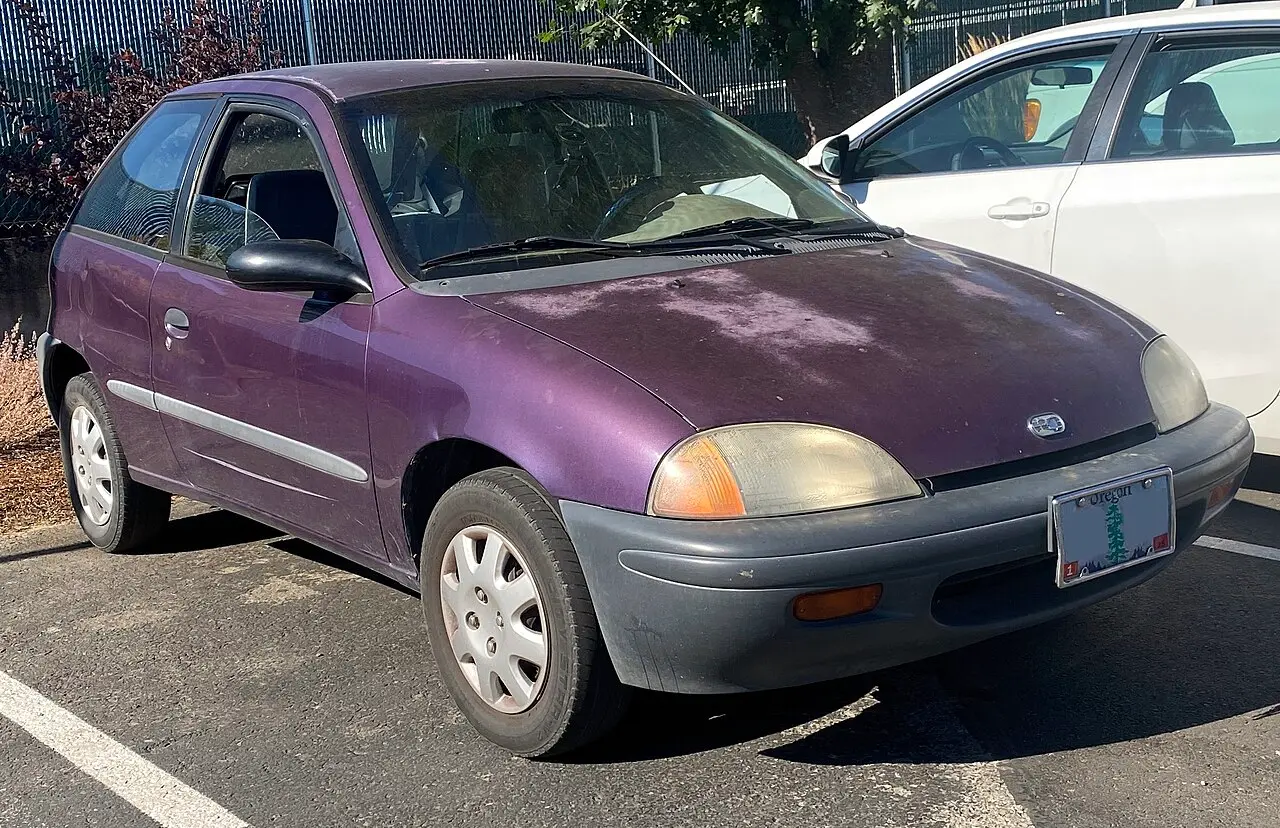
What is the Geo Metro?
The Geo Metro was a small subcompact passenger car, offered in body styles that included hatchbacks and a sedan. It was the smallest car in Geo’s lineup, with a simple, compact format suited to everyday city driving.
The Metro was closely related to the Suzuki Cultus, known in North America as the Swift. General Motors marketed it under the Geo name, bringing Suzuki’s small-car design into its lineup.
Generations and changes
The first generation ran from 1989 to 1994 and used the SF310 and SF413 codes. The second generation followed from 1995 to 1997, with sales in the United States and Canada. The newer generation marked a redesign while keeping the Metro’s compact, small-car character.
Geo branding ended after 1997, and the Metro continued under Chevrolet branding.
Engines and official fuel economy
The Metro used petrol engines from 1.0 L to 1.3 L. United States EPA figures cover 18 versions sold from 1989 to 1997, with a best combined rating of 47 MPG. In Canada, NRCan figures cover four versions from 1995 to 1997, with the lowest listed consumption at 5.9 L/100 km on the 5-cycle test.
These market figures use different procedures: the EPA test in the United States and NRCan’s 5-cycle test in Canada. European WLTP and NEDC procedures differ too, so results are not directly interchangeable.
Where was the Geo Metro sold?
The Geo Metro was sold in the United States and Canada. United States EPA figures span 1989 to 1997, while Canadian NRCan figures cover 1995 to 1997. Its Suzuki origins gave the Metro a distinct place among Geo’s small cars.
Questions and answers
What years was the Geo Metro sold?
It was sold as a Geo in the United States from 1989 to 1997, and Canadian figures cover 1995 to 1997.
What engines did the Geo Metro have?
It used petrol engines ranging from 1.0 L to 1.3 L.
What is the Metro’s best EPA fuel economy?
The best combined United States EPA rating is 47 MPG.
Why are the US and Canadian economy figures different?
The EPA and NRCan use different test procedures; the Canadian figures use NRCan’s 5-cycle test.