The official data lists 103 versions of the Ford Ka (2000–2020), in the European Union, the United Kingdom, and France. Each market publishes its own figures, measured on its own test procedure.
At a glance
Years in the data
2000–2020
Markets
European Union, United Kingdom, France
Engines
1.2 L to 1.6 L
Power
51 kW (69 PS) to 70 kW (95 PS)
Fuels
Petrol, Diesel, LPG
Lowest consumption (United Kingdom)
3.7 L/100 km (NEDC)
Lowest consumption (France)
4.1 L/100 km (NEDC)
New registrations in the EU
1,096,993
What is the Ford Ka?
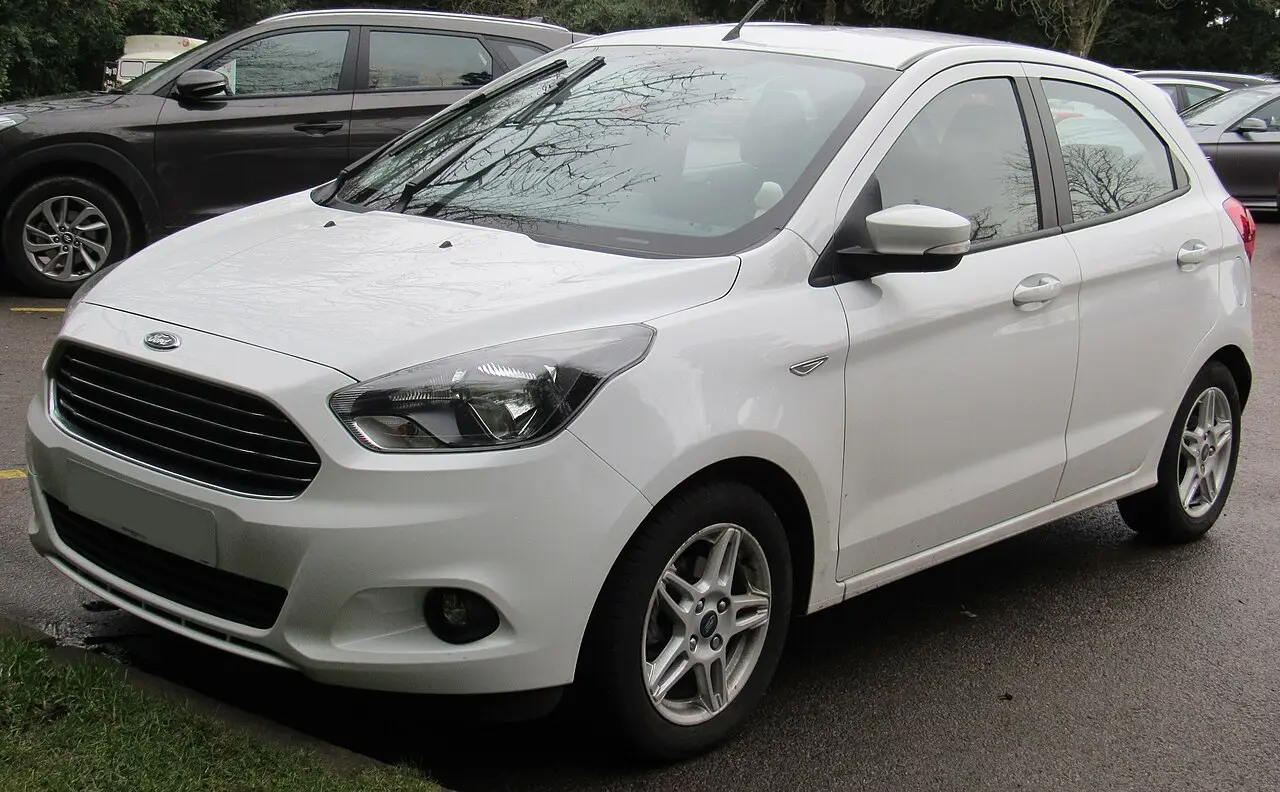
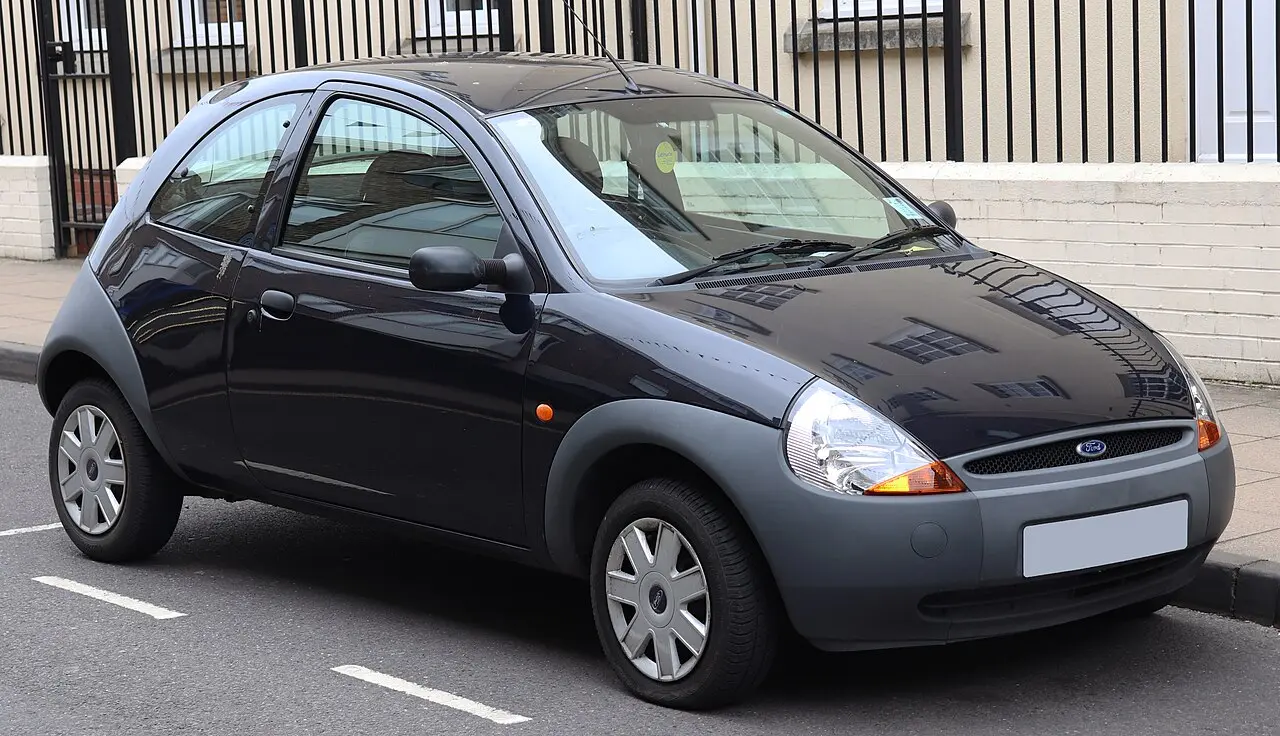
The Ka is a small city car designed for easy manoeuvring in urban traffic. Its first generation stood out with Ford’s distinctive New Edge design, combining rounded forms with sharp creases. Later versions took a softer, more conventional small-car shape while keeping the Ka’s compact role.
The generations listed are Mk1 (1996–2008), Mk2 (2008–2016) and Mk3 (2016–2020). The second generation adopted Ford’s Kinetic design language.
Engines and power
EU registration figures show engines from 1.2 L to 1.5 L and power from 51 kW (69 PS) to 95 kW (129 PS). Petrol was the main choice, with diesel, LPG and other fuel types also appearing. In the UK, the engine range runs from 1.2 L to 1.6 L, with power from 51 kW (69 PS) to 70 kW (95 PS). French figures show power from 51 kW (69 PS) to 55 kW (75 PS).
The 1.2 L petrol appears prominently in EU registrations, including versions rated at 51 kW (69 PS).
How economical is the Ford Ka?
The lowest recorded UK consumption is 3.7 L/100 km on NEDC. France shows a low of 4.1 L/100 km on NEDC. These are market-specific test figures measured using the same procedure.
Official EU registration figures cover 2010 to 2020 and record 1,096,993 Ka registrations. UK figures span 2000 to 2020, while French figures cover 2012 to 2015.
Questions and answers
What are the Ford Ka generations?
The generations listed are Mk1 (1996–2008), Mk2 (2008–2016) and Mk3 (2016–2020).
What is the Ka’s lowest recorded fuel consumption?
The UK low is 3.7 L/100 km on NEDC; the French low is 4.1 L/100 km on NEDC.
How powerful is the Ford Ka?
EU versions range from 51 kW (69 PS) to 95 kW (129 PS); UK versions range from 51 kW (69 PS) to 70 kW (95 PS).
Which engine was prominent in EU Ka registrations?
The 1.2 L petrol was prominent, including versions rated at 51 kW (69 PS).
New cars registered in the EU (plus Norway and Iceland), from the European Environment Agency. Figures on the NEDC procedure until 2020 and on WLTP from 2021; versions are grouped by engine and power, with their number of registrations.
Years and version
Engine
Power
Fuel
CO₂
EU registrations
2020
1.2 L
63 kW (86 PS)
Petrol
120 g/km
76
2020
1.2 L
62 kW (84 PS)
Petrol
122 g/km
20
2018–2019
1.2 L
63 kW (86 PS)
Petrol
120 g/km
83,980
2019
1.2 L
62 kW (84 PS)
Petrol
119 g/km
24,438
2016–2019
1.2 L
51 kW (69 PS)
Petrol
114 g/km
7,896
2018–2019
1.2 L
52 kW (71 PS)
Petrol
117 g/km
6,100
2019
1.2 L
51 kW (69 PS)
Petrol
117 g/km
3,170
2019
1.5 L
70 kW (95 PS)
Diesel
102 g/km
2,810
2019
1.2 L
63 kW (86 PS)
Petrol
114 g/km
900
2019
1.5 L
69 kW (94 PS)
Diesel
104 g/km
798
2019
1.5 L
–
Petrol
105 g/km
64
2019
1.2 L
70 kW (95 PS)
Petrol
119 g/km
18
2019
1.2 L
52 kW (71 PS)
Petrol
114 g/km
18
2019
1.5 L
62 kW (84 PS)
Diesel
99 g/km
12
2018
1.2 L
63 kW (86 PS)
Petrol
114 g/km
50,294
2018
1.2 L
52 kW (71 PS)
Petrol
112 g/km
9,852
2018
1.2 L
62 kW (84 PS)
Petrol
119 g/km
9,110
2018
1.2 L
51 kW (69 PS)
Petrol
117 g/km
2,522
2018
1.5 L
70 kW (95 PS)
Diesel
104 g/km
1,756
2018
1.2 L
63 kW (86 PS)
Other fuel
65 g/km
958
2018
1.5 L
69 kW (94 PS)
Diesel
104 g/km
264
2018
1.5 L
70 kW (95 PS)
Other fuel
57 g/km
240
2018
1.2 L
52 kW (71 PS)
Other fuel
65 g/km
174
2018
1.5 L
–
Petrol
105 g/km
24
2018
1.2 L
51 kW (69 PS)
Petrol
117 g/km
12
2017
1.2 L
63 kW (86 PS)
Petrol
113 g/km
83,112
2016–2017
1.2 L
52 kW (71 PS)
Petrol
114 g/km
15,030
2017
1.2 L
95 kW (129 PS)
Petrol
114 g/km
536
2017
1.2 L
51 kW (69 PS)
Petrol
115 g/km
292
2017
1.2 L
70 kW (95 PS)
Petrol
114 g/km
66
2017
1.2 L
51 kW (69 PS)
LPG
106 g/km
26
2016
1.2 L
51 kW (69 PS)
Petrol
117 g/km
39,532
2016
1.2 L
63 kW (86 PS)
Petrol
114 g/km
17,982
2016
1.2 L
51 kW (69 PS)
LPG
112 g/km
2,692
2016
1.2 L
–
Petrol
115 g/km
48
United Kingdom 18 versions
New cars on sale in the UK, from the Vehicle Certification Agency. NEDC figures until 2018 and WLTP figures after; years are the editions a version appeared in.
Years and version
Engine
Power
Fuel
Gearbox
Consumption (combined)
CO₂
20201.2L Ti-VCT
1.2 L
52 kW (71 PS)
Petrol
5-speed manual
5.8 L/100 km WLTP
130 g/km
20201.2L Ti-VCT
1.2 L
63 kW (86 PS)
Petrol
5-speed manual
5.9 L/100 km WLTP
133 g/km
20201.2L Ti-VCT
1.2 L
63 kW (86 PS)
Petrol
5-speed manual
6.5 L/100 km WLTP
146 g/km
20201.5 TDCi
1.5 L
70 kW (95 PS)
Diesel
5-speed manual
4.7 L/100 km WLTP
123 g/km
20201.5 TDCi
1.5 L
70 kW (95 PS)
Diesel
5-speed manual
5.0 L/100 km WLTP
131 g/km
20191.2L Ti-VCT
1.2 L
52 kW (71 PS)
Petrol
5-speed manual
5.8 L/100 km WLTP
–
20191.2L Ti-VCT
1.2 L
63 kW (86 PS)
Petrol
5-speed manual
5.9 L/100 km WLTP
–
20191.2L Ti-VCT
1.2 L
63 kW (86 PS)
Petrol
5-speed manual
6.5 L/100 km WLTP
–
20191.5 TDCi
1.5 L
70 kW (95 PS)
Diesel
5-speed manual
4.7 L/100 km WLTP
–
20191.5 TDCi
1.5 L
70 kW (95 PS)
Diesel
5-speed manual
5.0 L/100 km WLTP
–
20181.2L Ti-VCT (70PS)
1.2 L
52 kW (70 PS)
Petrol
5-speed manual
5.1 L/100 km NEDC
117 g/km
20181.2L Ti-VCT (85PS) Active Series
1.2 L
63 kW (85 PS)
Petrol
5-speed manual
5.7 L/100 km NEDC
129 g/km
20181.2L Ti-VCT (85PS) Non-Active Series
1.2 L
63 kW (85 PS)
Petrol
5-speed manual
5.0 L/100 km NEDC
114 g/km
2016–20181.2 Ti-VCT (70PS)
1.2 L
52 kW (70 PS)
Petrol
5-speed manual
5.0 L/100 km NEDC
114 g/km
2016–20181.2 Ti-VCT (85PS)
1.2 L
63 kW (85 PS)
Petrol
5-speed manual
5.0 L/100 km NEDC
114 g/km
20181.2 Ti-VCT (85PS) (Colour Edition)
1.2 L
63 kW (85 PS)
Petrol
5-speed manual
5.2 L/100 km NEDC
120 g/km
20181.5L TDCi (95PS) Non-Active Series
1.5 L
70 kW (95 PS)
Diesel
5-speed manual
3.7 L/100 km NEDC
99 g/km
20181.5L TDCi (95PS) Active Series
1.5 L
70 kW (95 PS)
Diesel
5-speed manual
4.1 L/100 km NEDC
108 g/km
Official figures are measured on standard test procedures and differ between markets. Your consumption depends on how, where and in what conditions you drive.