Ford

Ford Fusion

Ford Fusion
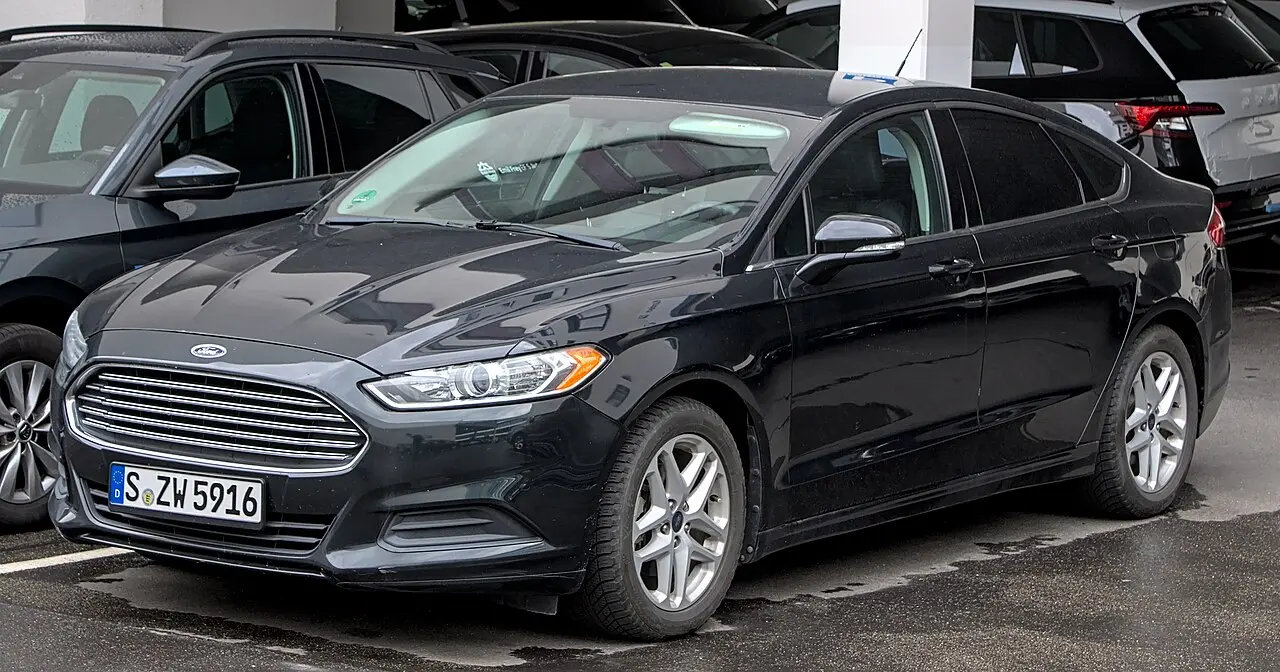
Photo: Alexander Migl / Wikimedia Commons · CC BY-SA 4.0

The official data lists 196 versions of the Ford Fusion (2002–2020), in the European Union, the United Kingdom, France, the United States, and Canada. Each market publishes its own figures, measured on its own test procedure.

At a glance

Years in the data
2002–2020
Markets
European Union, United Kingdom, France, United States, Canada
Engines
1.4 L to 3.5 L
Power
50 kW (68 PS) to 74 kW (101 PS)
Fuels
Petrol, LPG, Diesel, Hybrid, Plug-in hybrid, Flex fuel (E85)
Lowest consumption (United Kingdom)
4.4 L/100 km (NEDC)
Lowest consumption (Canada)
5.5 L/100 km (5-cycle)
Lowest consumption (United States)
5.6 L/100 km (EPA)
Plug-in hybrid, weighted (United States)
5.6 L/100 km (EPA)
New registrations in the EU
117,019

What is the Ford Fusion?

The Fusion name belonged to two distinct Ford models. In Europe, it was a small, tall five-door hatchback with an upright shape and a roomy-feeling cabin. Ford’s European Fusion was sold from 2002 to 2012.

In North America, the Fusion was a midsize four-door sedan. It sat in Ford’s family-car range and came with petrol engines, as well as hybrid and plug-in hybrid versions. The shared name did not mean the cars were the same design.

What are the Ford Fusion generations?

The European Fusion had one generation, sold from 2002 to 2012. The North American sedan began with a first generation, sold from 2006 to 2012, followed by a redesigned second generation from 2013 to 2020. The European model was a tall small car; both North American generations were sedans.

Engines and power

European versions covered engines from 1.2 to 1.6 litres and outputs from 50 kW (68 PS) to 74 kW (101 PS). Petrol and diesel were available in the UK, while EU registrations also include LPG and other fuel categories. The 1.4-litre petrol was prominent in EU registrations, including a 59 kW (80 PS) version.

North American versions covered 1.5- to 3.5-litre engines. The US lineup also included hybrid, plug-in hybrid and flex-fuel E85 versions; Canadian versions included petrol and E85.

How economical is the Ford Fusion?

The lowest listed UK figure is 4.4 L/100 km on the NEDC test. France’s petrol entries for 2012 start at 6.6 L/100 km, also on NEDC. In the US, the lowest listed figure is 5.6 L/100 km under EPA ratings, and the best combined rating is 42 MPG. The plug-in hybrid’s 5.6 L/100 km figure is weighted to account for some electric driving. Canada’s lowest listed result is 5.5 L/100 km on the NRCan 5-cycle test. NEDC in Europe, EPA in the US and Canada’s 5-cycle procedure differ, so results are not directly comparable across markets.

Questions and answers

Was the European Ford Fusion a sedan?

No. The European Fusion was a small, tall five-door hatchback. The North American Fusion was a midsize sedan.

When was the Ford Fusion sold in Europe?

The European generation ran from 2002 to 2012. EU registration figures span 2010 to 2013.

Did the Ford Fusion come as a hybrid?

Yes. Hybrid and plug-in hybrid versions were available in the US. European versions included petrol, diesel, LPG and other fuel categories.

What was the lowest listed US fuel-consumption figure?

The lowest listed US figure is 5.6 L/100 km under EPA ratings. The plug-in hybrid figure is weighted to include some electric driving.
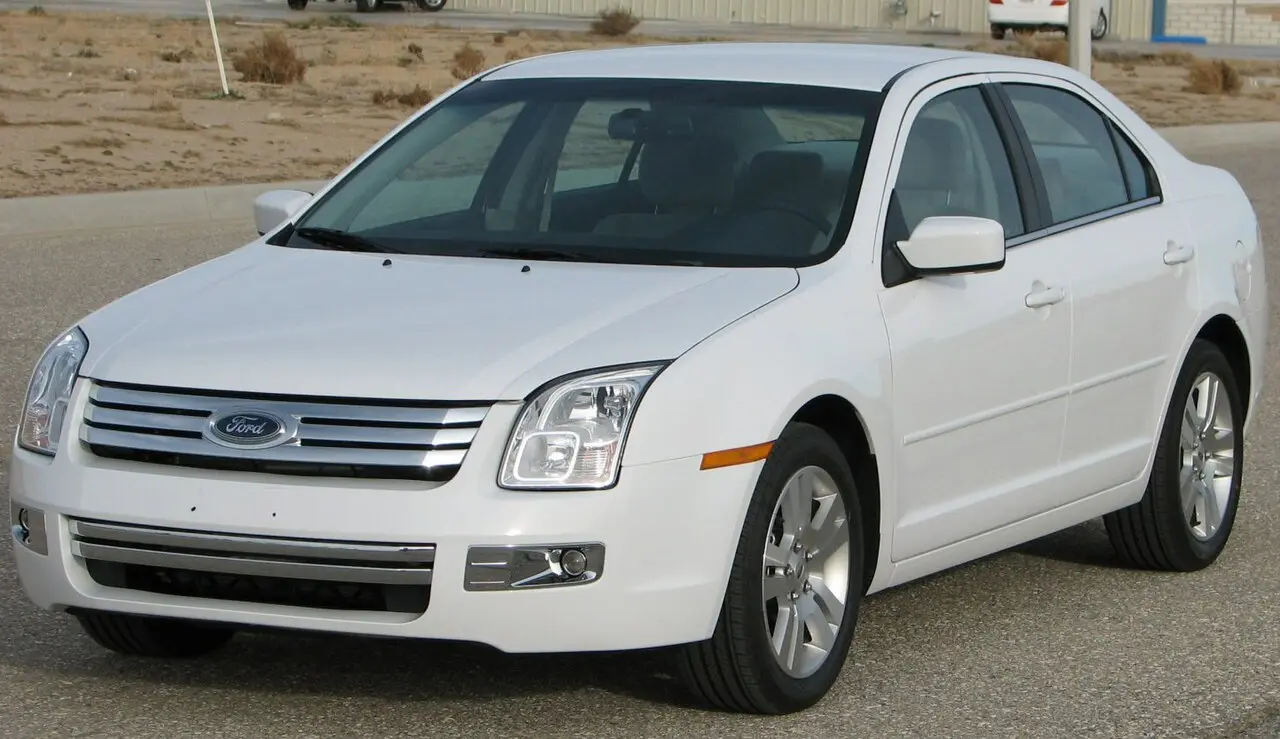
Fusion first generation (2002–2012)

Ford Fusion first generation
Photo: U.S. National Highway Traffic Safety Administration / Wikimedia Commons · Public domain

Model codes: B3 · Sold in: European Union, United Kingdom, and France · References: en.wikipedia.org

Show all 71 versions

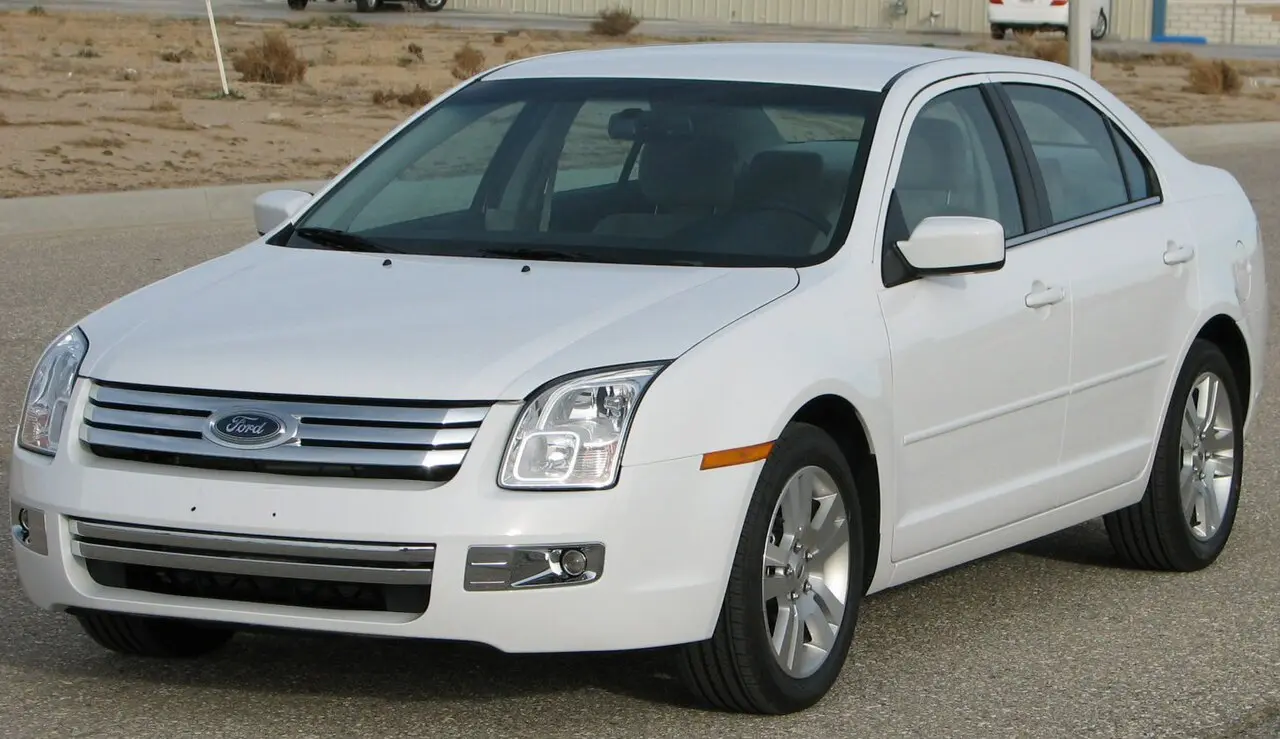
Fusion first generation (2006–2012)

Ford Fusion first generation
Photo: U.S. National Highway Traffic Safety Administration / Wikimedia Commons · Public domain

Model codes: CD3 · Sold in: United States and Canada · References: en.wikipedia.org, autofiles.com

Show all 56 versions

Fusion second generation (2013–2020)

Ford Fusion second generation
Photo: Alexander Migl / Wikimedia Commons · CC BY-SA 4.0

Model codes: CD4 · Sold in: United States and Canada · References: en.wikipedia.org

United States 32 versions

Model years sold in the USA, from the EPA and the Department of Energy (fueleconomy.gov). MPG on the EPA test; litres per 100 km = 235.215 ÷ MPG.

Years and versionEngineFuelGearboxDriveConsumption (combined)CO₂
2018–2020SIDI1.5 LPetrol6-speed automaticFront-wheel drive27 MPG (8.7 L/100 km) EPA203 g/km
2020SIDI2.0 LPetrol6-speed automaticAll-wheel drive23 MPG (10.2 L/100 km) EPA239 g/km
2020Hybrid2.0 LHybridContinuously variable (CVT)Front-wheel drive42 MPG (5.6 L/100 km) EPA131 g/km
2019–2020Hybrid2.0 LHybridContinuously variable (CVT)Front-wheel drive41 MPG (5.7 L/100 km) EPA135 g/km
2019–2020SIDI2.0 LPetrol6-speed automaticFront-wheel drive25 MPG (9.4 L/100 km) EPA221 g/km
2019–2020PHEV2.0 LPlug-in hybridContinuously variable (CVT)Front-wheel drive42 MPG (5.6 L/100 km) EPA63 g/km
20202.5 LPetrol6-speed automaticFront-wheel drive24 MPG (9.8 L/100 km) EPA226 g/km
2019SIDI2.0 LPetrol6-speed automaticAll-wheel drive23 MPG (10.2 L/100 km) EPA240 g/km
2019Hybrid2.0 LHybridContinuously variable (CVT)Front-wheel drive42 MPG (5.6 L/100 km) EPA132 g/km
20192.5 LPetrol6-speed automaticFront-wheel drive25 MPG (9.4 L/100 km) EPA224 g/km
2017–2019SIDI2.7 LPetrol6-speed automaticAll-wheel drive20 MPG (11.8 L/100 km) EPA276 g/km
2017–2018SIDI2.0 LPetrol6-speed automaticFront-wheel drive25 MPG (9.4 L/100 km) EPA225 g/km
2018SIDI2.0 LPetrol6-speed automaticAll-wheel drive23 MPG (10.2 L/100 km) EPA239 g/km
20182.0 LHybridContinuously variable (CVT)Front-wheel drive42 MPG (5.6 L/100 km) EPA131 g/km
2017–20182.5 LPetrol6-speed automaticFront-wheel drive25 MPG (9.4 L/100 km) EPA224 g/km
2017SIDI1.5 LPetrol6-speed automaticFront-wheel drive27 MPG (8.7 L/100 km) EPA204 g/km
2017SIDI2.0 LPetrol6-speed automaticAll-wheel drive23 MPG (10.2 L/100 km) EPA240 g/km
20172.0 LHybridContinuously variable (CVT)Front-wheel drive42 MPG (5.6 L/100 km) EPA130 g/km
2014–2016SIDI; with Stop/Start Technology · SIDI; Stop-Start1.5 LPetrol6-speed automaticFront-wheel drive29 MPG (8.1 L/100 km) EPA191 g/km
2015–2016SIDI1.5 LPetrol6-speed automaticFront-wheel drive28 MPG (8.4 L/100 km) EPA199 g/km
2013–2016SIDI2.0 LPetrol6-speed automaticAll-wheel drive25 MPG (9.4 L/100 km) EPA222 g/km
2015–2016SIDI2.0 LPetrol6-speed automaticFront-wheel drive26 MPG (9.0 L/100 km) EPA212 g/km
20162.0 LHybridContinuously variable (CVT)Front-wheel drive41 MPG (5.7 L/100 km) EPA133 g/km
20162.5 LPetrol6-speed automaticFront-wheel drive26 MPG (9.0 L/100 km) EPA211 g/km
2013–20152.0 LHybridContinuously variable (CVT)Front-wheel drive41 MPG (5.7 L/100 km) EPA134 g/km
2013–20152.5 LPetrol6-speed automaticFront-wheel drive26 MPG (9.0 L/100 km) EPA213 g/km
2014SIDI1.5 LPetrol6-speed automaticFront-wheel drive27 MPG (8.7 L/100 km) EPA203 g/km
2014SIDI1.6 LPetrol6-speed manualFront-wheel drive29 MPG (8.1 L/100 km) EPA191 g/km
2013–2014SIDI2.0 LPetrol6-speed automaticFront-wheel drive26 MPG (9.0 L/100 km) EPA213 g/km
2013SIDI1.6 LPetrol6-speed manualFront-wheel drive29 MPG (8.1 L/100 km) EPA190 g/km
2013SIDI1.6 LPetrol6-speed automaticFront-wheel drive27 MPG (8.7 L/100 km) EPA201 g/km
2013SIDI; with Stop/Start Technology1.6 LPetrol6-speed automaticFront-wheel drive28 MPG (8.4 L/100 km) EPA198 g/km

Canada 36 versions

Model years sold in Canada, from Natural Resources Canada fuel consumption ratings (5-cycle test).

Years and versionEngineFuelGearboxConsumption (combined)CO₂
2020Mid-size1.5 LPetrol6-speed automatic8.7 L/100 km 5-cycle203 g/km
2020Mid-size2.0 LPetrolContinuously variable (CVT)5.6 L/100 km 5-cycle131 g/km
2019Mid-size1.5 LPetrol6-speed automatic8.7 L/100 km 5-cycle204 g/km
2018–2019Mid-size2.0 LPetrolContinuously variable (CVT)5.6 L/100 km 5-cycle131 g/km
2018Mid-size1.5 LPetrol6-speed automatic8.7 L/100 km 5-cycle203 g/km
2017–2018Mid-size2.0 LPetrol6-speed automatic9.6 L/100 km 5-cycle225 g/km
2018Mid-size2.0 LPetrol6-speed automatic10.2 L/100 km 5-cycle238 g/km
2018Mid-size2.5 LPetrol6-speed automatic9.5 L/100 km 5-cycle223 g/km
2018Mid-size2.7 LPetrol6-speed automatic11.8 L/100 km 5-cycle277 g/km
2017Mid-size1.5 LPetrol6-speed automatic8.7 L/100 km 5-cycle204 g/km
2017Mid-size2.0 LPetrol6-speed automatic10.1 L/100 km 5-cycle238 g/km
2017Mid-size2.0 LPetrolContinuously variable (CVT)5.6 L/100 km 5-cycle131 g/km
2017Mid-size2.5 LPetrol6-speed automatic9.6 L/100 km 5-cycle224 g/km
2017Mid-size2.7 LPetrol6-speed automatic11.5 L/100 km 5-cycle270 g/km
2016Mid-size1.5 LPetrol6-speed automatic8.4 L/100 km 5-cycle197 g/km
2016Mid-size1.5 LPetrol6-speed automatic8.0 L/100 km 5-cycle188 g/km
2016Mid-size2.0 LPetrol6-speed automatic8.9 L/100 km 5-cycle210 g/km
2016Mid-size2.0 LPetrol6-speed automatic9.3 L/100 km 5-cycle220 g/km
2016Mid-size2.0 LPetrolContinuously variable (CVT)5.5 L/100 km 5-cycle130 g/km
2016Mid-size2.5 LPetrol6-speed automatic8.9 L/100 km 5-cycle209 g/km
2015Mid-size1.5 LPetrol6-speed automatic8.4 L/100 km 5-cycle193 g/km
2015Mid-size1.5 LPetrol6-speed automatic8.0 L/100 km 5-cycle184 g/km
2015Mid-size2.0 LPetrol6-speed automatic8.9 L/100 km 5-cycle205 g/km
2015Mid-size2.0 LPetrol6-speed automatic9.3 L/100 km 5-cycle214 g/km
2015Mid-size2.0 LPetrolContinuously variable (CVT)5.5 L/100 km 5-cycle126 g/km
2015Mid-size2.5 LPetrol6-speed automatic8.9 L/100 km 5-cycle205 g/km
2014Mid-size1.5 LPetrol6-speed automatic8.5 L/100 km 5-cycle196 g/km
2014Mid-size1.5 LPetrol6-speed automatic8.1 L/100 km 5-cycle186 g/km
2014Mid-size1.6 LPetrol6-speed manual8.1 L/100 km 5-cycle186 g/km
2013–2014Mid-size2.0 LPetrol6-speed automatic9.0 L/100 km 5-cycle207 g/km
2013–2014Mid-size2.0 LPetrol6-speed automatic9.4 L/100 km 5-cycle216 g/km
2013–2014Mid-size2.0 LPetrolContinuously variable (CVT)5.5 L/100 km 5-cycle126 g/km
2013–2014Mid-size2.5 LPetrol6-speed automatic8.9 L/100 km 5-cycle205 g/km
2013Mid-size1.6 LPetrol6-speed automatic8.5 L/100 km 5-cycle196 g/km
2013Mid-size1.6 LPetrol6-speed automatic8.3 L/100 km 5-cycle191 g/km
2013Mid-size1.6 LPetrol6-speed manual8.0 L/100 km 5-cycle184 g/km

Versions outside these generations

European Union 1 version

New cars registered in the EU (plus Norway and Iceland), from the European Environment Agency. Figures on the NEDC procedure until 2020 and on WLTP from 2021; versions are grouped by engine and power, with their number of registrations.

Years and versionEnginePowerFuelCO₂EU registrations
20131.4 L59 kW (80 PS)Petrol154 g/km48

Official figures are measured on standard test procedures and differ between markets. Your consumption depends on how, where and in what conditions you drive.