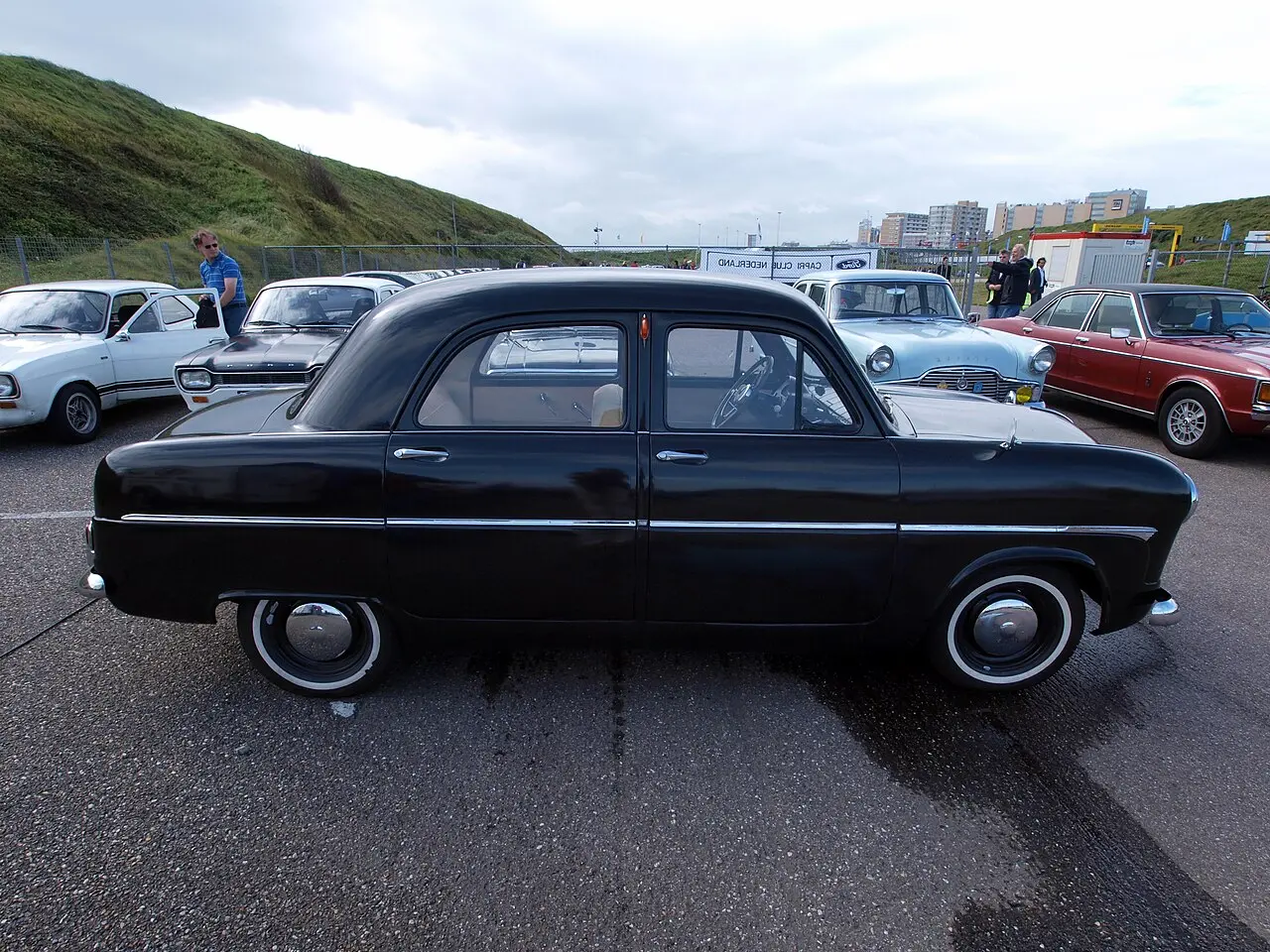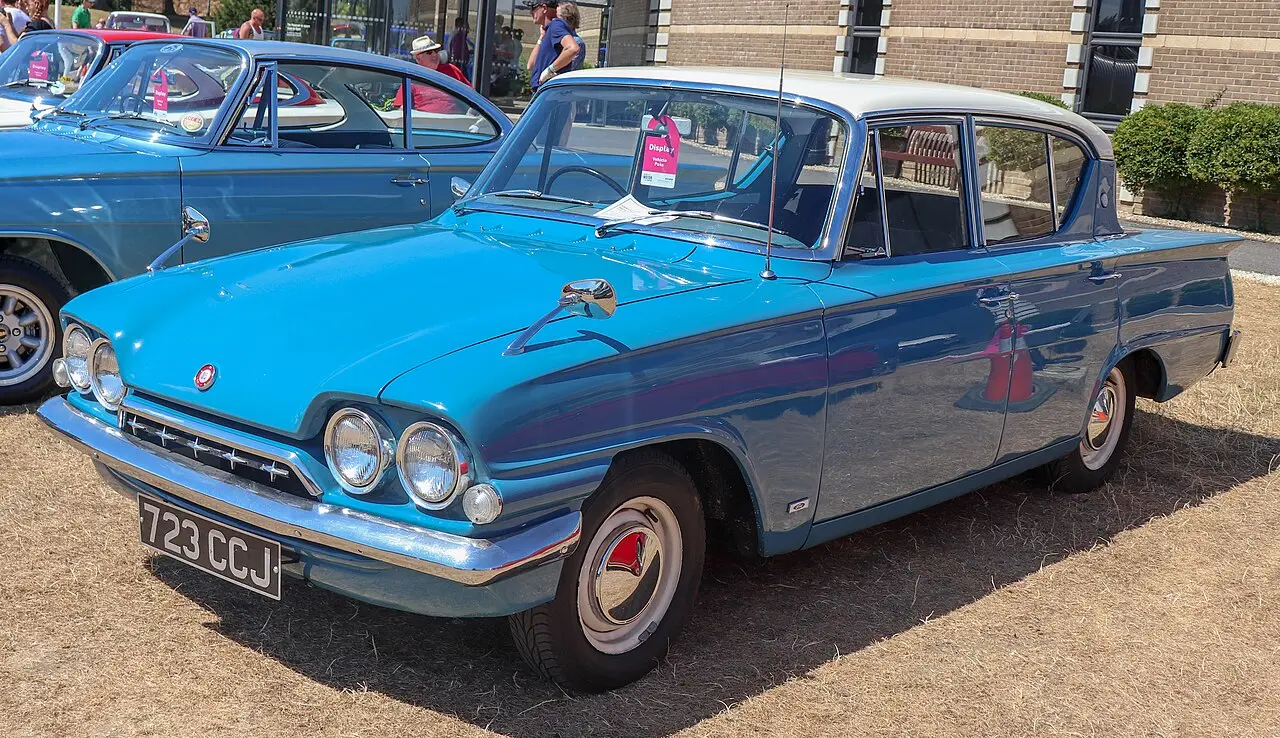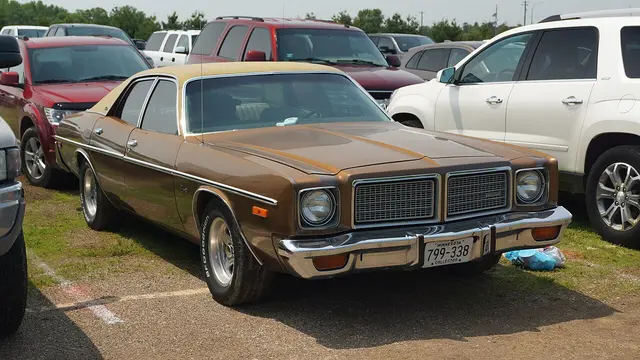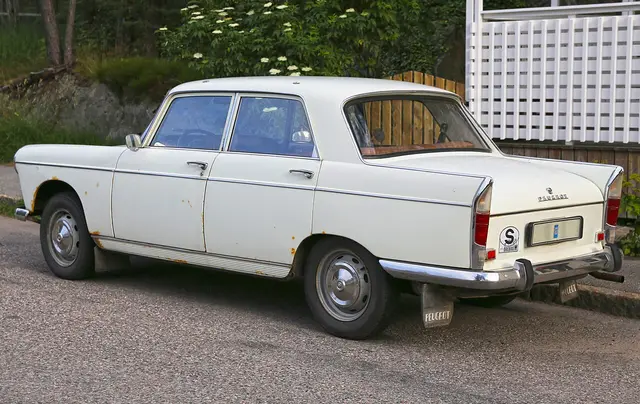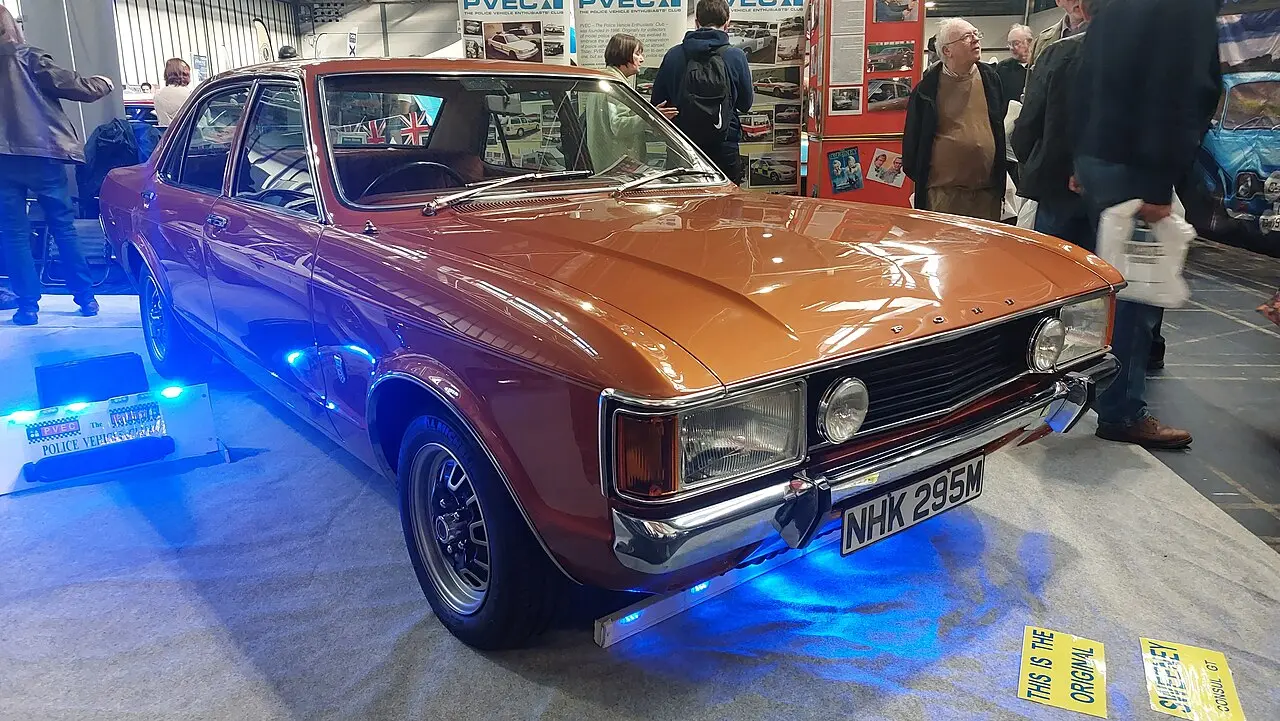
What is the Ford Consul?
The Consul name belongs to a family of British Ford saloons whose role changed over time. In its best-known early form, the Consul was the more accessible four-cylinder companion to the larger Zephyr in Ford of Britain’s range. It was a practical family car with a more formal, upright shape than the smaller Fords of the period, aimed at drivers who wanted room and comfort for everyday use.
Ford’s British identity was built around making useful cars for a wide range of households. The Consul sat between compact models and larger, more expensive saloons, giving the company a way to offer a step up in space and presence without moving into its most luxurious territory. The name was later used again on other Ford saloons, so “Consul” can refer to more than one distinct car.
Generations and design
The Consul name first appeared on a family saloon, then returned on later models including the Consul Classic and, in a different role, a lower-trim version of the Granada. Those cars belong to separate chapters of Ford history rather than a single continuous design lineage. The Classic had a distinctive roofline and a more fashion-conscious look, while the later Granada-based Consul shared the larger car’s basic shape and engineering.
Ford’s range names could vary between Britain and continental Europe, and the Consul badge was not used consistently across every market. That makes the name especially interesting to classic-car enthusiasts: the badge alone does not identify one body style or one generation.
Engines, economy and availability
The Consul name was associated with different cars and engine choices during its life. In the original range it marked the four-cylinder model alongside the six-cylinder Zephyr; later Consuls were based on larger Ford saloons. Exact engine outputs and official consumption or CO₂ figures depend on the individual model and market. European test methods such as NEDC and WLTP also produce figures that are not directly interchangeable.
The name is principally associated with Ford of Britain, although some later Consul models were also produced for continental Europe. The badge’s changing meaning reflects Ford’s effort to serve different buyers with familiar names across its regional line-ups.
Questions and answers
Was the Consul a single model?
No. Ford used the Consul name on more than one saloon, including the early family car, the Consul Classic and a later Granada-based model.
Where was the Ford Consul sold?
It is chiefly associated with Ford of Britain, and some later models were also produced for continental Europe.
What kind of car was the Consul?
It was a Ford saloon name used for family and larger cars, with its place in the range changing over time.