Ford

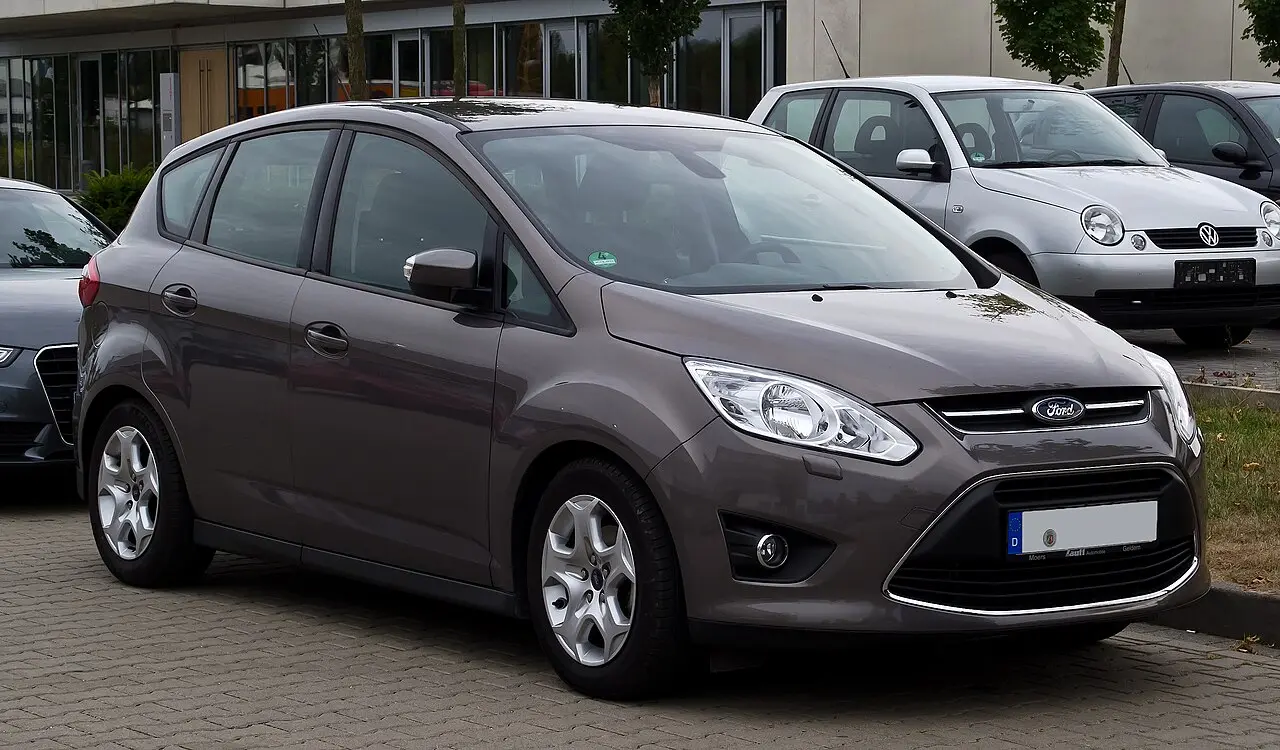
Ford C-Max Energi

Ford C-Max Energi
Photo: M 93 / Wikimedia Commons · CC BY-SA 3.0 de

The official data lists 6 versions of the Ford C-Max Energi (2013–2017), in the European Union, the United States, and Canada. Each market publishes its own figures, measured on its own test procedure.

At a glance

Years in the data
2013–2017
Markets
European Union, United States, Canada
Engines
2.0 L to 2.0 L
Power
101 kW (137 PS)
Fuels
Hybrid, Plug-in hybrid
Plug-in hybrid, weighted (United States)
6.0 L/100 km (EPA)
Plug-in hybrid, weighted (Canada)
6.0 L/100 km (5-cycle)
New registrations in the EU
2,516

What is the Ford C-Max Energi?

The C-Max Energi is the plug-in hybrid version of Ford’s compact C-Max people carrier. Its raised roof and passenger-focused cabin give it a practical shape for family journeys. Ford presented the Energi as its first production plug-in hybrid, pairing electric drive with a petrol engine for longer journeys.

Generation and powertrain

The C-Max Energi belongs to the second-generation C-Max, known as Mk2 and code C344. It appears in US and Canadian listings from 2013 to 2017, while EU registration figures cover 2014 to 2017. The powertrain pairs a 2.0-litre engine with electric propulsion. EU specifications list 101 kW (137 PS); the US and Canadian listings identify it as a plug-in hybrid.

Fuel consumption and markets

The stated plug-in hybrid figure is 6 L/100 km in both the US EPA and Canadian NRCan 5-cycle results. Each is a weighted figure that assumes some driving is electric, so actual consumption depends on charging and use. European WLTP and NEDC procedures differ from the EPA and Canadian 5-cycle tests, and their results are not directly comparable. EU registrations total 2,516 across two versions from 2014 to 2017. The 101 kW (137 PS) version recorded 2,474 registrations in 2014–2015 and 42 in 2016–2017. The plug-in hybrid appears in US and Canadian listings from 2013 to 2017.

Questions and answers

Is the C-Max Energi a plug-in hybrid?

Yes. It pairs electric propulsion with a petrol engine, using stored electricity when charged and hybrid operation for longer journeys.

What generation is the C-Max Energi?

It is the second-generation C-Max, or Mk2, code C344. US and Canadian listings cover 2013 to 2017.

What is its official fuel consumption?

The stated US EPA and Canadian NRCan 5-cycle weighted figure is 6 L/100 km. It assumes some driving is electric.

What power is listed for EU versions?

EU specifications give 101 kW (137 PS) for the 2.0-litre hybrid.

C-Max Energi Mk2 (2013–2017)

Ford C-Max Energi Mk2
Photo: M 93 / Wikimedia Commons · CC BY-SA 3.0 de

Model codes: C344 · Sold in: United States and Canada · References: en.wikipedia.org, drive-sense.com

United States 2 versions

Model years sold in the USA, from the EPA and the Department of Energy (fueleconomy.gov). MPG on the EPA test; litres per 100 km = 235.215 ÷ MPG.

Years and versionEngineFuelGearboxDriveConsumption (combined)CO₂
2017PHEV2.0 LPlug-in hybridContinuously variable (CVT)Front-wheel drive39 MPG (6.0 L/100 km) EPA76 g/km
2013–2016PHEV2.0 LPlug-in hybridContinuously variable (CVT)Front-wheel drive38 MPG (6.2 L/100 km) EPA80 g/km

Canada 2 versions

Model years sold in Canada, from Natural Resources Canada fuel consumption ratings (5-cycle test).

Years and versionEngineFuelGearboxConsumption (combined)CO₂Electric range
2017Mid-size2.0 LPlug-in hybridContinuously variable (CVT)6.0 L/100 km 5-cycle76 g/km33 km
2013–2016Mid-size2.0 LPlug-in hybridContinuously variable (CVT)6.1 L/100 km 5-cycle80 g/km32 km

Versions outside these generations

European Union 2 versions

New cars registered in the EU (plus Norway and Iceland), from the European Environment Agency. Figures on the NEDC procedure until 2020 and on WLTP from 2021; versions are grouped by engine and power, with their number of registrations.

Years and versionEnginePowerFuelConsumption (combined)CO₂EU registrations
2016–20172.0 L101 kW (137 PS)Hybrid–46 g/km42
2014–20152.0 L101 kW (137 PS)Hybrid9.4 kWh/100 km NEDC46 g/km2,474

Official figures are measured on standard test procedures and differ between markets. Your consumption depends on how, where and in what conditions you drive.