Fiat

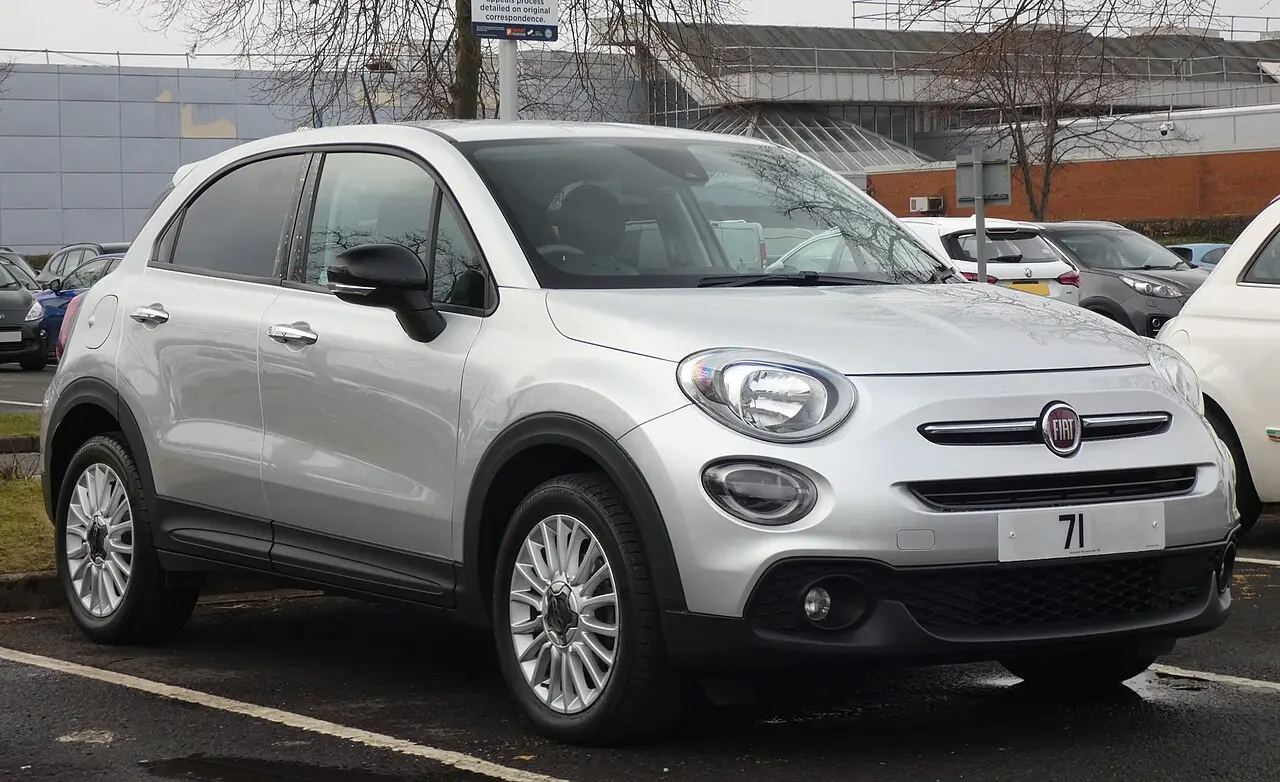
Fiat 500X

Fiat 500X
Photo: Harvey Bold / Wikimedia Commons · CC0

The official data lists 172 versions of the Fiat 500X (2014–2025), in the European Union, the United Kingdom, the United States, and Canada. Each market publishes its own figures, measured on its own test procedure.

At a glance

Years in the data
2014–2025
Markets
European Union, United Kingdom, United States, Canada
Engines
1.0 L to 2.4 L
Power
70 kW (95 PS) to 131 kW (178 PS)
Fuels
Petrol, Hybrid, Diesel, LPG
Lowest consumption (United Kingdom)
4.1 L/100 km (NEDC)
Lowest consumption (European Union)
4.5 L/100 km (WLTP)
Lowest consumption (Canada)
8.3 L/100 km (5-cycle)
New registrations in the EU
1,067,041

What is the Fiat 500X?

The Fiat 500X is a compact crossover that extends the 500 family into a taller, more spacious body. Its rounded lights and front design echo the classic 500, while the cabin and shape suit drivers looking for a more versatile everyday car.

The 500X debuted in 2014. Its Type 334 generation is listed from 2014–2024 in Europe and the UK, and from 2016–2023 in the United States and Canada. Fiat offered distinct urban and more rugged styling, along with different drivetrain choices in Europe.

Engines and power

In EU registration figures, the 500X spans 1.0 L to 2.0 L engines, with power from 70 kW (95 PS) to 132 kW (179 PS). Listed fuels include petrol, hybrid, diesel and LPG. The UK range also covers engines from 1.0 L to 2.0 L and power from 71 kW (96 PS) to 131 kW (178 PS), with petrol, hybrid and diesel versions.

North American listings cover petrol engines from 1.3 L to 2.4 L. Engine and drivetrain choices vary between markets.

Fuel consumption and markets

The lowest listed EU consumption is 4.5 L/100 km on WLTP; the UK figure is 4.1 L/100 km on NEDC. The US EPA figure is 8.4 L/100 km, with a best combined rating of 28 MPG. Canada’s lowest listed result is 8.3 L/100 km under NRCan’s 5-cycle procedure. WLTP and NEDC are European test procedures; EPA and Canada’s 5-cycle method are used in North America, so market figures are not directly equivalent.

EU registration figures cover 2014–2025 and total 1,067,041. The UK range is listed for 2015–2024, while US and Canadian figures run from 2016–2023.

Questions and answers

When was the Fiat 500X sold?

Its Type 334 generation is listed from 2014–2024 in Europe and the UK, and from 2016–2023 in the US and Canada.

What engines did the 500X have?

EU and UK ranges span 1.0 L to 2.0 L. US and Canadian listings cover petrol engines from 1.3 L to 2.4 L.

What is the lowest official fuel consumption listed for the 500X?

The lowest listed figure is 4.1 L/100 km in the UK on NEDC. The EU WLTP figure is 4.5 L/100 km; test procedures differ.
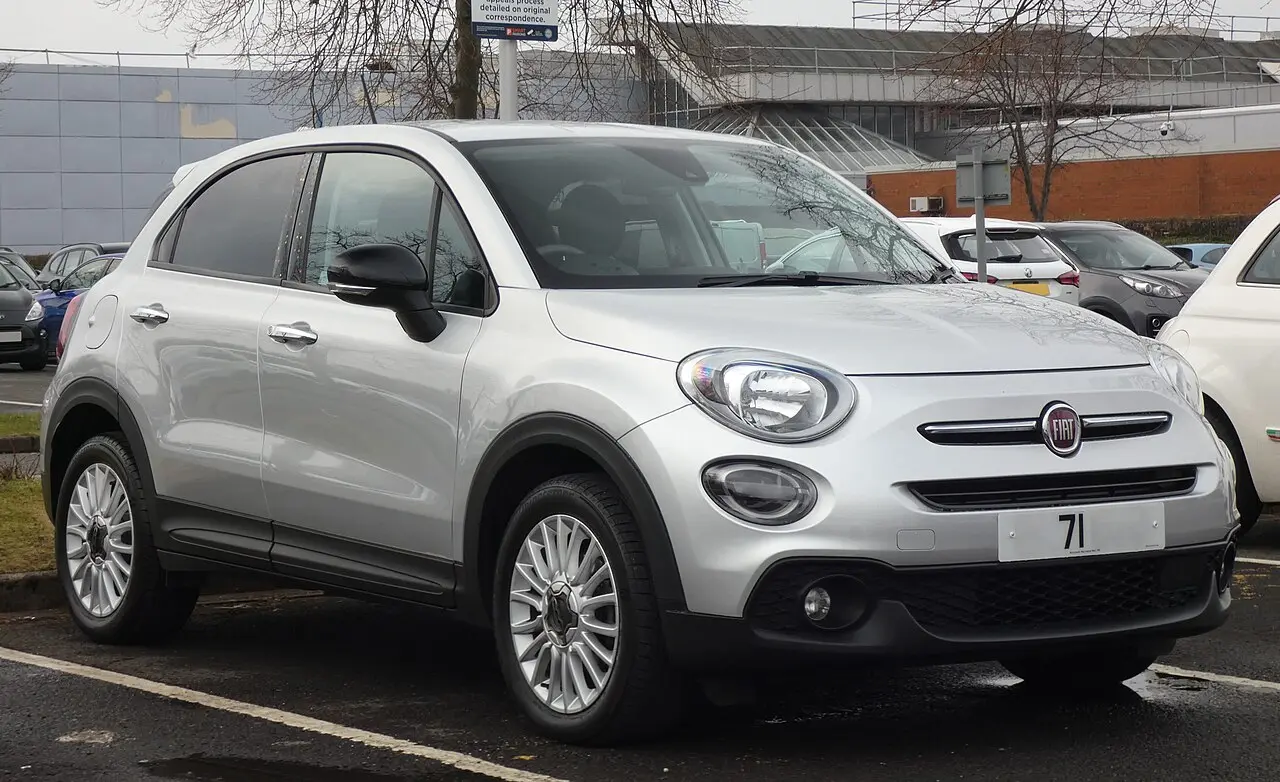
500X 500X (2014–2024)

Fiat 500X 500X
Photo: Harvey Bold / Wikimedia Commons · CC0

Model codes: Type 334 · Sold in: European Union and United Kingdom · References: en.wikipedia.org, fiat.nl

Show all 153 versions

500X 500X (2016–2023)

Fiat 500X 500X
Photo: Harvey Bold / Wikimedia Commons · CC0

Model codes: Type 334 · Sold in: United States and Canada · References: en.wikipedia.org, caranddriver.com

United States 7 versions

Model years sold in the USA, from the EPA and the Department of Energy (fueleconomy.gov). MPG on the EPA test; litres per 100 km = 235.215 ÷ MPG.

Years and versionEngineFuelGearboxDriveConsumption (combined)CO₂
2021–2023SIDI1.3 LPetrol9-speed automaticAll-wheel drive26 MPG (9.0 L/100 km) EPA221 g/km
2019–2020SIDI1.3 LPetrol9-speed automaticAll-wheel drive26 MPG (9.0 L/100 km) EPA213 g/km
2017–20181.4 LPetrol6-speed manualFront-wheel drive28 MPG (8.4 L/100 km) EPA197 g/km
2016–20182.4 LPetrol9-speed automaticAll-wheel drive24 MPG (9.8 L/100 km) EPA226 g/km
20182.4 LPetrol9-speed automaticFront-wheel drive25 MPG (9.4 L/100 km) EPA220 g/km
2016–20172.4 LPetrol9-speed automaticFront-wheel drive25 MPG (9.4 L/100 km) EPA219 g/km
20161.4 LPetrol6-speed manualFront-wheel drive28 MPG (8.4 L/100 km) EPA196 g/km

Canada 9 versions

Model years sold in Canada, from Natural Resources Canada fuel consumption ratings (5-cycle test).

Years and versionEngineFuelGearboxConsumption (combined)CO₂
2021–2023Sport utility vehicle: Small1.3 LPetrol9-speed automatic9.1 L/100 km 5-cycle221 g/km
2019–2020Sport utility vehicle: Small1.3 LPetrol9-speed automatic9.1 L/100 km 5-cycle213 g/km
2017–2018Sport utility vehicle: Small1.4 LPetrol6-speed manual8.4 L/100 km 5-cycle197 g/km
2017–2018Sport utility vehicle: Small2.4 LPetrol9-speed automatic9.7 L/100 km 5-cycle226 g/km
2018Sport utility vehicle: Small2.4 LPetrol9-speed automatic9.4 L/100 km 5-cycle220 g/km
2017Sport utility vehicle: Small2.4 LPetrol9-speed automatic9.3 L/100 km 5-cycle219 g/km
2016Sport utility vehicle: Small1.4 LPetrol6-speed manual8.3 L/100 km 5-cycle194 g/km
2016Sport utility vehicle: Small2.4 LPetrol9-speed automatic9.3 L/100 km 5-cycle217 g/km
2016Sport utility vehicle: Small2.4 LPetrol9-speed automatic9.6 L/100 km 5-cycle224 g/km

Versions outside these generations

European Union 3 versions

New cars registered in the EU (plus Norway and Iceland), from the European Environment Agency. Figures on the NEDC procedure until 2020 and on WLTP from 2021; versions are grouped by engine and power, with their number of registrations.

Years and versionEnginePowerFuelConsumption (combined)CO₂EU registrations
20251.5 L96 kW (131 PS)Hybrid5.6 L/100 km WLTP128 g/km145
20251.4 L103 kW (140 PS)Petrol–157 g/km49
20251.2 L70 kW (95 PS)Diesel4.9 L/100 km WLTP126 g/km27

Official figures are measured on standard test procedures and differ between markets. Your consumption depends on how, where and in what conditions you drive.