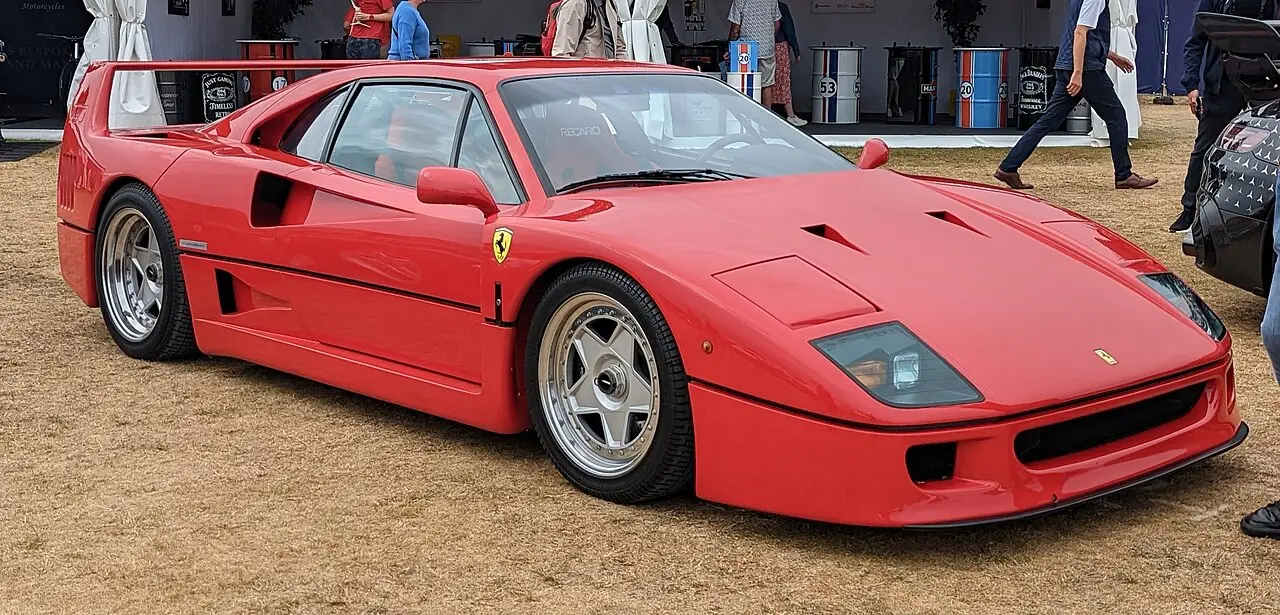
What is the Ferrari F40?
The F40 is a mid-engined Ferrari supercar created to mark the company’s anniversary. Ferrari designed it as a focused road car, with a lightweight body and a strong connection to its racing experience. It was the last Ferrari personally approved by founder Enzo Ferrari.
Engines and power
The United States listing gives the F40 a 2.9-litre petrol engine. Its mid-engined layout and purposeful design set it apart within Ferrari’s road-car history.
How economical is the Ferrari F40?
For the 1990–1992 model years, the EPA rates the F40 at 13 MPG combined, equivalent to 18.1 L/100 km. This is a United States result under the EPA procedure. European WLTP or NEDC and Canadian 5-cycle results use different tests, so figures from different markets are not directly comparable.
Where was the Ferrari F40 sold?
The United States listing covers the 1990–1992 model years. The F40’s direct, competition-influenced character reflects Ferrari’s roots in performance motoring.
Questions and answers
What engine does the Ferrari F40 have?
The United States listing gives it a 2.9-litre petrol engine.
What is the F40’s EPA fuel economy?
The EPA rates it at 13 MPG combined, or 18.1 L/100 km.
Which model years are listed for the F40 in the United States?
The listing covers the 1990–1992 model years.