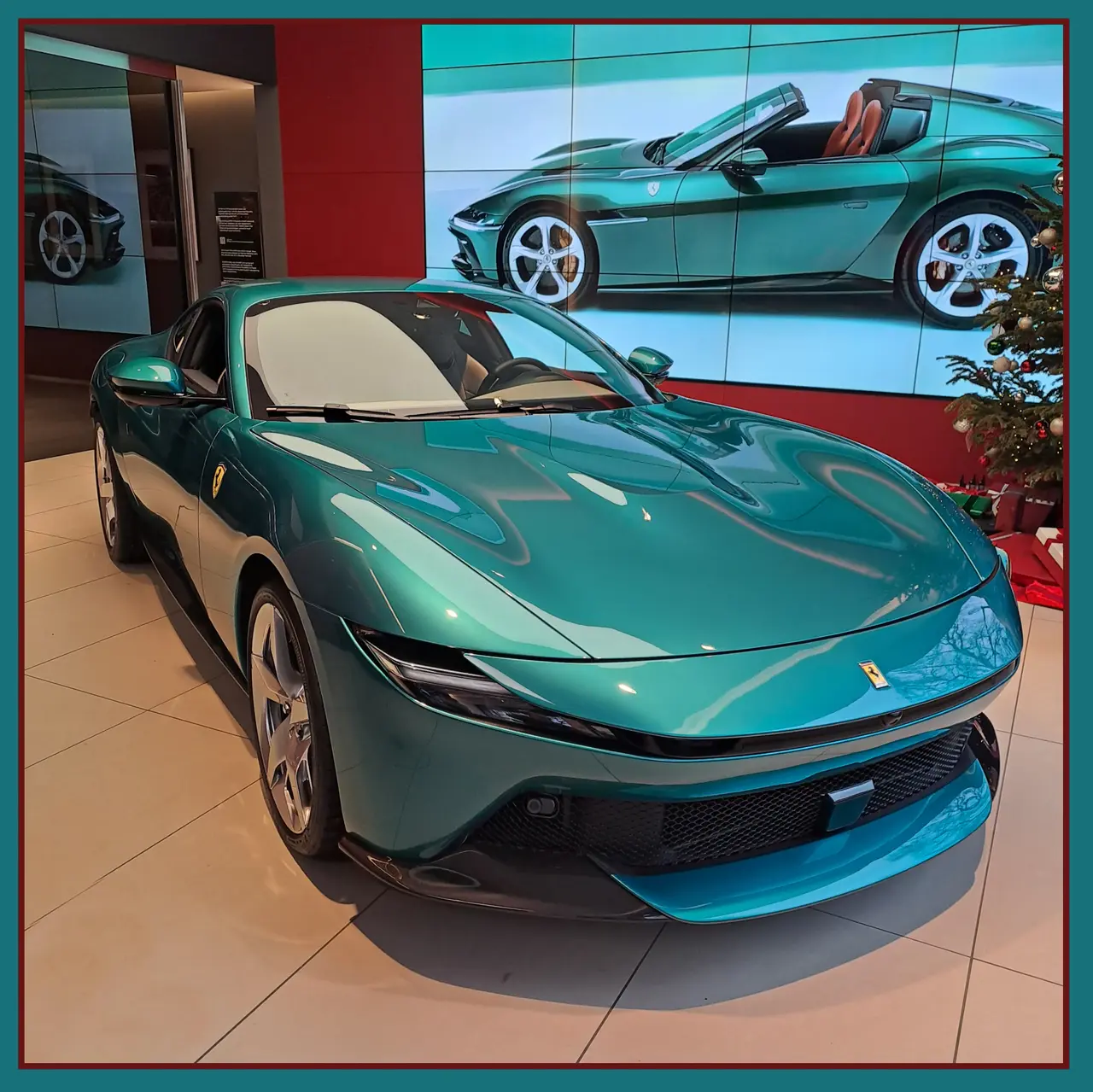
What is the Ferrari Amalfi?
The Amalfi is a front-mid-engined Ferrari coupé in the grand touring tradition, designed to combine sporting character with everyday versatility. It replaces the Roma in Ferrari’s line-up and continues the marque’s front-engined V8 coupé tradition.
Engines and power
The United States listing gives the Amalfi a 3.9-litre petrol engine. Ferrari describes it as a front-mid-engined 2+ coupé, with a twin-turbo V8.
How economical is the Ferrari Amalfi?
For the 2027 model year, the EPA rates the Amalfi at 19 MPG combined, equivalent to 12.4 L/100 km. This is a United States result under the EPA procedure. European WLTP or NEDC and Canadian 5-cycle results use different tests, so figures from different markets are not directly comparable.
Where was the Ferrari Amalfi sold?
The United States listing covers the 2027 model year. Its front-mid-engined coupé layout and grand touring character make it part of Ferrari’s road-focused V8 line.
Questions and answers
What kind of car is the Ferrari Amalfi?
It is a front-mid-engined, two-door Ferrari coupé in the grand touring tradition.
What engine size is listed for the Amalfi?
The United States listing gives it a 3.9-litre petrol engine.
What is its EPA fuel economy?
The EPA rates it at 19 MPG combined, or 12.4 L/100 km, for the 2027 model year.