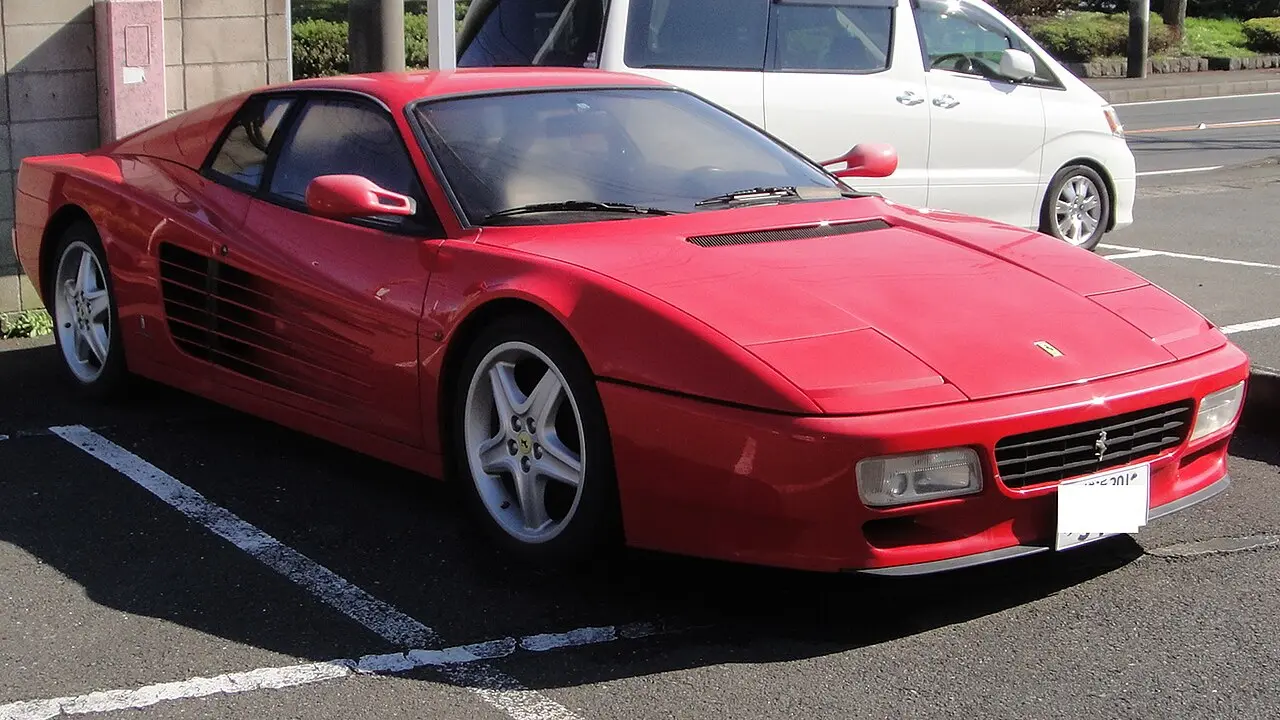
What is the Ferrari 512 TR?
The Ferrari 512 TR is a mid-engined grand tourer and an evolution of the Testarossa. It kept the earlier car’s broad shape and side air intakes, while Ferrari revised the exterior and cabin. The result carried the Testarossa design into a new version of the same concept.
Generations and engines
The 512 TR followed the Testarossa in the model family. Ferrari says its exterior changes improved the aerodynamics of the Pininfarina design, while the cabin became more comfortable and ergonomic. The United States EPA listing gives the 512 TR a 4.9 L petrol engine.
How economical is the Ferrari 512 TR?
The EPA combined rating is 11 MPG, or 21.4 L/100 km. It covers model years 1993–1995 and uses the EPA test procedure in the United States. European WLTP and NEDC procedures differ from the EPA method, so results are not directly comparable.
Where was the Ferrari 512 TR sold?
The EPA fuel consumption figures are for the United States. The 512 TR continued Ferrari’s mid-engined grand touring approach in an updated form of the Testarossa.
Questions and answers
What years does the 512 TR span?
The United States EPA listing covers 1993–1995.
What engine is listed for the 512 TR?
A 4.9 L petrol engine.
What is the 512 TR’s EPA fuel-consumption figure?
11 MPG combined, or 21.4 L/100 km.