What is the Eagle Summit?
The Summit was a small car sold by Chrysler’s Eagle division from 1989 to 1996. The range included hatchback, coupe and sedan body styles for everyday driving. A separate Summit Wagon offered a taller shape with more cabin space. Based on Mitsubishi models, the Summit brought an import-inspired small car to Eagle showrooms.
Eagle grew out of Chrysler’s acquisition of American Motors. The original AMC Eagle was known for its four-wheel-drive design; the later Eagle range included cars developed with Chrysler’s partners.
Summit generations
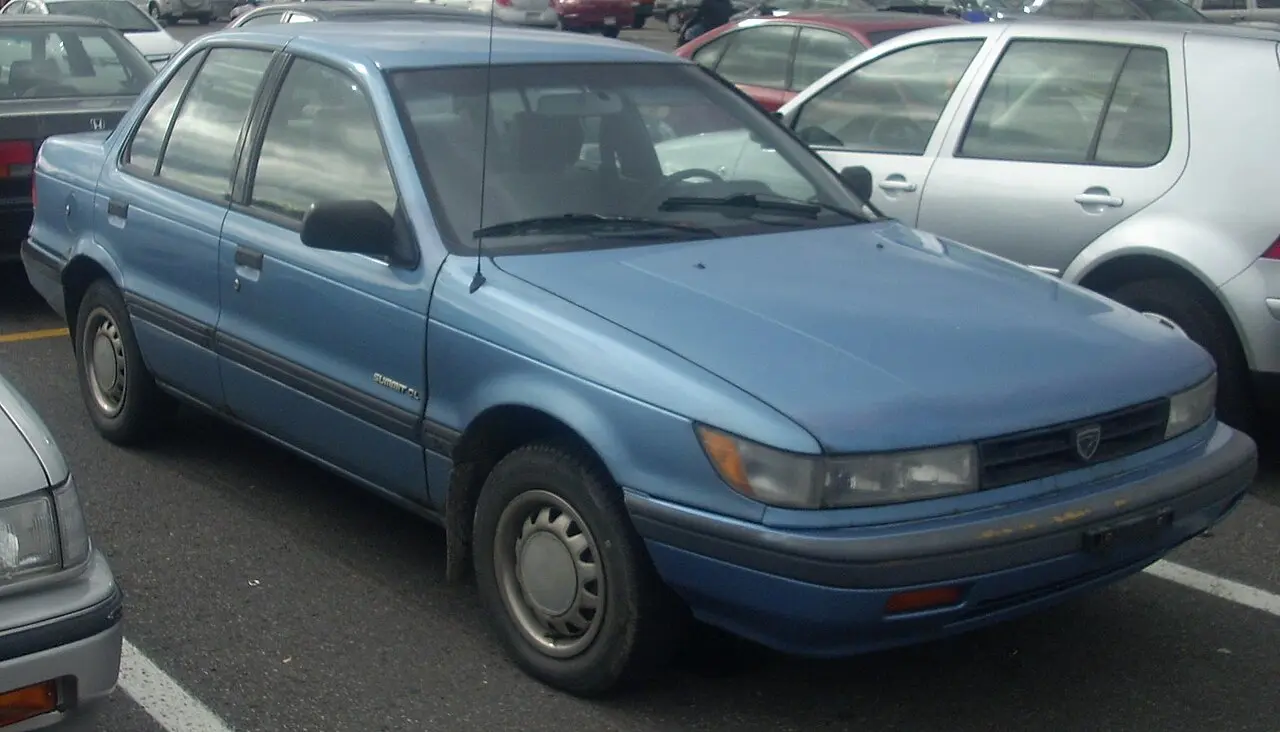
The first generation ran from 1989 to 1992 and was based on the Mitsubishi Mirage.
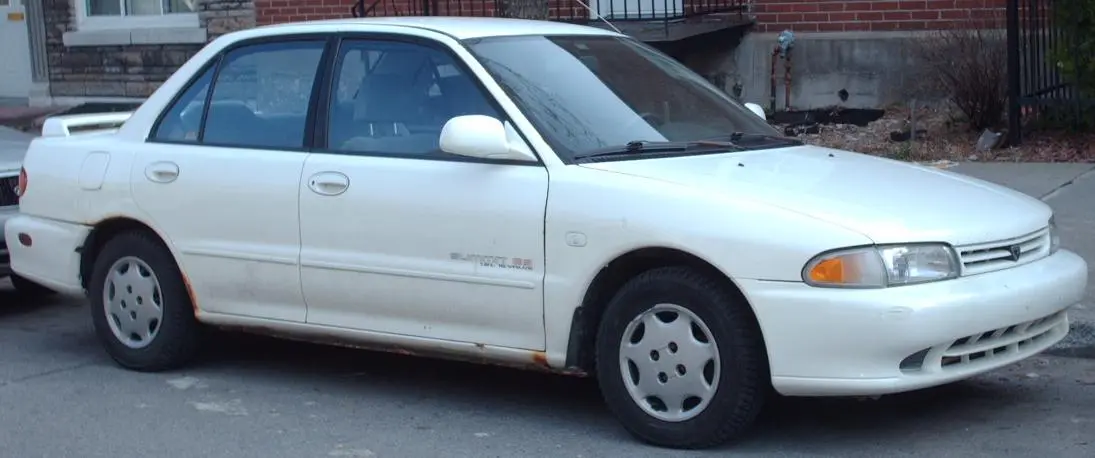
The second generation, known by the CC code, ran from 1993 to 1996. Its rounder design brought more room inside. The hatchback gave way to coupe and sedan body styles, while the separate Summit Wagon offered a taller alternative.
Engines and power
The Summit was offered with petrol engines from 1.5 to 2.4 litres. That range gave buyers a choice of engine sizes across its small-car body styles.
How economical is the Eagle Summit?
In the United States, EPA figures for 1989–1996 show a lowest combined consumption of 7.6 L/100 km and a best combined rating of 31 MPG. Canadian NRCan figures for 1995–1996 show a lowest result of 7.5 L/100 km on the 5-cycle test. EPA and Canadian 5-cycle procedures differ, so the figures are best considered within their respective markets.
Where was the Summit sold?
The Summit was sold in the United States and Canada. US EPA figures cover 1989–1996, while Canadian NRCan figures cover 1995–1996.
Questions and answers
When was the Eagle Summit sold?
It was sold in the United States from 1989 to 1996 and in Canada from 1995 to 1996.
How many generations did the Summit have?
Two: the first generation ran from 1989 to 1992, followed by the CC generation from 1993 to 1996.
What engine sizes were available?
The Summit had petrol engines from 1.5 to 2.4 litres.
What is the Summit’s lowest official consumption figure?
The lowest listed result is 7.5 L/100 km in Canada on the NRCan 5-cycle test. The lowest US EPA figure is 7.6 L/100 km.