Dodge

Dodge Stealth

Dodge Stealth
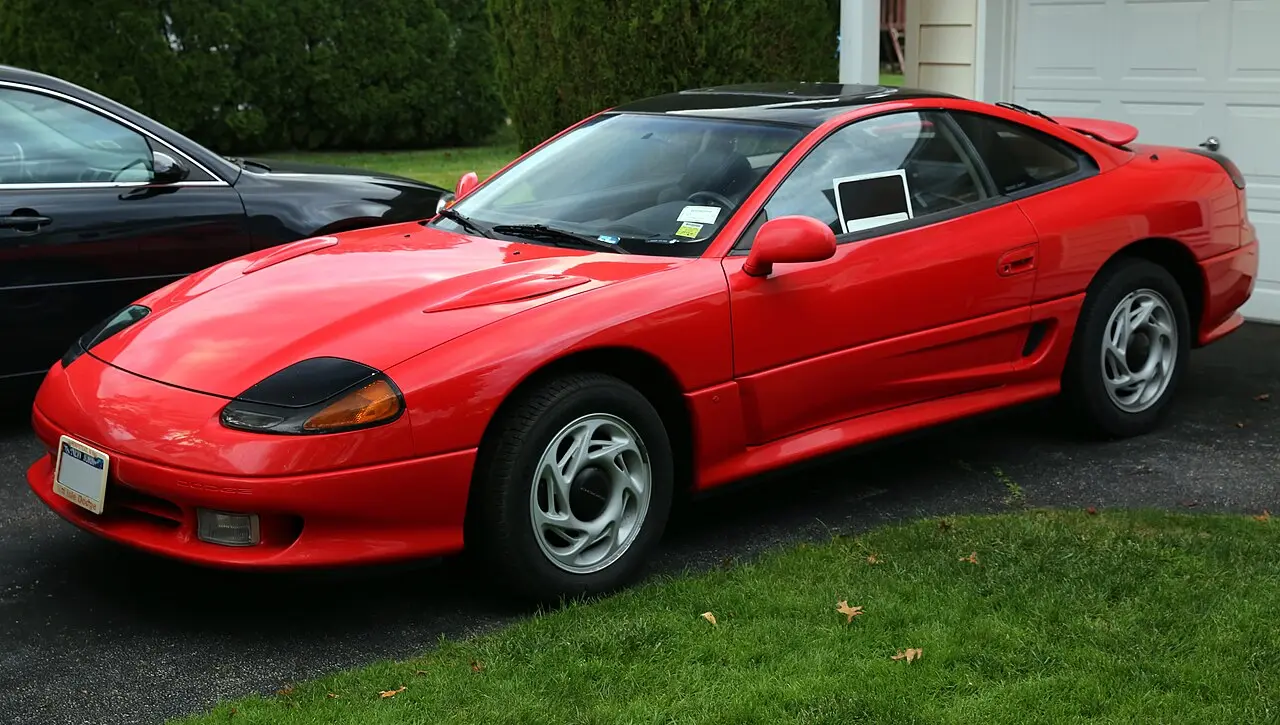
Photo: Mr.choppers / Wikimedia Commons · CC BY-SA 3.0

The official data lists 15 versions of the Dodge Stealth (1991–1996), in the United States and Canada. Each market publishes its own figures, measured on its own test procedure.

At a glance

Years in the data
1991–1996
Markets
United States, Canada
Engines
3.0 L
Fuels
Petrol
Lowest consumption (Canada)
12.2 L/100 km (5-cycle)
Lowest consumption (United States)
12.4 L/100 km (EPA)

What is the Dodge Stealth?

The Dodge Stealth was a low, two-door sports coupe with a dramatic shape and a touring-oriented character. It was related to the Mitsubishi 3000GT, developed through the companies’ partnership. The Stealth gave Dodge a distinctive coupe in its performance range.

Its wide body and V6 engine suited the Stealth’s grand touring character. The model’s single generation ran from 1991 to 1996.

Generation and engines

The Stealth had one generation, identified by the code Z16A. Its listed engine was a 3.0 L petrol V6.

How economical is the Dodge Stealth?

United States EPA figures cover the Stealth from 1991 to 1996. The best combined rating is 19 MPG, and the lowest listed consumption is 12.4 L/100 km. Canadian figures cover 1995–1996, with a lowest listed consumption of 12.2 L/100 km. The EPA and Canadian five-cycle procedures differ, so results are best considered within each market.

Where was it sold?

The Stealth was sold in the United States and Canada.

Questions and answers

What type of car was the Dodge Stealth?

It was a two-door sports coupe related to the Mitsubishi 3000GT.

When was the Stealth sold?

Its single generation ran from 1991 to 1996.

What engine did it use?

The listed versions had a 3.0 L petrol V6.

What are its official fuel economy figures?

The best combined United States EPA rating is 19 MPG. Canada’s listing for 1995–1996 gives a lowest consumption of 12.2 L/100 km.

Stealth First generation (1991–1996)

Dodge Stealth First generation
Photo: Mr.choppers / Wikimedia Commons · CC BY-SA 3.0

Model codes: Z16A · References: cars.com, dodge-wiki.com

United States 10 versions

Model years sold in the USA, from the EPA and the Department of Energy (fueleconomy.gov). MPG on the EPA test; litres per 100 km = 235.215 ÷ MPG.

Years and versionEngineFuelGearboxDriveConsumption (combined)CO₂
1991–1996(DOHC) (FFS), 2MODE · (SOHC) (FFS), 2MODE · SOHC (FFS), 2MODE and 1 more trim3.0 LPetrol4-speed automaticFront-wheel drive18 MPG (13.1 L/100 km) EPA307 g/km
1994–1996SOHC (FFS)3.0 LPetrol5-speed manualFront-wheel drive19 MPG (12.4 L/100 km) EPA291 g/km
1994–1996DOHC (FFS)3.0 LPetrol5-speed manualFront-wheel drive19 MPG (12.4 L/100 km) EPA291 g/km
1994–1996(DOHC) (FFS,TRBO) · DOHC TURBO (FFS,TRBO)3.0 LPetrol6-speed manualFour- or all-wheel drive18 MPG (13.1 L/100 km) EPA307 g/km
1993–1995SOHC (FFS), 2MODE3.0 LPetrol4-speed automaticFront-wheel drive18 MPG (13.1 L/100 km) EPA307 g/km
1991–1993(SOHC) (FFS) · SOHC (FFS)3.0 LPetrol5-speed manualFront-wheel drive18 MPG (13.1 L/100 km) EPA307 g/km
1993DOHC TURBO (FFS,TRBO)3.0 LPetrol5-speed manualFour- or all-wheel drive19 MPG (12.4 L/100 km) EPA291 g/km
1993DOHC (FFS)3.0 LPetrol5-speed manualFront-wheel drive19 MPG (12.4 L/100 km) EPA291 g/km
1991–1992(DOHC) (FFS) · DOHC (FFS)3.0 LPetrol5-speed manualFront-wheel drive19 MPG (12.4 L/100 km) EPA291 g/km
1991–1992(DOHC) (FFS,TRBO) · DOHC TURBO (FFS,TRBO)3.0 LPetrol5-speed manualFour- or all-wheel drive18 MPG (13.1 L/100 km) EPA307 g/km

Canada 5 versions

Model years sold in Canada, from Natural Resources Canada fuel consumption ratings (5-cycle test).

Years and versionEngineFuelGearboxConsumption (combined)CO₂
1995–1996Subcompact3.0 LPetrol5-speed manual12.2 L/100 km 5-cycle281 g/km
1996Subcompact3.0 LPetrol4-speed automatic12.7 L/100 km 5-cycle292 g/km
1996Subcompact3.0 LPetrol6-speed manual13.0 L/100 km 5-cycle299 g/km
1995Subcompact3.0 LPetrol4-speed automatic12.9 L/100 km 5-cycle297 g/km
1995Subcompact3.0 LPetrol6-speed manual12.9 L/100 km 5-cycle297 g/km

Official figures are measured on standard test procedures and differ between markets. Your consumption depends on how, where and in what conditions you drive.