Dodge

Dodge Dart

Dodge Dart
Photo: Elise240SX / Wikimedia Commons · CC BY-SA 4.0

The official data lists 37 versions of the Dodge Dart (2013–2016), in the United States and Canada. Each market publishes its own figures, measured on its own test procedure.

At a glance

Years in the data
2013–2016
Markets
United States, Canada
Engines
1.4 L to 2.4 L
Fuels
Petrol, Flex fuel (E85)
Lowest consumption (Canada)
7.3 L/100 km (5-cycle)
Lowest consumption (United States)
7.4 L/100 km (EPA)

What is the Dodge Dart?

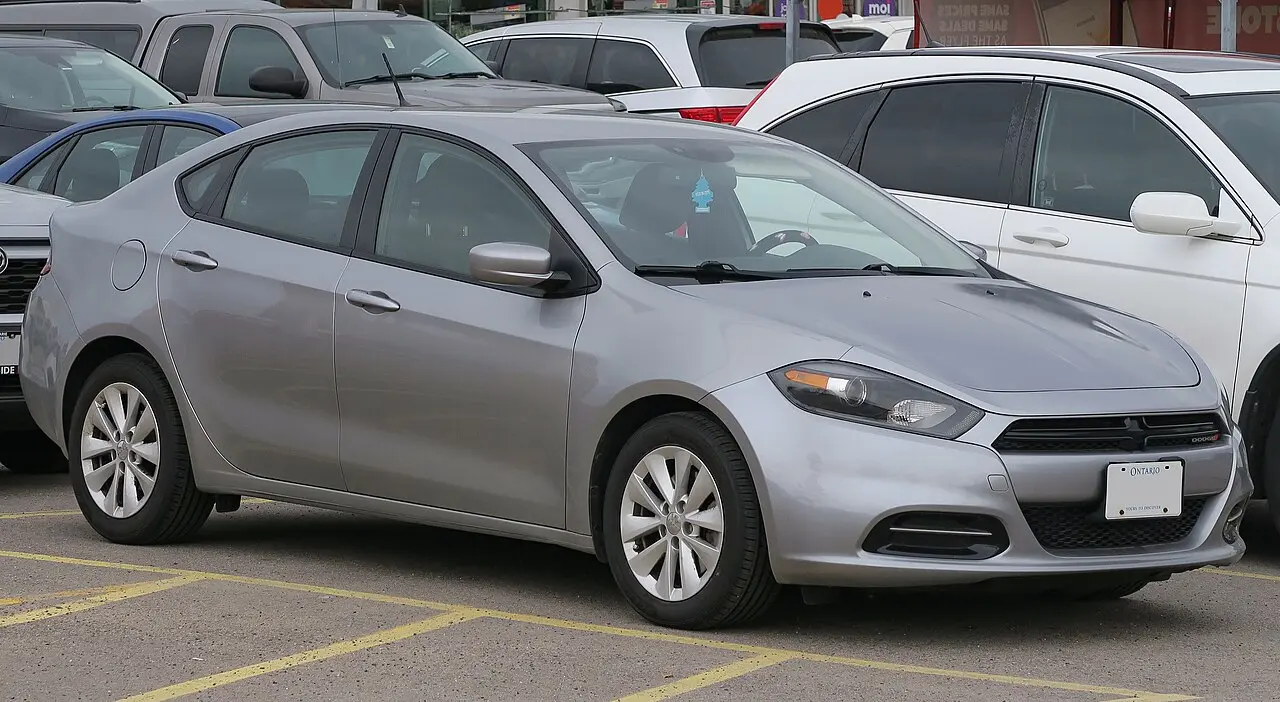
The 2013 Dodge Dart is a compact, front-wheel-drive sedan that brought a familiar Dodge name back to the range. Its PF generation was developed during the Fiat Chrysler era and used a platform related to the Alfa Romeo Giulietta, with Dodge styling and equipment.

This Dart was distinct from earlier cars with the same name. Its PF generation ran from 2013 to 2016, bringing a compact sedan back to Dodge’s lineup.

Engines and power

The US and Canadian ranges included petrol and flex-fuel E85 versions, with engines from 1.4 L to 2.4 L. The 1.4 L engine was turbocharged; the listed engines were four-cylinder units.

E85-capable versions could run on a blend of petrol and ethanol as well as petrol. Engine and fuel combinations varied by version and market.

Fuel consumption and where it was sold

The best combined US EPA rating is 32 MPG, with a lowest listed consumption of 7.4 L/100 km. Canada’s lowest listed figure is 7.3 L/100 km under NRCan’s 5-cycle test. These market figures use different procedures: EPA in the USA, 5-cycle in Canada, and WLTP or NEDC in Europe.

The US range included 13 versions from 2013 to 2016, while Canada’s included 24 versions over the same years. Both markets offered petrol and E85 versions of the PF-generation Dart.

Questions and answers

What kind of car is the modern Dodge Dart?

It is a compact, front-wheel-drive, four-door sedan from the PF generation.

When was the PF-generation Dart sold in the US and Canada?

The listed market years are 2013 to 2016 in both countries.

Which engine sizes were offered?

The listed engines ranged from 1.4 L to 2.4 L, including a turbocharged 1.4 L option.

How do the official economy figures differ by market?

The best combined US EPA rating is 32 MPG, with a lowest listed US consumption of 7.4 L/100 km. Canada’s lowest listed figure is 7.3 L/100 km under NRCan’s 5-cycle test.

Dart PF (2013–2016)

Dodge Dart PF
Photo: Elise240SX / Wikimedia Commons · CC BY-SA 4.0

Model codes: PF · Sold in: United States and Canada · References: en.wikipedia.org

United States 13 versions

Model years sold in the USA, from the EPA and the Department of Energy (fueleconomy.gov). MPG on the EPA test; litres per 100 km = 235.215 ÷ MPG.

Years and versionEngineFuelGearboxDriveConsumption (combined)CO₂
20161.4 LPetrol6-speed manualFront-wheel drive31 MPG (7.6 L/100 km) EPA177 g/km
2013–20161.4 LPetrol6-speed automated manualFront-wheel drive30 MPG (7.8 L/100 km) EPA181 g/km
2013–20161.4 LPetrol6-speed automated manualFront-wheel drive32 MPG (7.4 L/100 km) EPA174 g/km
2013–20161.4 LPetrol6-speed manualFront-wheel drive32 MPG (7.4 L/100 km) EPA173 g/km
2013–20162.0 LPetrol6-speed manualFront-wheel drive29 MPG (8.1 L/100 km) EPA192 g/km
2013–2016FFV2.0 LFlex fuel (E85)6-speed automaticFront-wheel drive27 MPG (8.7 L/100 km) EPA203 g/km
2013–20162.4 LPetrol6-speed manualFront-wheel drive26 MPG (9.0 L/100 km) EPA209 g/km
2014–20162.4 LPetrol6-speed automaticFront-wheel drive27 MPG (8.7 L/100 km) EPA204 g/km
2014–20162.4 LPetrol6-speed automaticFront-wheel drive25 MPG (9.4 L/100 km) EPA217 g/km
2014–20162.4 LPetrol6-speed manualFront-wheel drive27 MPG (8.7 L/100 km) EPA208 g/km
20131.4 LPetrol6-speed manualFront-wheel drive31 MPG (7.6 L/100 km) EPA177 g/km
20132.0 LPetrol6-speed automaticFront-wheel drive27 MPG (8.7 L/100 km) EPA204 g/km
20132.4 LPetrol6-speed automaticFront-wheel drive24 MPG (9.8 L/100 km) EPA235 g/km

Canada 24 versions

Model years sold in Canada, from Natural Resources Canada fuel consumption ratings (5-cycle test).

Years and versionEngineFuelGearboxConsumption (combined)CO₂
2016Mid-size1.4 LPetrol6-speed automated manual7.3 L/100 km 5-cycle171 g/km
2016Mid-size1.4 LPetrol6-speed manual7.3 L/100 km 5-cycle171 g/km
2016Mid-size2.0 LPetrol6-speed automatic8.6 L/100 km 5-cycle201 g/km
2016Mid-size2.0 LFlex fuel (E85)6-speed automatic11.5 L/100 km 5-cycle187 g/km
2016Mid-size2.0 LPetrol6-speed manual8.1 L/100 km 5-cycle189 g/km
2016Mid-size2.4 LPetrol6-speed automatic8.6 L/100 km 5-cycle202 g/km
2016Mid-size2.4 LPetrol6-speed manual8.8 L/100 km 5-cycle205 g/km
2016Mid-size2.4 LPetrol6-speed automatic9.2 L/100 km 5-cycle215 g/km
2016Mid-size2.4 LPetrol6-speed manual8.8 L/100 km 5-cycle207 g/km
2013–2015Mid-size1.4 LPetrol6-speed automated manual7.3 L/100 km 5-cycle168 g/km
2013–2015Mid-size1.4 LPetrol6-speed manual7.3 L/100 km 5-cycle168 g/km
2013–2015Mid-size2.0 LPetrol6-speed automatic8.6 L/100 km 5-cycle198 g/km
2013–2015Mid-size2.0 LPetrol6-speed manual8.1 L/100 km 5-cycle186 g/km
2015Mid-size2.0 LFlex fuel (E85)6-speed automatic11.5 L/100 km 5-cycle184 g/km
2014–2015Mid-size2.4 LPetrol6-speed automatic8.6 L/100 km 5-cycle198 g/km
2014–2015Mid-size2.4 LPetrol6-speed manual8.8 L/100 km 5-cycle202 g/km
2014–2015Mid-size2.4 LPetrol6-speed automatic9.2 L/100 km 5-cycle212 g/km
2014–2015Mid-size2.4 LPetrol6-speed manual8.8 L/100 km 5-cycle202 g/km
2014Mid-size2.0 LFlex fuel (E85)6-speed automatic12.2 L/100 km 5-cycle195 g/km
2013Mid-size1.4 LPetrol6-speed automated manual7.6 L/100 km 5-cycle175 g/km
2013Mid-size1.4 LPetrol6-speed manual7.4 L/100 km 5-cycle170 g/km
2013Mid-size2.0 LFlex fuel (E85)6-speed automatic12.2 L/100 km 5-cycle195 g/km
2013Mid-size2.4 LPetrol6-speed automatic9.1 L/100 km 5-cycle209 g/km
2013Mid-size2.4 LPetrol6-speed manual8.8 L/100 km 5-cycle202 g/km

Official figures are measured on standard test procedures and differ between markets. Your consumption depends on how, where and in what conditions you drive.