The official data lists 60 versions of the Dodge Avenger (1995–2014), in the European Union, the United Kingdom, the United States, and Canada. Each market publishes its own figures, measured on its own test procedure.
At a glance
Years in the data
1995–2014
Markets
European Union, United Kingdom, United States, Canada
Engines
2.0 L to 3.6 L
Fuels
Petrol, Diesel, Flex fuel (E85)
Lowest consumption (United Kingdom)
6.2 L/100 km (NEDC)
Lowest consumption (Canada)
9.6 L/100 km (5-cycle)
Lowest consumption (United States)
9.8 L/100 km (EPA)
New registrations in the EU
690
What is the Dodge Avenger?
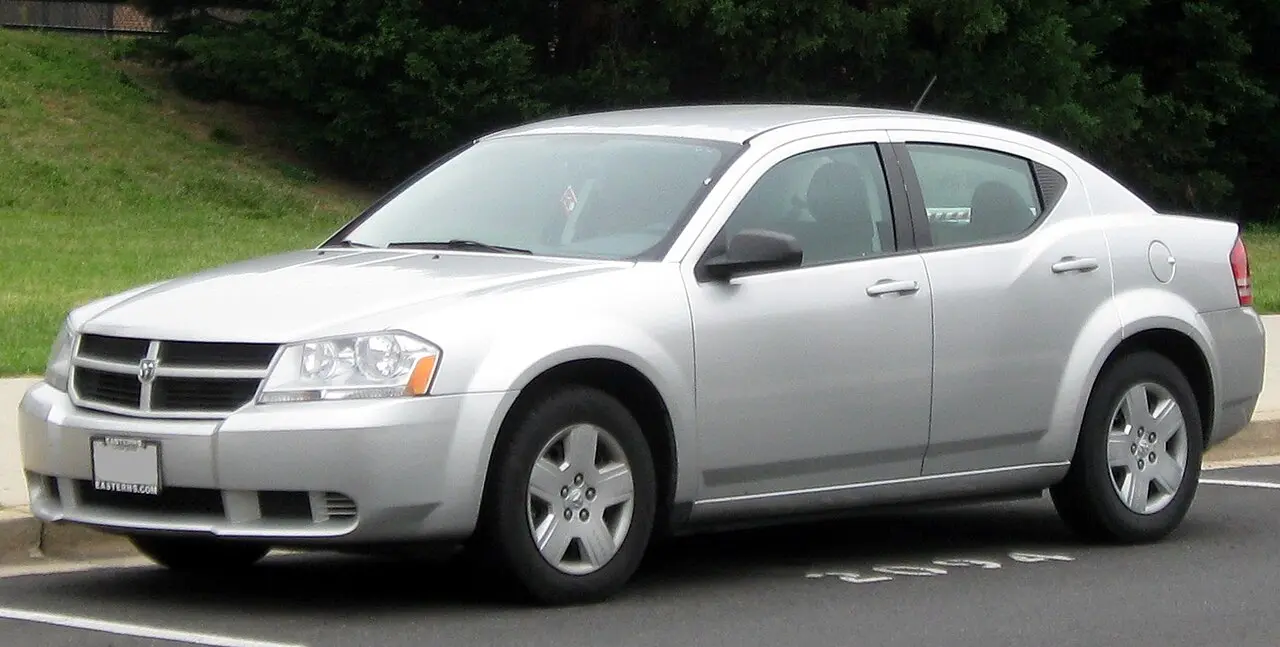
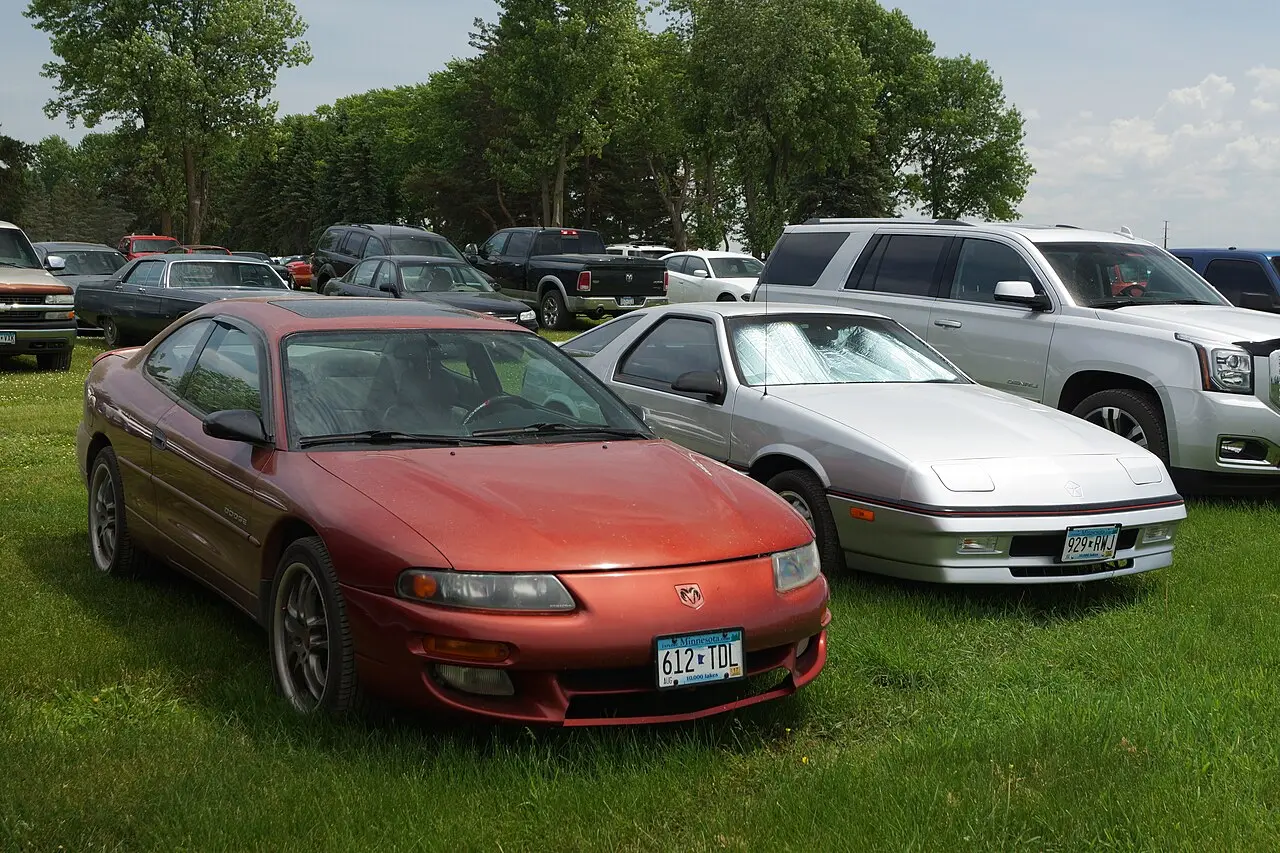
The Dodge Avenger name has been used for two quite different cars. The first was a coupe, sold from 1995 to 2000. When the name returned, it was attached to a four-door midsize sedan, giving Dodge a family-car entry with a more assertive design.
The sedan was the second generation, running from 2008 to 2014. It followed the coupe and took over from the Stratus in Dodge’s midsize range. The change from coupe to sedan gave the Avenger a conventional family-car layout.
Engines and power
Engine choices depended on generation and market. US and Canadian versions span 2.0 L to 3.6 L and include petrol and flex-fuel E85 options. The UK range is listed with 2.0 L to 2.4 L petrol and diesel engines. EU registrations include petrol and diesel versions; the listed engine range is 2.0 L.
How economical is the Dodge Avenger?
The lowest listed US consumption is 9.8 L/100 km, and the best combined EPA rating is 24 MPG. Canada’s lowest listed figure is 9.6 L/100 km on the NRCan 5-cycle test. In the UK, the lowest figure is 6.2 L/100 km on the NEDC test. EPA, Canadian 5-cycle and NEDC procedures differ, so their results are best understood in their own market context.
Where was the Avenger sold?
The Avenger was sold in the United States and Canada across both generations, and in the EU and UK during the sedan era. EU registrations from 2010 to 2011 total 690. The 2.0 L diesel was the most registered listed version, with 532 registrations in 2010.
Questions and answers
Was the Dodge Avenger a coupe or a sedan?
Both: the first generation was a coupe from 1995 to 2000, and the second was a sedan from 2008 to 2014.
What is the best combined US fuel economy figure?
The best combined EPA rating is 24 MPG.
Which version led EU registrations in the listed period?
The 2.0 L diesel led the listed EU entries, with 532 registrations in 2010.
Model codes: JS · Sold in: United States, Canada, European Union, and United Kingdom · References: en.wikipedia.org, dodge.com
European Union 6 versions
New cars registered in the EU (plus Norway and Iceland), from the European Environment Agency. Figures on the NEDC procedure until 2020 and on WLTP from 2021; versions are grouped by engine and power, with their number of registrations.
Years and version
Engine
Power
Fuel
CO₂
EU registrations
2011
2.0 L
115 kW (156 PS)
Petrol
185 g/km
10
2010
2.0 L
–
Diesel
170 g/km
532
2010
2.0 L
–
Petrol
185 g/km
82
2010
2.4 L
–
Petrol
211 g/km
32
2010
2.7 L
–
Petrol
236 g/km
20
2010
2.7 L
–
Petrol
234 g/km
14
United Kingdom 3 versions
New cars on sale in the UK, from the Vehicle Certification Agency. NEDC figures until 2018 and WLTP figures after; years are the editions a version appeared in.
Years and version
Engine
Fuel
Gearbox
Consumption (combined)
CO₂
200909MY 2.0td
2.0 L
Diesel
6-speed automatic
6.2 L/100 km NEDC
164 g/km
20092.0td
2.0 L
Diesel
6-speed automatic
6.7 L/100 km NEDC
175 g/km
20092.4 from 12.1.2009
2.4 L
Petrol
4-speed automatic
8.8 L/100 km NEDC
208 g/km
United States 14 versions
Model years sold in the USA, from the EPA and the Department of Energy (fueleconomy.gov). MPG on the EPA test; litres per 100 km = 235.215 ÷ MPG.
Years and version
Engine
Fuel
Gearbox
Drive
Consumption (combined)
CO₂
2014
2.4 L
Petrol
4-speed automatic
Front-wheel drive
24 MPG (9.8 L/100 km) EPA
231 g/km
2014
2.4 L
Petrol
6-speed automatic
Front-wheel drive
23 MPG (10.2 L/100 km) EPA
236 g/km
2013–2014FFV
3.6 L
Flex fuel (E85)
6-speed automatic
Front-wheel drive
22 MPG (10.7 L/100 km) EPA
248 g/km
2013
2.4 L
Petrol
6-speed automatic
Front-wheel drive
23 MPG (10.2 L/100 km) EPA
238 g/km
2013
2.4 L
Petrol
4-speed automatic
Front-wheel drive
23 MPG (10.2 L/100 km) EPA
235 g/km
2011–2012
2.4 L
Petrol
4-speed automatic
Front-wheel drive
24 MPG (9.8 L/100 km) EPA
230 g/km
2011–2012
2.4 L
Petrol
6-speed automatic
Front-wheel drive
23 MPG (10.2 L/100 km) EPA
240 g/km
2011–2012FFV
3.6 L
Flex fuel (E85)
6-speed automatic
Front-wheel drive
22 MPG (10.7 L/100 km) EPA
251 g/km
2008–2010CMODE
2.4 L
Petrol
4-speed automatic
Front-wheel drive
24 MPG (9.8 L/100 km) EPA
230 g/km
2008–2010GAS 370 · FFV
2.7 L
Flex fuel (E85)
4-speed automatic
Front-wheel drive
22 MPG (10.7 L/100 km) EPA
251 g/km
2009–2010CMODE
3.5 L
Petrol
6-speed automatic
Front-wheel drive
20 MPG (11.8 L/100 km) EPA
276 g/km
2008
2.7 L
Petrol
4-speed automatic
Front-wheel drive
22 MPG (10.7 L/100 km) EPA
251 g/km
2008CMODE
3.5 L
Petrol
6-speed automatic
Front-wheel drive
19 MPG (12.4 L/100 km) EPA
291 g/km
2008CMODE
3.5 L
Petrol
6-speed automatic
Four- or all-wheel drive
18 MPG (13.1 L/100 km) EPA
307 g/km
Canada 15 versions
Model years sold in Canada, from Natural Resources Canada fuel consumption ratings (5-cycle test).
Years and version
Engine
Fuel
Gearbox
Consumption (combined)
CO₂
2014Mid-size
2.4 L
Petrol
4-speed automatic
9.8 L/100 km 5-cycle
225 g/km
2014Mid-size
2.4 L
Petrol
6-speed automatic
10.0 L/100 km 5-cycle
230 g/km
2011–2014Mid-size
3.6 L
Petrol
6-speed automatic
10.5 L/100 km 5-cycle
242 g/km
2011–2014Mid-size
3.6 L
Flex fuel (E85)
6-speed automatic
14.4 L/100 km 5-cycle
230 g/km
2013Mid-size
2.4 L
Petrol
4-speed automatic
10.0 L/100 km 5-cycle
230 g/km
2013Mid-size
2.4 L
Petrol
6-speed automatic
10.1 L/100 km 5-cycle
232 g/km
2011–2012Mid-size
2.4 L
Petrol
4-speed automatic
9.8 L/100 km 5-cycle
225 g/km
2011–2012Mid-size
2.4 L
Petrol
6-speed automatic
10.0 L/100 km 5-cycle
230 g/km
2008–2010Mid-size
2.4 L
Petrol
4-speed automatic
9.6 L/100 km 5-cycle
221 g/km
2009–2010Mid-size
3.5 L
Petrol
6-speed automatic
11.9 L/100 km 5-cycle
274 g/km
2008–2009Mid-size
2.7 L
Petrol
4-speed automatic
10.6 L/100 km 5-cycle
244 g/km
2009Mid-size
2.7 L
Flex fuel (E85)
4-speed automatic
14.4 L/100 km 5-cycle
230 g/km
2008Mid-size
2.7 L
Flex fuel (E85)
4-speed automatic
14.8 L/100 km 5-cycle
237 g/km
2008Mid-size
3.5 L
Petrol
6-speed automatic
12.1 L/100 km 5-cycle
278 g/km
2008Mid-size
3.5 L
Petrol
6-speed automatic
13.0 L/100 km 5-cycle
299 g/km
Versions outside these generations
United Kingdom 3 versions
New cars on sale in the UK, from the Vehicle Certification Agency. NEDC figures until 2018 and WLTP figures after; years are the editions a version appeared in.
Official figures are measured on standard test procedures and differ between markets. Your consumption depends on how, where and in what conditions you drive.