


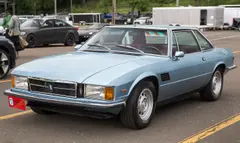



Who is De Tomaso?
De Tomaso was an Italian car maker founded by Argentine-born racing driver Alejandro de Tomaso. The marque is best known for the Pantera, a low-slung sports car with Italian design and a Ford V8. Its cars brought together Italian styling and American engine power.
Which De Tomaso models are listed?
The range spans three model lines: the Deauville, Longchamp and Pantera. The Deauville was the four-door grand touring saloon, while the Longchamp offered a two-door coupé body. The Pantera was the sports car, with a more focused, mid-engined layout. Together, they show a small marque serving very different roles, from long-distance comfort to performance driving.
How did the range develop?
The Deauville and Pantera both began in 1971, followed by the Longchamp in 1972. The Pantera remained in the line through 1992, making it the longest-running of the three. The Longchamp continued until 1989, and the Deauville until 1985. Across the years covered, the range moved from three concurrent models to the Pantera as its final listed line.
Are De Tomaso cars electrified, and where are they listed?
The models listed here are the Deauville, Longchamp and Pantera, with no electric or hybrid variants indicated. No markets are listed for these cars, so there are no official fuel-consumption, CO₂ or power figures to compare by region. European WLTP and older NEDC tests, the US EPA procedure and Canada's 5-cycle test also use different methods, so figures from those markets would not be directly interchangeable.
Questions and answers
What is De Tomaso best known for?
The marque is best known for the Pantera, an Italian-designed sports car powered by a Ford V8.
Which De Tomaso model ran the longest?
The Pantera, listed from 1971 to 1992.
What kind of car was the De Tomaso Deauville?
It was a four-door grand touring saloon, positioned for comfortable long-distance travel.
Does the listed De Tomaso range include electric or hybrid cars?
No electric or hybrid variants are indicated among the Deauville, Longchamp and Pantera.