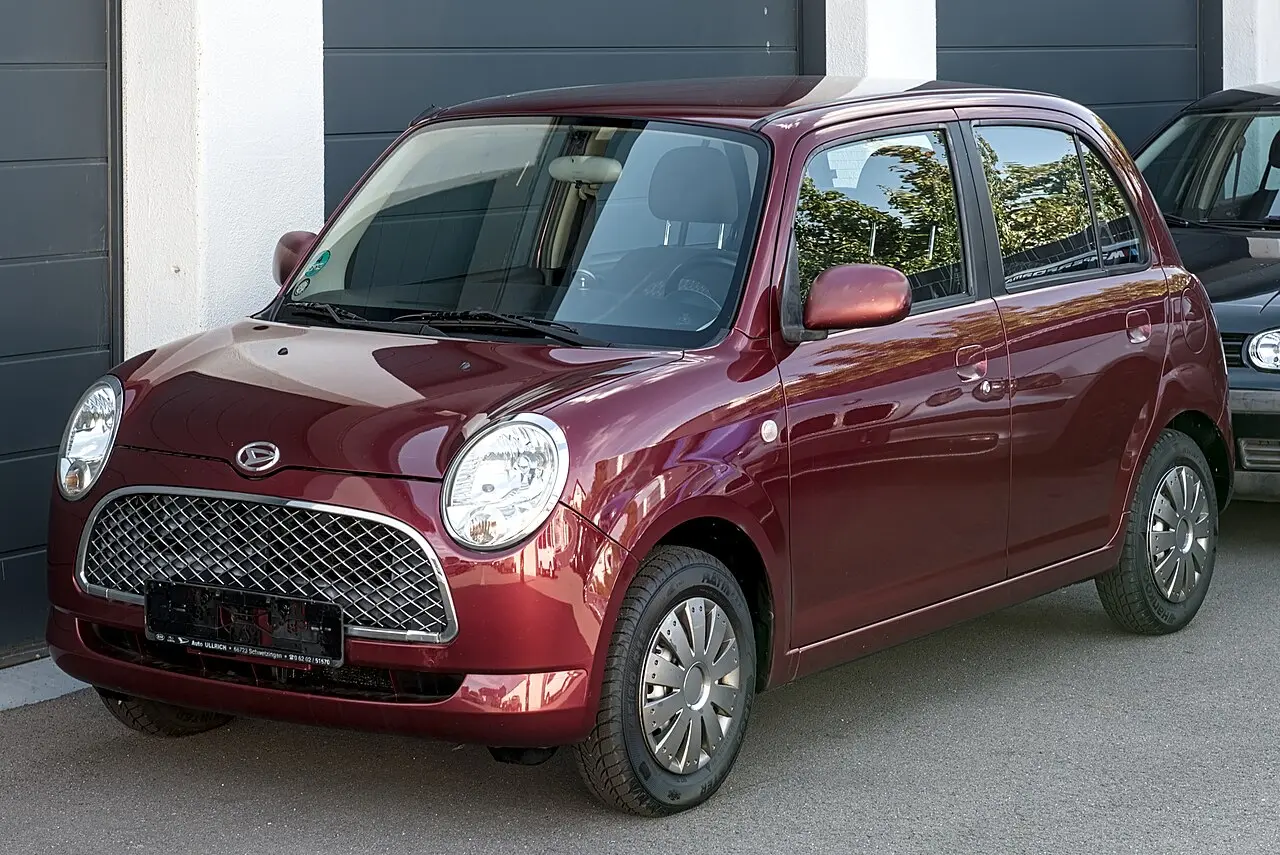
What is the Daihatsu Trevis?
The Trevis is a small five-door hatchback with rounded, retro-inspired styling. It was the European export version of the second-generation Mira Gino, bringing that model’s distinctive appearance to Daihatsu’s compact-car range. Daihatsu began in Osaka in 1907 as an engine maker and has a long history of producing compact vehicles.
Generations and engines
The Trevis was based on the second-generation Mira Gino and was sold with a 1.0-litre petrol engine. Its five-door body makes the rear seats easy to reach, while the rounded styling sets it apart from more conventional small hatchbacks.
How economical is the Daihatsu Trevis?
European Union registration figures show one petrol version in 2010, with 436 registrations.
Where was the Trevis sold?
Daihatsu offered the Trevis in European markets as an export version of the Mira Gino, with its own name and styling details. It is a small city hatchback with five doors and a distinctive retro look.
Questions and answers
What kind of car is the Daihatsu Trevis?
It is a small five-door hatchback with retro-inspired styling.
What engine did the Trevis use?
The European version used a 1.0-litre petrol engine.
How many Trevis registrations were recorded in the EU in 2010?
There were 436 registrations in 2010.