CUPRA

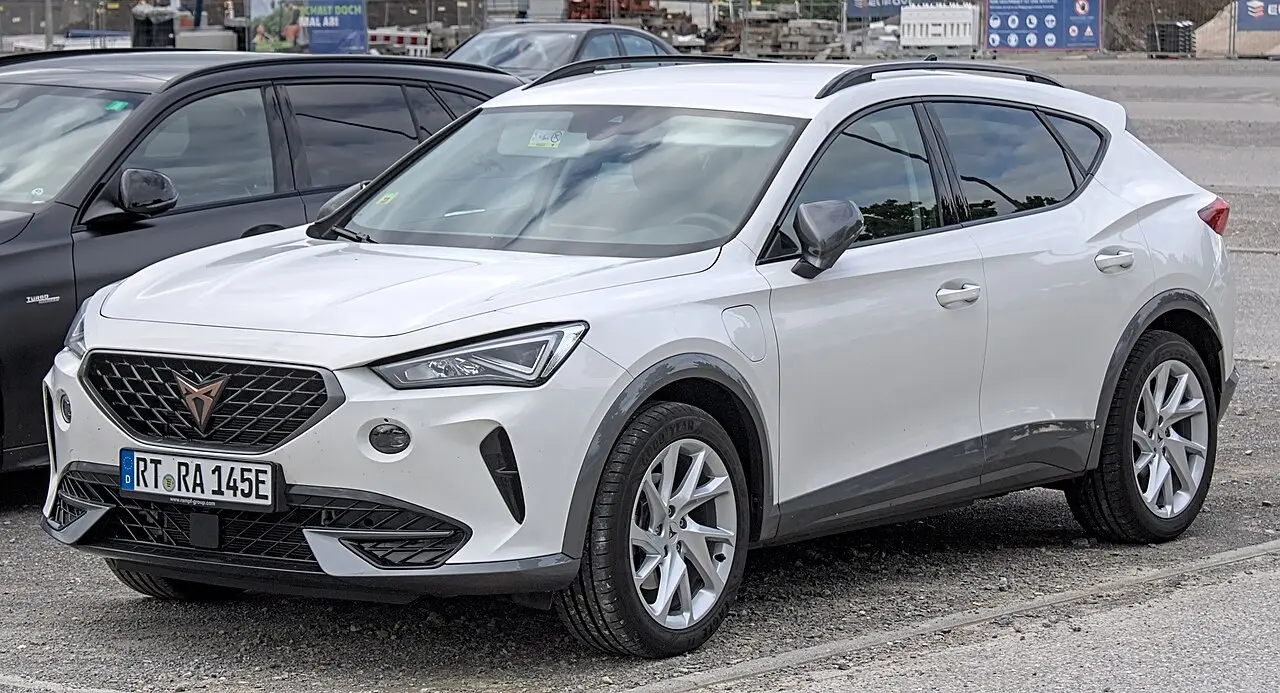
CUPRA Formentor

CUPRA Formentor
Photo: Alexander-93 / Wikimedia Commons · CC BY-SA 4.0

The official data lists 53 versions of the CUPRA Formentor (2020–2026), in the European Union and France. Each market publishes its own figures, measured on its own test procedure.

At a glance

Years in the data
2020–2026
Markets
European Union, France
Engines
1.4 L to 2.5 L
Power
110 kW (150 PS) to 287 kW (390 PS)
Fuels
Petrol, Hybrid, Plug-in hybrid, Diesel
Lowest consumption (European Union)
1.3 L/100 km (WLTP)
Lowest consumption (France)
7.1 L/100 km (WLTP)
Plug-in hybrid, weighted (European Union)
0.5 L/100 km (WLTP)
New registrations in the EU
394,673

What is the CUPRA Formentor?

The Formentor is a compact crossover with a coupé-like roofline, and the first model developed entirely for CUPRA. Its raised body and practical shape bring the brand’s sporty character to a car suited to everyday driving. The first generation began in 2020, and a refresh during that generation brought updated styling and plug-in hybrid changes.

Engines and power

EU versions span 1.4 L to 2.5 L engines and 110 kW (150 PS) to 287 kW (390 PS). Petrol, diesel, hybrid and plug-in hybrid options give the range a broad spread of powertrains. The 1.5 L petrol with 110 kW (150 PS) was the most registered configuration in each of 2021, 2022 and 2023.

How economical is the CUPRA Formentor?

The lowest listed EU WLTP consumption for petrol, diesel and hybrid versions is 1.3 L/100 km. Plug-in hybrids have a lowest official weighted figure of 0.5 L/100 km WLTP, which assumes that some driving is electric. France’s ADEME listing for 2026 includes two 2.0 L petrol versions, with power from 140 kW (190 PS) to 180 kW (245 PS) and a lowest WLTP figure of 7.1 L/100 km.

EU registrations

The Formentor recorded 394,673 EU registrations from 2020 to 2025. Fuel economy figures from other markets may use different test procedures: Europe uses WLTP, the USA uses EPA testing and Canada uses a 5-cycle test.

Questions and answers

When did the CUPRA Formentor first appear?

Its first generation began in 2020.

What engines and fuels were offered in EU versions?

The EU range includes 1.4 L to 2.5 L engines, with petrol, diesel, hybrid and plug-in hybrid powertrains.

What is the lowest official consumption figure?

The lowest listed figure is 0.5 L/100 km WLTP for a plug-in hybrid, a weighted result that assumes some electric driving.

How many Formentors were registered in the EU?

The total was 394,673 from 2020 to 2025.

Formentor first generation (since 2020)

CUPRA Formentor first generation
Photo: Alexander-93 / Wikimedia Commons · CC BY-SA 4.0

References: en.wikipedia.org, nieuws.cupraofficial.nl

European Union 51 versions

New cars registered in the EU (plus Norway and Iceland), from the European Environment Agency. Figures on the NEDC procedure until 2020 and on WLTP from 2021; versions are grouped by engine and power, with their number of registrations.

Years and versionEnginePowerFuelConsumption (combined)CO₂Electric rangeEU registrations
2024–20251.5 L110 kW (150 PS)Hybrid5.9 L/100 km WLTP135 g/km–28,392
20251.5 L110 kW (150 PS)Plug-in hybrid0.6 L/100 km WLTP16.4 kWh/100 km WLTP13 g/km121 km15,234
2024–20252.0 L245 kW (333 PS)Petrol8.8 L/100 km WLTP200 g/km–11,552
20251.5 L130 kW (177 PS)Plug-in hybrid0.5 L/100 km WLTP17.1 kWh/100 km WLTP11 g/km117 km10,029
20252.0 L110 kW (150 PS)Diesel5.2 L/100 km WLTP137 g/km–5,764
20251.5 L110 kW (150 PS)Petrol6.1 L/100 km WLTP138 g/km–3,727
20252.0 L195 kW (265 PS)Petrol7.9 L/100 km WLTP178 g/km–1,243
20252.0 L150 kW (204 PS)Petrol7.6 L/100 km WLTP173 g/km–688
20251.4 L110 kW (150 PS)Plug-in hybrid1.4 L/100 km WLTP15.5 kWh/100 km WLTP32 g/km56 km152
20252.0 L228 kW (310 PS)Petrol8.5 L/100 km WLTP193 g/km–86
20252.5 L287 kW (390 PS)Petrol10.2 L/100 km WLTP232 g/km–60
20252.0 L140 kW (190 PS)Petrol7.7 L/100 km WLTP175 g/km–20
20241.5 L110 kW (150 PS)Petrol6.5 L/100 km WLTP151 g/km–23,609
20241.4 L110 kW (150 PS)Plug-in hybrid1.6 L/100 km WLTP15.4 kWh/100 km WLTP30 g/km56 km16,557
20242.0 L228 kW (310 PS)Petrol8.5 L/100 km WLTP192 g/km–7,299
20242.0 L110 kW (150 PS)Diesel5.6 L/100 km WLTP147 g/km–5,547
20242.0 L140 kW (190 PS)Petrol7.5 L/100 km WLTP167 g/km–4,430
20241.5 L130 kW (177 PS)Plug-in hybrid0.5 L/100 km WLTP17.2 kWh/100 km WLTP10 g/km117 km3,932
20242.0 L180 kW (245 PS)Petrol7.7 L/100 km WLTP174 g/km–2,028
20241.5 L110 kW (150 PS)Plug-in hybrid0.6 L/100 km WLTP16.6 kWh/100 km WLTP10 g/km120 km1,649
20242.5 L287 kW (390 PS)Petrol10.2 L/100 km WLTP231 g/km–1,559
20241.4 L110 kW (150 PS)Petrol1.3 L/100 km WLTP15.3 kWh/100 km WLTP116 g/km–32
20231.5 L110 kW (150 PS)Petrol6.8 L/100 km WLTP153 g/km–36,087
20231.4 L110 kW (150 PS)Plug-in hybrid1.3 L/100 km WLTP15.5 kWh/100 km WLTP30 g/km56 km21,371
20232.0 L110 kW (150 PS)Diesel5.6 L/100 km WLTP148 g/km–10,059
20232.0 L228 kW (310 PS)Petrol8.5 L/100 km WLTP193 g/km–6,393
20232.0 L140 kW (190 PS)Petrol7.7 L/100 km WLTP175 g/km–4,842
20232.0 L180 kW (245 PS)Petrol7.7 L/100 km WLTP174 g/km–3,849
20232.5 L287 kW (390 PS)Petrol10.2 L/100 km WLTP231 g/km–2,681
20231.5 L130 kW (177 PS)Plug-in hybrid–143 g/km–15
20221.5 L110 kW (150 PS)Petrol6.0 L/100 km WLTP152 g/km–28,575
20221.4 L110 kW (150 PS)Plug-in hybrid1.4 L/100 km WLTP15.4 kWh/100 km WLTP31 g/km61 km21,408
20222.0 L110 kW (150 PS)Diesel5.1 L/100 km WLTP143 g/km–9,666
20222.0 L228 kW (310 PS)Petrol8.3 L/100 km WLTP193 g/km–7,314
20222.0 L140 kW (190 PS)Petrol7.3 L/100 km WLTP176 g/km–3,352
20222.5 L287 kW (390 PS)Petrol9.9 L/100 km WLTP231 g/km–1,801
20222.0 L180 kW (245 PS)Petrol7.4 L/100 km WLTP174 g/km–1,747
20221.4 L110 kW (150 PS)Plug-in hybrid1.3 L/100 km WLTP13.4 kWh/100 km WLTP31 g/km–10
20211.5 L110 kW (150 PS)Petrol6.4 L/100 km WLTP151 g/km–29,022
20211.4 L110 kW (150 PS)Plug-in hybrid1.5 L/100 km WLTP15.4 kWh/100 km WLTP31 g/km59 km27,343
20212.0 L228 kW (310 PS)Petrol8.4 L/100 km WLTP193 g/km–18,434
20212.0 L110 kW (150 PS)Diesel5.2 L/100 km WLTP145 g/km–6,550
20212.0 L140 kW (190 PS)Petrol7.5 L/100 km WLTP175 g/km–2,012
20211.4 L110 kW (150 PS)Hybrid1.3 L/100 km WLTP15.3 kWh/100 km WLTP29 g/km56 km1,146
20212.0 L180 kW (245 PS)Petrol7.4 L/100 km WLTP174 g/km–668
20212.5 L287 kW (390 PS)Petrol10.2 L/100 km WLTP231 g/km–343
20202.0 L228 kW (310 PS)Petrol–175 g/km–5,773
20201.5 L110 kW (150 PS)Petrol–127 g/km–570
20201.4 L110 kW (150 PS)Plug-in hybrid–138 g/km–22
20201.4 L80 kW (109 PS)Petrol–37 g/km–17
20202.0 L110 kW (150 PS)Diesel–164 g/km–14

France 2 versions

New cars on sale in France, from ADEME Car Labelling. NEDC figures until 2015, WLTP figures in the current catalogue.

Years and versionEnginePowerFuelGearboxConsumption (combined)CO₂
2026CUPRA FORMENTOR 2.0 TSI (190ch) DSG7 4DRIVE2.0 L140 kW (190 PS)Petrol7-speed automatic7.1 L/100 km WLTP162 g/km
2026CUPRA FORMENTOR 2.0 TSI (245ch) DSG72.0 L180 kW (245 PS)Petrol7-speed automatic7.2 L/100 km WLTP164 g/km

Official figures are measured on standard test procedures and differ between markets. Your consumption depends on how, where and in what conditions you drive.