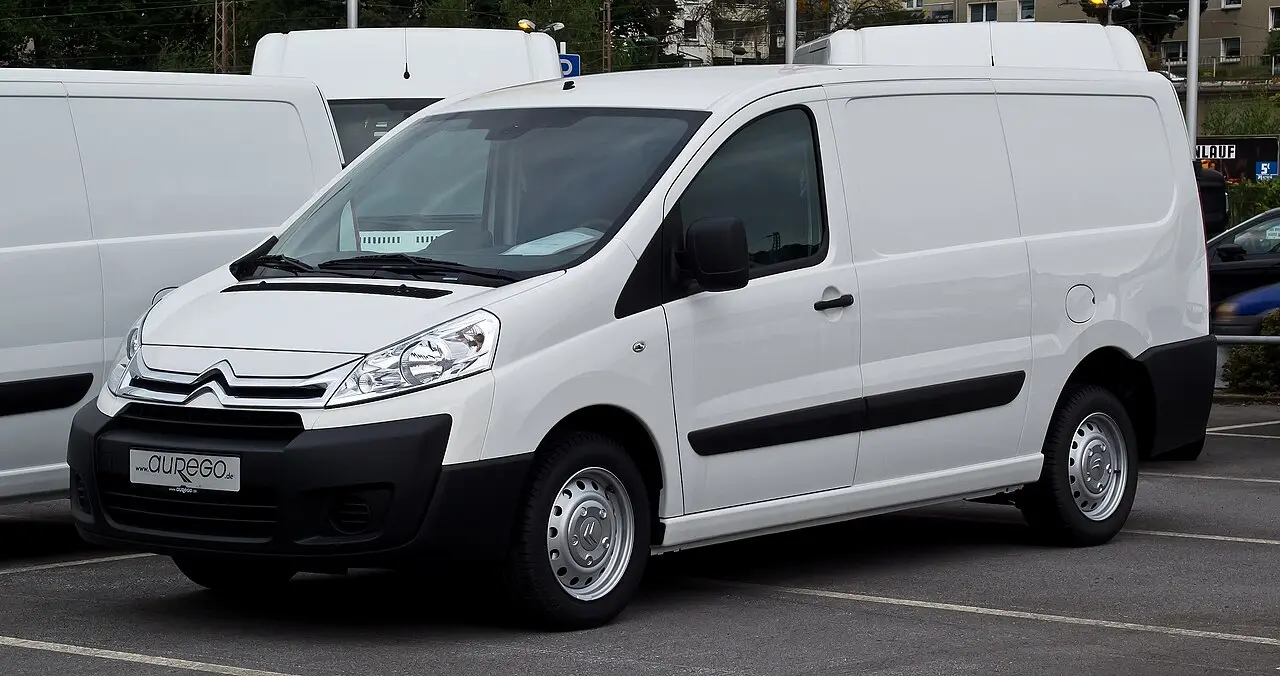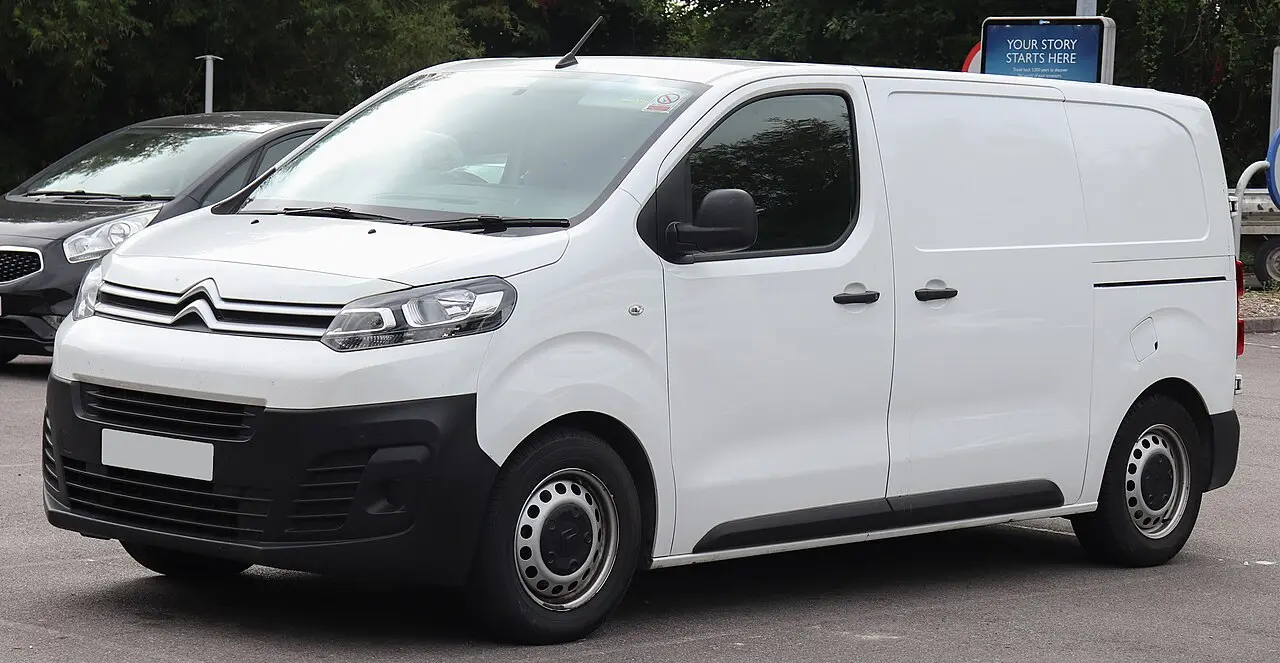
What is the Citroën Jumpy?
The Jumpy is a mid-size van for work and passenger transport. It sits between the Berlingo and Jumper in Citroën’s commercial vehicle range, with versions for carrying goods or people.
Citroën introduced the Jumpy in 1995. Since then, it has served a range of transport needs, from trades and deliveries to passenger shuttles.
Generations and engines
The second-generation Jumpy (G9) ran from 2007 to 2016. The third generation (K0) began in 2016, bringing a modular platform and updated driver assistance and engines. It has been offered in van, Combi, double-cab and platform-cab forms.
In EU registration figures from 2010 to 2025, engine sizes range from 1.5 to 2.0 litres and power from 57 kW (77 PS) to 165 kW (224 PS). The recorded fuel types include diesel, electric, other, hybrid and petrol. In France, figures from 2012 to 2026 cover diesel and electric versions, with power from 57 kW (77 PS) to 120 kW (163 PS).
How economical is the Citroën Jumpy?
The lowest listed EU consumption is 6.3 L/100 km on the WLTP test, for petrol, diesel or hybrid versions. France’s lowest listed figure is 6.6 L/100 km on NEDC for those fuel types. WLTP and NEDC are different test procedures, so the figures are best read within their respective markets.
EU registrations total 135,523 from 2010 to 2025. The most registered listed version was the 1.5-litre diesel with 88 kW (120 PS) in 2019. Next came 2.0-litre diesels with 130 kW (177 PS), listed in 2019 and 2018.
Where was the Jumpy sold?
The Jumpy has appeared in European Union registration figures and French ADEME figures. As part of Citroën’s commercial vehicle range, it has been offered in configurations for carrying either goods or passengers.
Questions and answers
When did the current Jumpy generation begin?
The third generation, known by code K0, began in 2016.
What engines and power are listed for the Jumpy in the EU?
EU figures cover 1.5- to 2.0-litre engines and outputs from 57 kW (77 PS) to 165 kW (224 PS).
What is the lowest listed Jumpy fuel consumption?
The EU figure is 6.3 L/100 km on WLTP; France’s ADEME figure is 6.6 L/100 km on NEDC.