Citroën

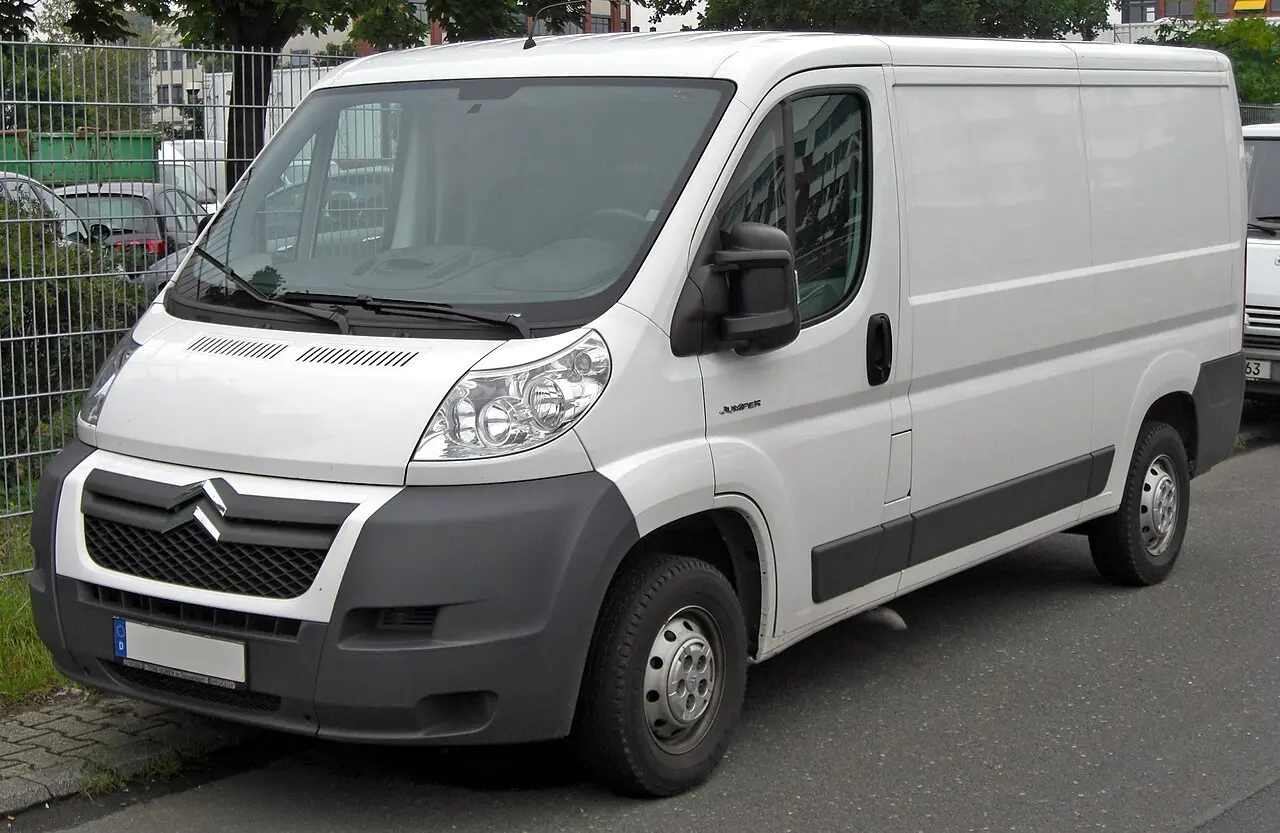
Citroën Jumper

Citroën Jumper
Photo: M 93 / Wikimedia Commons · CC BY-SA 3.0

The official data lists 87 versions of the Citroën Jumper (2010–2025), in the European Union and France. Each market publishes its own figures, measured on its own test procedure.

At a glance

Years in the data
2010–2025
Markets
European Union, France
Engines
2.0 L to 3.0 L
Power
81 kW (110 PS) to 130 kW (177 PS)
Fuels
Diesel, Hybrid
Lowest consumption (France)
6.8 L/100 km (NEDC)
Lowest consumption (European Union)
9.4 L/100 km (WLTP)
New registrations in the EU
19,588

What is the Citroën Jumper?

The Jumper is Citroën’s large van, built for tradespeople, delivery work and other jobs that need a roomy, adaptable vehicle. It sits in the brand’s commercial range, with body styles suited to carrying people, goods or equipment. Citroën launched the Jumper in 1994 as part of a project developed with Peugeot and Fiat.

The second generation, known as X250, ran from 2007 to 2014. The third generation, X290, followed from 2015. It brought updated styling and a revised cabin while keeping the Jumper’s focus on working life.

Engines and power

In EU registration figures from 2010 to 2025, the Jumper spans diesel, hybrid and other fuel entries. Engine sizes range from 2.0 to 3.0 litres, with power from 74 kW (101 PS) to 130 kW (177 PS). French ADEME entries from 2012 to 2015 list diesel versions rated from 81 kW (110 PS) to 130 kW (177 PS).

The most registered individual version in the EU figures was a 2.0-litre diesel rated at 96 kW (131 PS) in 2016, with 1,752 registrations. The same engine and power had 1,270 registrations in 2017. A 2.2-litre diesel led the listed versions in 2010, with 1,516 registrations.

How economical is the Citroën Jumper?

The lowest listed EU figure is 9.4 L/100 km on the WLTP test. France’s lowest listed figure is 6.8 L/100 km on NEDC. These results use different test procedures, so they are best read in their market context. Consumption in everyday use also varies with the Jumper’s body style, load and work.

Where was the Jumper sold?

EU registration figures record 19,588 Jumper registrations from 2010 to 2025. French ADEME entries cover 2012 to 2015.

Questions and answers

What generations of Citroën Jumper are listed?

The second generation, X250, ran from 2007 to 2014; the third generation, X290, began in 2015.

What engines and power does the Jumper offer?

EU figures span 2.0- to 3.0-litre engines and 74 kW (101 PS) to 130 kW (177 PS).

What is the lowest official consumption figure?

The lowest listed EU figure is 9.4 L/100 km on WLTP; France’s lowest listed figure is 6.8 L/100 km on NEDC.

Jumper II (2007–2014)

Citroën Jumper II
Photo: M 93 / Wikimedia Commons · CC BY-SA 3.0

Model codes: X250 · References: autobild.de, en.wikipedia.org

Show all 43 versions

Jumper III (since 2015)

Model codes: X290 · References: autobild.de, en.wikipedia.org

European Union 39 versions

New cars registered in the EU (plus Norway and Iceland), from the European Environment Agency. Figures on the NEDC procedure until 2020 and on WLTP from 2021; versions are grouped by engine and power, with their number of registrations.

Years and versionEnginePowerFuelConsumption (combined)CO₂EU registrations
20252.2 L103 kW (140 PS)Diesel8.1 L/100 km WLTP213 g/km10
20242.2 L121 kW (165 PS)Diesel9.4 L/100 km WLTP247 g/km12
20232.2 L103 kW (140 PS)Diesel9.0 L/100 km WLTP237 g/km14
20222.0 L13 kW (18 PS)Diesel–158 g/km14
20222.2 L121 kW (165 PS)Diesel8.2 L/100 km WLTP234 g/km12
20212.2 L103 kW (140 PS)Diesel9.4 L/100 km WLTP248 g/km150
20212.2 L121 kW (165 PS)Diesel9.4 L/100 km WLTP248 g/km44
20212.2 L88 kW (120 PS)Diesel8.6 L/100 km WLTP232 g/km24
20202.2 L103 kW (140 PS)Diesel–173 g/km633
20202.2 L121 kW (165 PS)Diesel–173 g/km390
20202.2 L88 kW (120 PS)Diesel–159 g/km286
20202.0 L120 kW (163 PS)Diesel–167 g/km12
20192.2 L103 kW (140 PS)Diesel–173 g/km858
20192.2 L88 kW (120 PS)Diesel–159 g/km590
20192.0 L120 kW (163 PS)Diesel–164 g/km182
20192.0 L96 kW (131 PS)Diesel–161 g/km122
20192.2 L121 kW (165 PS)Diesel–177 g/km94
20192.0 L81 kW (110 PS)Diesel–154 g/km34
20182.0 L96 kW (131 PS)Diesel–157 g/km800
20182.0 L120 kW (163 PS)Diesel–161 g/km358
20182.0 L81 kW (110 PS)Diesel–153 g/km152
20172.0 L96 kW (131 PS)Diesel–154 g/km1,270
20172.0 L81 kW (110 PS)Other fuel–151 g/km330
20172.0 L120 kW (163 PS)Diesel–159 g/km290
20162.0 L96 kW (131 PS)Diesel–157 g/km1,752
20162.0 L81 kW (110 PS)Diesel–156 g/km632
20162.0 L120 kW (163 PS)Diesel–160 g/km198
20162.2 L110 kW (150 PS)Diesel–201 g/km48
20162.2 L96 kW (131 PS)Diesel–196 g/km22
20162.2 L81 kW (110 PS)Diesel–192 g/km14
20152.2 L96 kW (131 PS)Diesel–196 g/km914
20152.0 L96 kW (131 PS)Diesel–157 g/km272
20152.2 L110 kW (150 PS)Diesel–211 g/km234
20152.2 L81 kW (110 PS)Diesel–194 g/km226
20153.0 L130 kW (177 PS)Diesel–211 g/km80
20152.0 L81 kW (110 PS)Diesel–153 g/km50
20152.2 L81 kW (110 PS)Hybrid–191 g/km38
20152.2 L96 kW (131 PS)Hybrid–183 g/km20
20152.0 L120 kW (163 PS)Diesel–158 g/km12

France 5 versions

New cars on sale in France, from ADEME Car Labelling. NEDC figures until 2015, WLTP figures in the current catalogue.

Years and versionEnginePowerFuelGearboxConsumption (combined)CO₂
2015NOUVEAU JUMPER COMBI 30 L1H1 HDi (110ch) BVM6–81 kW (110 PS)Diesel6-speed manual7.1 L/100 km NEDC187 g/km
2015NOUVEAU JUMPER COMBI 30 L1H1 e-HDi (130ch) BVM6–96 kW (131 PS)Diesel6-speed manual6.8 L/100 km NEDC179 g/km
2015NOUVEAU JUMPER COMBI 33 L2H2 e-HDi (130ch) BVM6–96 kW (131 PS)Diesel6-speed manual7.0 L/100 km NEDC184 g/km
2015NOUVEAU JUMPER COMBI 30 L1H1 e-HDi (150ch) BVM6–110 kW (150 PS)Diesel6-speed manual6.8 L/100 km NEDC179 g/km
2015NOUVEAU JUMPER COMBI 33 L2H2 e-HDi (150ch) BVM6–110 kW (150 PS)Diesel6-speed manual7.0 L/100 km NEDC184 g/km

Official figures are measured on standard test procedures and differ between markets. Your consumption depends on how, where and in what conditions you drive.