Citroën

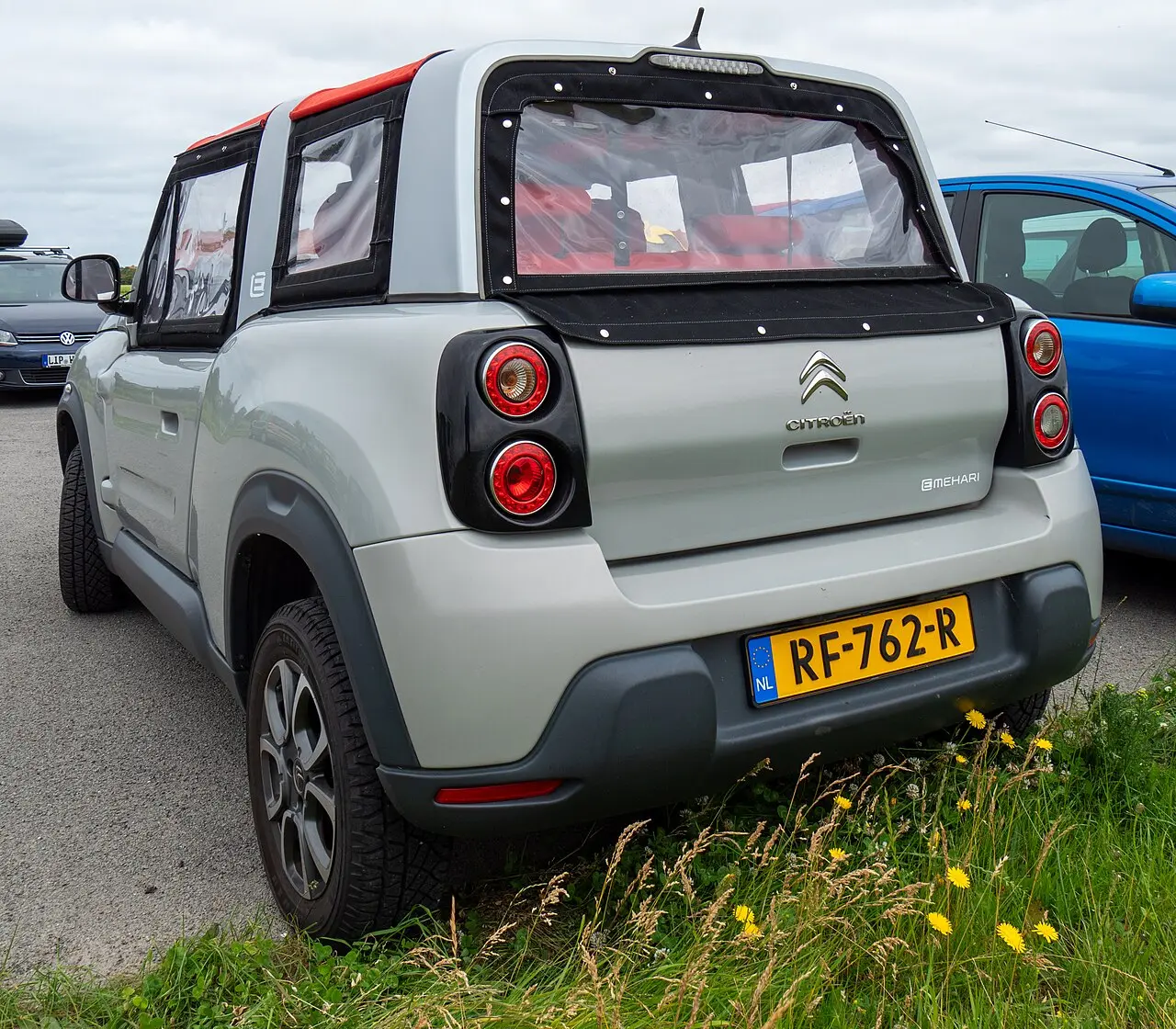
Citroën E-Mehari

Citroën E-Mehari
Photo: JoachimKohler-HB / Wikimedia Commons · CC BY-SA 4.0

The official data lists 5 versions of the Citroën E-Mehari (2016–2019), in the European Union. Each market publishes its own figures, measured on its own test procedure.

At a glance

Years in the data
2016–2019
Markets
European Union
Power
20 kW (27 PS) to 35 kW (48 PS)
Fuels
Electric
New registrations in the EU
2,614

What is the Citroën E-Méhari?

The E-Méhari is an electric, open-top car with a relaxed, beach-car character. Its name and styling nod to Citroën’s original Méhari, while its electric drive gave that idea a modern form. A fabric roof and a simple, washable interior suited casual trips and fair-weather driving. It stood apart from Citroën’s regular hatchbacks and family cars as a distinctive small cabriolet.

Developed with the French Bolloré group, the E-Méhari had ridged doors that echoed the original Méhari’s bodywork. It was registered in the European Union from 2016 to 2019; its first generation ran from 2017 to 2019.

Engines and power

Every E-Méhari version was electric. Power ranged from 20 kW (27 PS) to 35 kW (48 PS). The 29 kW (39 PS) version was registered most often, followed by the 35 kW (48 PS) version.

European registrations

There were 2,614 E-Méhari registrations in the European Economic Area from 2016 to 2019. The 29 kW (39 PS) version accounted for 1,682 registrations, followed by the 35 kW (48 PS) version with 834 and the 20 kW (27 PS) version with 50.

Questions and answers

Was the E-Méhari fully electric?

Yes. Every version was electric.

How much power did it have?

Outputs ranged from 20 kW (27 PS) to 35 kW (48 PS).

When was the E-Méhari registered in the European Union?

European Economic Area registrations ran from 2016 to 2019.

What car inspired its name and design?

It paid tribute to Citroën’s original Méhari, including ridged doors that echoed the earlier car’s bodywork.

E-Mehari first generation (2017–2019)

Citroën E-Mehari first generation
Photo: JoachimKohler-HB / Wikimedia Commons · CC BY-SA 4.0

References: en.wikipedia.org

European Union 3 versions

New cars registered in the EU (plus Norway and Iceland), from the European Environment Agency. Figures on the NEDC procedure until 2020 and on WLTP from 2021; versions are grouped by engine and power, with their number of registrations.

Years and versionEnginePowerFuelConsumption (combined)CO₂EU registrations
2017–2019Electric motor35 kW (48 PS)Electric20.0 kWh/100 km NEDC0 g/km834
2019Electric motor50 kW (68 PS)Electric20.0 kWh/100 km NEDC0 g/km10
2018Electric motor20 kW (27 PS)Electric41.3 kWh/100 km NEDC0 g/km50

Versions outside these generations

European Union 2 versions

New cars registered in the EU (plus Norway and Iceland), from the European Environment Agency. Figures on the NEDC procedure until 2020 and on WLTP from 2021; versions are grouped by engine and power, with their number of registrations.

Years and versionEnginePowerFuelConsumption (combined)CO₂EU registrations
2016–2019Electric motor29 kW (39 PS)Electric41.3 kWh/100 km NEDC0 g/km1,682
2016–2017Electric motor20 kW (27 PS)Electric41.3 kWh/100 km NEDC0 g/km38

Official figures are measured on standard test procedures and differ between markets. Your consumption depends on how, where and in what conditions you drive.