Chrysler

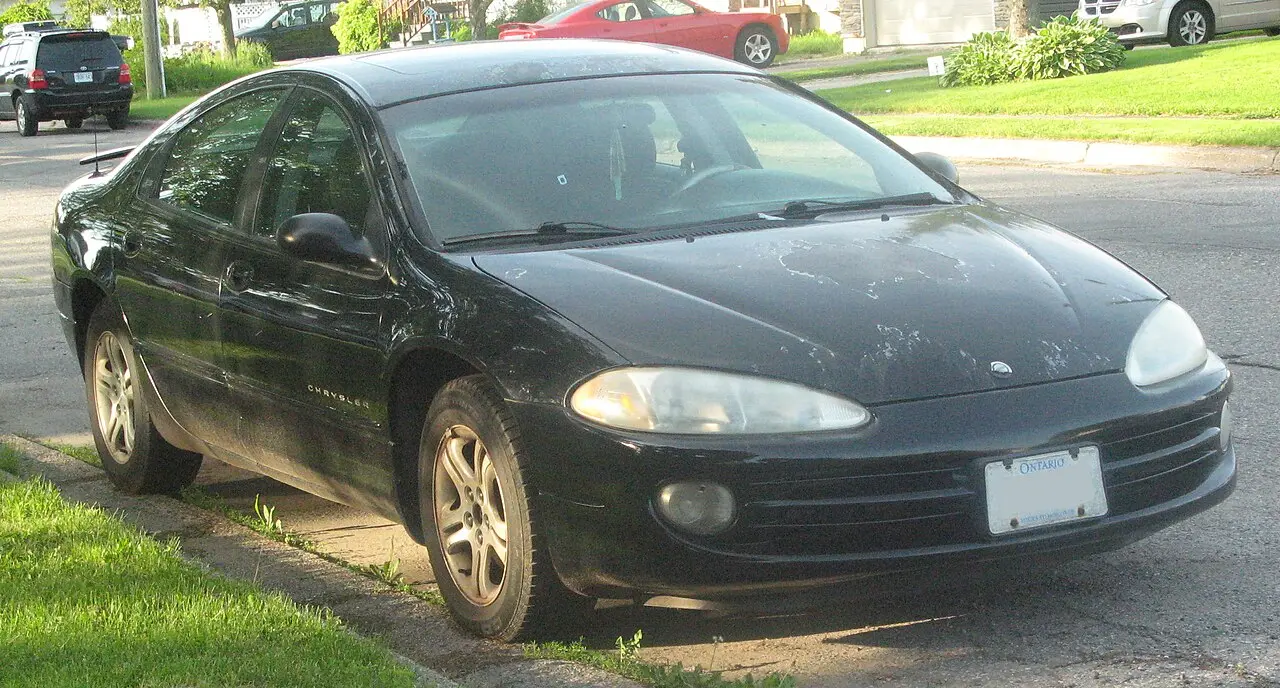
Chrysler Intrepid

Chrysler Intrepid
Photo: SsmIntrigue / Wikimedia Commons · CC BY-SA 4.0

The official data lists 24 versions of the Chrysler Intrepid (1996–2004), in Canada. Each market publishes its own figures, measured on its own test procedure.

At a glance

Years in the data
1996–2004
Markets
Canada
Engines
2.7 L to 3.5 L
Fuels
Petrol
Lowest consumption (Canada)
10.8 L/100 km (5-cycle)

What kind of car was the Chrysler Intrepid?

The Intrepid was a large four-door sedan sold in Canada under the Chrysler name. It was known as the Dodge Intrepid in other markets. Its flowing shape and front-wheel-drive layout reflected Chrysler’s cab-forward design approach, which placed the cabin farther forward in the body.

Both generations used Chrysler’s LH platform. The first ran from 1996 to 1997, followed by the second from 1998 to 2004. The later generation updated the styling while retaining the front-wheel-drive sedan layout.

Engines and power

Canadian Intrepid models in NRCan figures used petrol engines ranging from 2.7 L to 3.5 L. Engine choice varied by year and version.

How economical was the Chrysler Intrepid?

Canada’s NRCan figures cover 1996–2004. The lowest listed fuel consumption is 10.8 L/100 km on the Canadian 5-cycle test. Canada’s procedure differs from the US EPA and European WLTP or NEDC tests, so results from those markets are not directly interchangeable.

Where was it sold?

The Intrepid appears in Canadian NRCan figures for 1996–2004. Canadian-market cars carried Chrysler badging; in other markets the model was known as the Dodge Intrepid. The first generation ran from 1996 to 1997 and the second from 1998 to 2004.

Questions and answers

Was the Chrysler Intrepid the same model as the Dodge Intrepid?

The sedan was sold as the Chrysler Intrepid in Canada and was known as the Dodge Intrepid in other markets.

What were the Intrepid generations?

The first generation ran from 1996 to 1997, followed by the second from 1998 to 2004.

What engines did the Canadian Intrepid use?

The NRCan entries list petrol engines from 2.7 L to 3.5 L.

What is the lowest listed fuel consumption?

It is 10.8 L/100 km on Canada’s NRCan 5-cycle test.

Intrepid first generation (1996–1997)

Model codes: LH · Sold in: Canada · References: en.wikipedia.org, en.wikipedia.org

Show all 6 versions

Intrepid second generation (1998–2004)

Chrysler Intrepid second generation
Photo: SsmIntrigue / Wikimedia Commons · CC BY-SA 4.0

Model codes: LH · Sold in: Canada · References: en.wikipedia.org, en.wikipedia.org

Canada 18 versions

Model years sold in Canada, from Natural Resources Canada fuel consumption ratings (5-cycle test).

Years and versionEngineFuelGearboxConsumption (combined)CO₂
2003–2004Full-size2.7 LPetrol4-speed automatic10.8 L/100 km 5-cycle248 g/km
2003–2004Full-size3.5 LPetrol4-speed automatic11.9 L/100 km 5-cycle274 g/km
2002Full-size2.7 LPetrol4-speed automatic11.4 L/100 km 5-cycle262 g/km
2002Full-size2.7 LPetrol4-speed automatic11.5 L/100 km 5-cycle265 g/km
2002Full-size3.5 LPetrol4-speed automatic12.3 L/100 km 5-cycle283 g/km
2002Full-size3.5 LPetrol4-speed automatic12.5 L/100 km 5-cycle288 g/km
2001Full-size2.7 LPetrol4-speed automatic11.5 L/100 km 5-cycle265 g/km
2001Full-size2.7 LPetrol4-speed automatic11.4 L/100 km 5-cycle262 g/km
2001Full-size3.2 LPetrol4-speed automatic12.1 L/100 km 5-cycle278 g/km
2001Full-size3.5 LPetrol4-speed automatic12.5 L/100 km 5-cycle288 g/km
2000Full-size2.7 LPetrol4-speed automatic11.3 L/100 km 5-cycle260 g/km
2000Full-size2.7 LPetrol4-speed automatic11.2 L/100 km 5-cycle258 g/km
2000Full-size3.2 LPetrol4-speed automatic11.9 L/100 km 5-cycle274 g/km
2000Full-size3.5 LPetrol4-speed automatic12.3 L/100 km 5-cycle283 g/km
1999Full-size2.7 LPetrol4-speed automatic11.5 L/100 km 5-cycle265 g/km
1999Full-size3.2 LPetrol4-speed automatic12.1 L/100 km 5-cycle278 g/km
1998Full-size2.7 LPetrol4-speed automatic10.8 L/100 km 5-cycle248 g/km
1998Full-size3.2 LPetrol4-speed automatic11.8 L/100 km 5-cycle271 g/km

Official figures are measured on standard test procedures and differ between markets. Your consumption depends on how, where and in what conditions you drive.