The official data lists 127 versions of the Cadillac Escalade (1999–2027), in the European Union, the United Kingdom, France, the United States, and Canada. Each market publishes its own figures, measured on its own test procedure.
At a glance
Years in the data
1999–2027
Markets
European Union, United Kingdom, France, United States, Canada
Engines
3.0 L to 6.2 L
Power
248 kW (337 PS) to 313 kW (426 PS)
Fuels
Petrol, Hybrid, Diesel, Flex fuel (E85)
Lowest consumption (European Union)
7.3 L/100 km (WLTP)
Lowest consumption (United States)
10.2 L/100 km (EPA)
Lowest consumption (Canada)
10.5 L/100 km (5-cycle)
New registrations in the EU
2,569
What is the Cadillac Escalade?
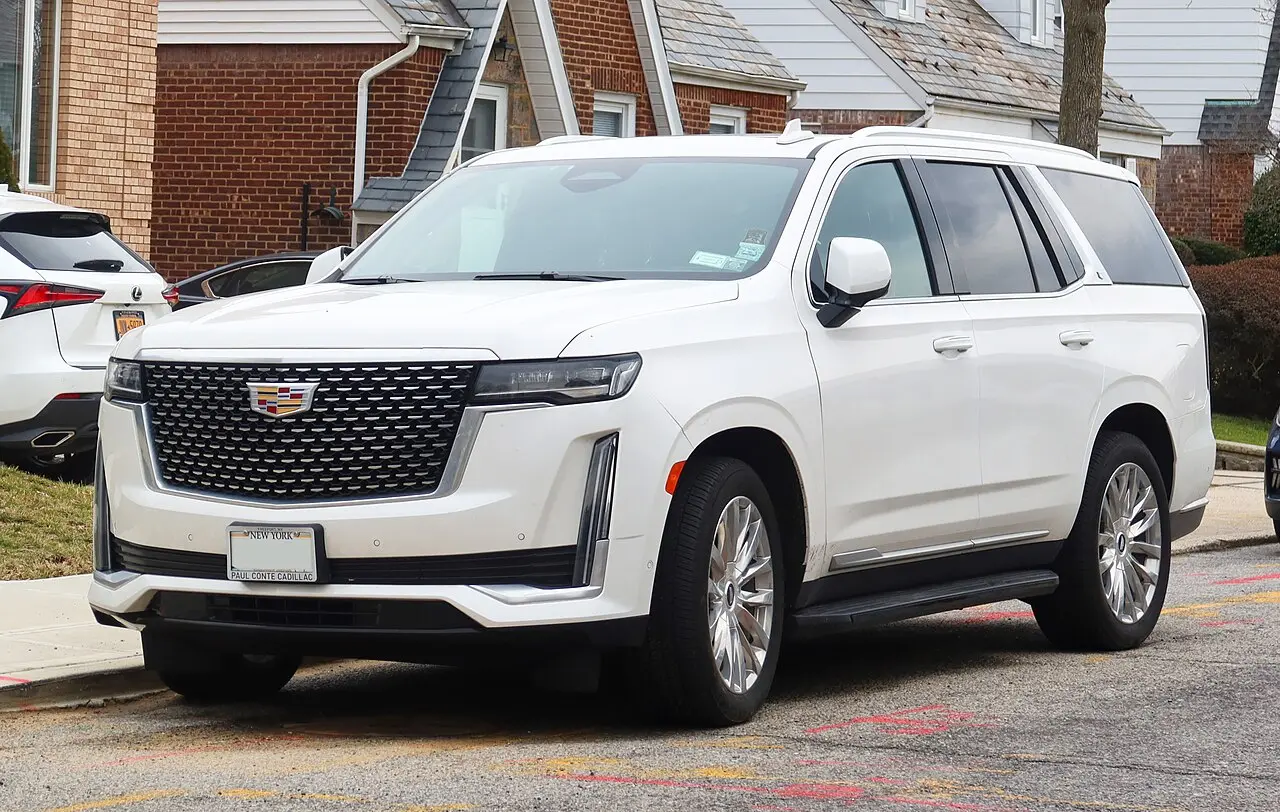
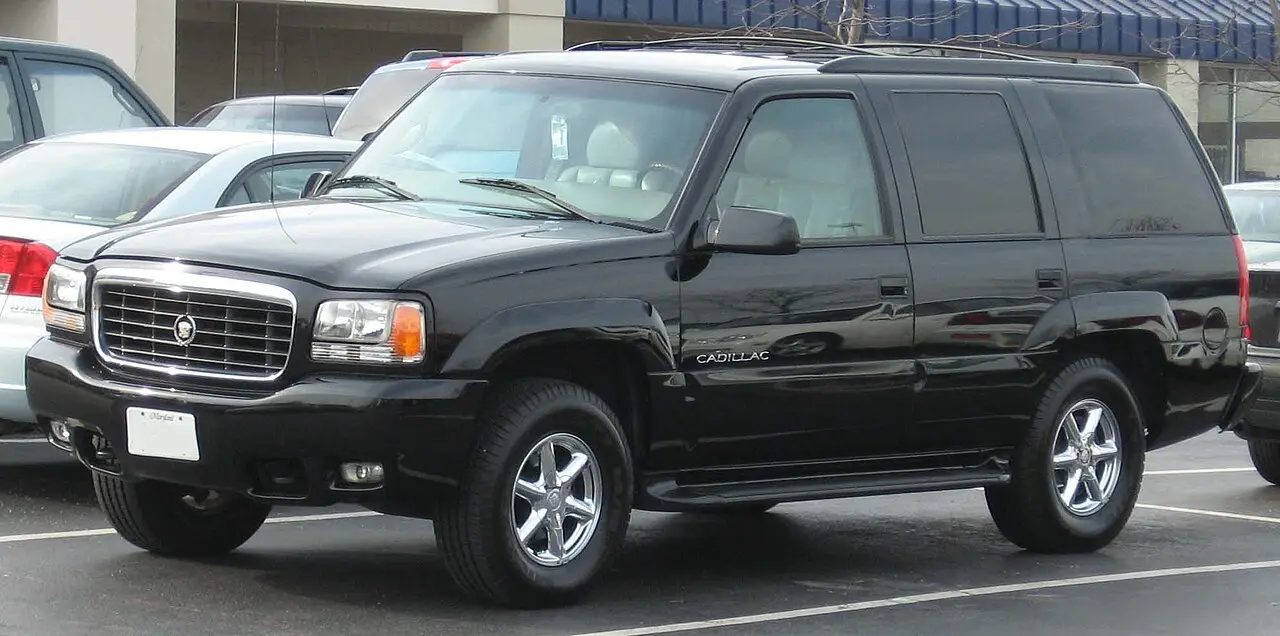
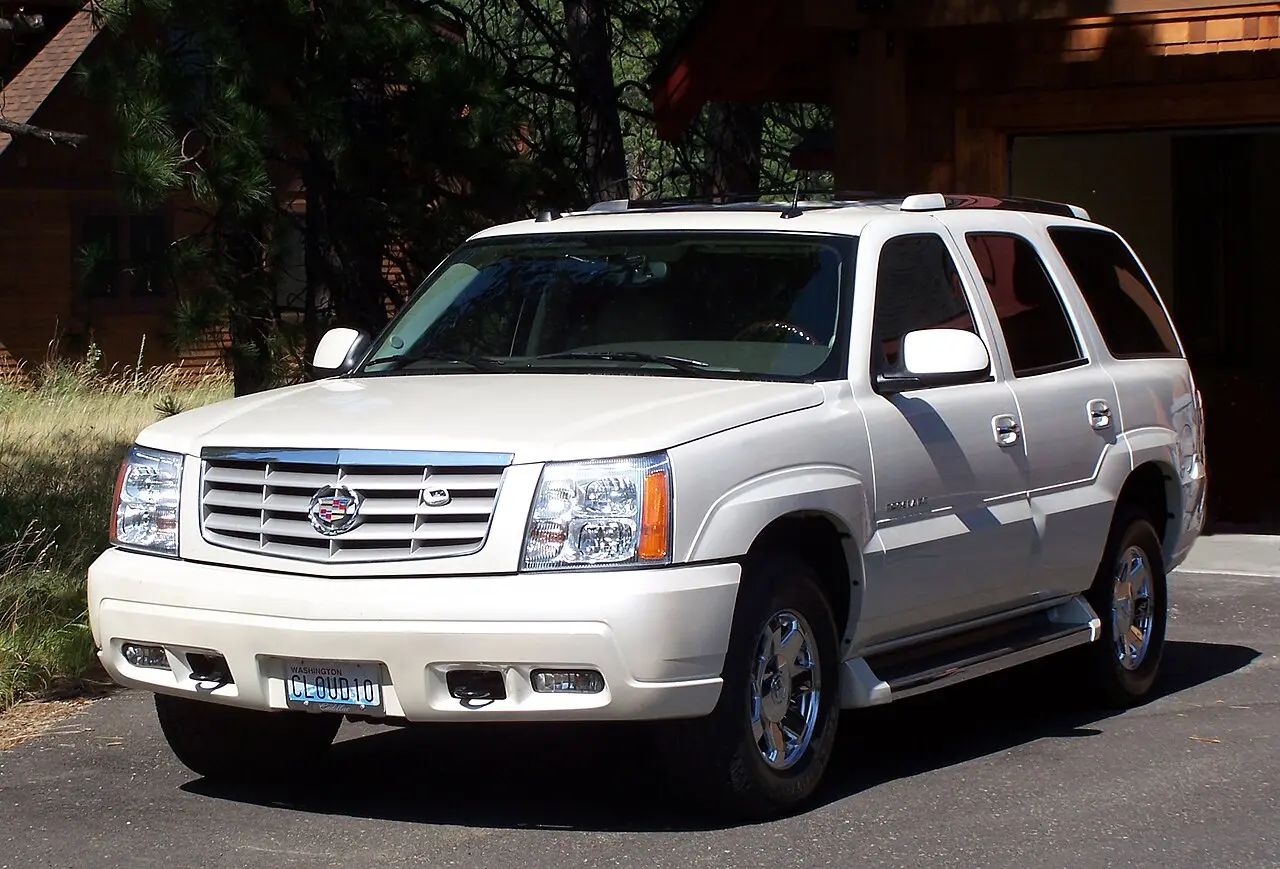
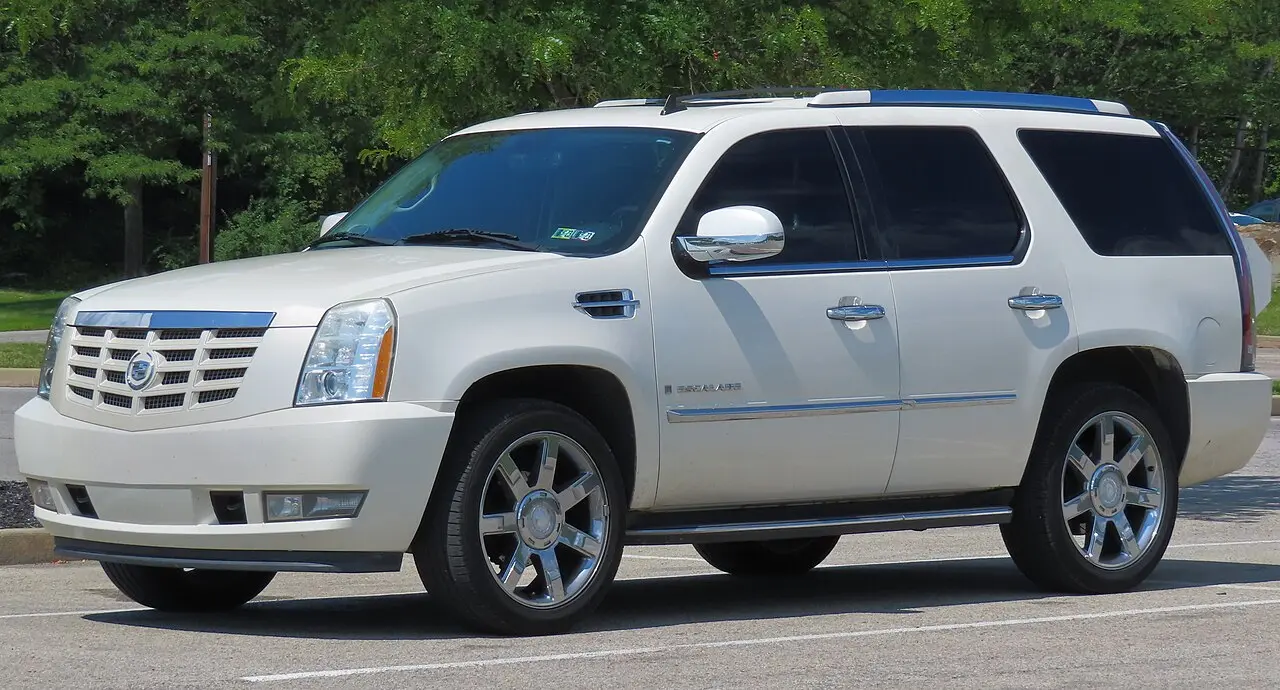
The Cadillac Escalade is a full-size luxury SUV and a flagship in the brand’s range. Its upright shape and spacious cabin give it room for passengers and luggage. Introduced as Cadillac’s first full-size SUV, the Escalade became a defining model for the brand.
The Escalade has five generations: the first ran from 1999 to 2000, the second from 2002 to 2006, the third from 2007 to 2014, the fourth from 2015 to 2020 and the fifth from 2021 onward. It has kept its large, upright SUV format while gaining new design and technology with each generation.
Engines and power
European figures list petrol engines from 6.0 L to 6.2 L, with power from 248 kW (337 PS) to 313 kW (426 PS). In France, the recorded power range is 248 kW (337 PS) to 301 kW (409 PS), and both petrol and hybrid versions appear. US listings include petrol, diesel, flex-fuel E85 and hybrid versions; Canadian listings include petrol, diesel and E85.
How economical is the Cadillac Escalade?
Official results vary by market and test procedure. The EU listing gives a low of 7.3 L/100 km on WLTP, France gives 10.9 L/100 km on NEDC, and UK NEDC figures show 12.6 L/100 km. In the US, the EPA low is 10.2 L/100 km, with a best combined rating of 23 MPG; Canada’s low is 10.5 L/100 km under NRCan 5-cycle testing. WLTP and NEDC are European procedures; EPA and Canadian 5-cycle testing use different methods, so results are best read within their respective markets.
Where was the Escalade sold?
The Escalade appears in US and Canadian official figures from 1999 onward, and in the EU from 2010, the UK from 2007 and France from 2012. EU registrations total 2,569 over 2010–2025. The leading listed entry in several years was the 6.2 L petrol version rated at 313 kW (426 PS).
Questions and answers
How many generations of Cadillac Escalade are there?
Five: 1999–2000, 2002–2006, 2007–2014, 2015–2020 and 2021 onward.
What engines does the Escalade use?
European figures show petrol engines from 6.0 L to 6.2 L. US and Canadian listings also include other fuel types.
What is the lowest listed Escalade consumption?
The lowest is 7.3 L/100 km in the EU figures under WLTP. Other markets use different test procedures.
New cars registered in the EU (plus Norway and Iceland), from the European Environment Agency. Figures on the NEDC procedure until 2020 and on WLTP from 2021; versions are grouped by engine and power, with their number of registrations.
Years and version
Engine
Power
Fuel
Consumption (combined)
CO₂
EU registrations
2025
6.2 L
313 kW (426 PS)
Petrol
11.2 L/100 km WLTP
331 g/km
147
2025
6.2 L
507 kW (689 PS)
Petrol
–
463 g/km
10
2024
6.2 L
313 kW (426 PS)
Petrol
7.3 L/100 km WLTP
308 g/km
100
2023
6.2 L
313 kW (426 PS)
Petrol
–
302 g/km
91
2022
6.2 L
313 kW (426 PS)
Petrol
–
385 g/km
87
2021
6.2 L
313 kW (426 PS)
Petrol
–
397 g/km
26
United States 22 versions
Model years sold in the USA, from the EPA and the Department of Energy (fueleconomy.gov). MPG on the EPA test; litres per 100 km = 235.215 ÷ MPG.
Years and version
Engine
Fuel
Gearbox
Drive
Consumption (combined)
CO₂
2025–2027SIDI
6.2 L
Petrol
10-speed automatic
Four-wheel drive
16 MPG (14.7 L/100 km) EPA
355 g/km
2027SIDI
6.2 L
Petrol
10-speed automatic
Rear-wheel drive
17 MPG (13.8 L/100 km) EPA
331 g/km
2027SIDI
6.2 L
Petrol
10-speed automatic
Four-wheel drive
13 MPG (18.1 L/100 km) EPA
417 g/km
2025–2026SIDI
6.2 L
Petrol
10-speed automatic
Rear-wheel drive
17 MPG (13.8 L/100 km) EPA
334 g/km
2026SIDI
6.2 L
Petrol
10-speed automatic
Four-wheel drive
13 MPG (18.1 L/100 km) EPA
429 g/km
2025SIDI
6.2 L
Petrol
10-speed automatic
Four-wheel drive
13 MPG (18.1 L/100 km) EPA
424 g/km
2022–2024
3.0 L
Diesel
10-speed automatic
Rear-wheel drive
23 MPG (10.2 L/100 km) EPA
275 g/km
2022–2024
3.0 L
Diesel
10-speed automatic
Four-wheel drive
22 MPG (10.7 L/100 km) EPA
287 g/km
2023–2024SIDI
6.2 L
Petrol
10-speed automatic
Rear-wheel drive
16 MPG (14.7 L/100 km) EPA
345 g/km
2023–2024SIDI
6.2 L
Petrol
10-speed automatic
Four-wheel drive
16 MPG (14.7 L/100 km) EPA
350 g/km
2024SIDI
6.2 L
Petrol
10-speed automatic
Four-wheel drive
13 MPG (18.1 L/100 km) EPA
424 g/km
2023SIDI
6.2 L
Petrol
10-speed automatic
Four-wheel drive
13 MPG (18.1 L/100 km) EPA
436 g/km
2022SIDI
6.2 L
Petrol
10-speed automatic
Rear-wheel drive
16 MPG (14.7 L/100 km) EPA
341 g/km
2022SIDI
6.2 L
Petrol
10-speed automatic
Four-wheel drive
16 MPG (14.7 L/100 km) EPA
353 g/km
2022SIDI; Stop-Start
6.2 L
Petrol
10-speed automatic
Rear-wheel drive
16 MPG (14.7 L/100 km) EPA
340 g/km
2022SIDI; Stop-Start
6.2 L
Petrol
10-speed automatic
Four-wheel drive
16 MPG (14.7 L/100 km) EPA
345 g/km
2021
3.0 L
Diesel
10-speed automatic
Rear-wheel drive
23 MPG (10.2 L/100 km) EPA
272 g/km
2021
3.0 L
Diesel
10-speed automatic
Four-wheel drive
22 MPG (10.7 L/100 km) EPA
276 g/km
2021SIDI; Stop-Start
6.2 L
Petrol
10-speed automatic
Rear-wheel drive
17 MPG (13.8 L/100 km) EPA
329 g/km
2021SIDI; Stop-Start
6.2 L
Petrol
10-speed automatic
Four-wheel drive
16 MPG (14.7 L/100 km) EPA
347 g/km
2021SIDI
6.2 L
Petrol
10-speed automatic
Rear-wheel drive
16 MPG (14.7 L/100 km) EPA
343 g/km
2021SIDI
6.2 L
Petrol
10-speed automatic
Four-wheel drive
16 MPG (14.7 L/100 km) EPA
354 g/km
Canada 13 versions
Model years sold in Canada, from Natural Resources Canada fuel consumption ratings (5-cycle test).
Years and version
Engine
Fuel
Gearbox
Consumption (combined)
CO₂
2025–2026Sport utility vehicle: Standard
6.2 L
Petrol
10-speed automatic
15.0 L/100 km 5-cycle
352 g/km
2026Sport utility vehicle: Standard
6.2 L
Petrol
10-speed automatic
17.7 L/100 km 5-cycle
420 g/km
2025Sport utility vehicle: Standard
6.2 L
Petrol
10-speed automatic
17.7 L/100 km 5-cycle
415 g/km
2022–2024Sport utility vehicle: Standard
3.0 L
Diesel
10-speed automatic
10.5 L/100 km 5-cycle
281 g/km
2024Sport utility vehicle: Standard
6.2 L
Petrol
10-speed automatic
15.0 L/100 km 5-cycle
350 g/km
2024Sport utility vehicle: Standard
6.2 L
Petrol
10-speed automatic
18.1 L/100 km 5-cycle
425 g/km
2023Sport utility vehicle: Standard
6.2 L
Petrol
10-speed automatic
15.0 L/100 km 5-cycle
352 g/km
2023Sport utility vehicle: Standard
6.2 L
Petrol
10-speed automatic
18.6 L/100 km 5-cycle
436 g/km
2022Sport utility vehicle: Standard
6.2 L
Petrol
10-speed automatic
14.7 L/100 km 5-cycle
345 g/km
2022Sport utility vehicle: Standard
6.2 L
Petrol
10-speed automatic
15.1 L/100 km 5-cycle
353 g/km
2021Sport utility vehicle: Standard
3.0 L
Diesel
10-speed automatic
10.6 L/100 km 5-cycle
277 g/km
2021Sport utility vehicle: Standard
6.2 L
Petrol
10-speed automatic
14.8 L/100 km 5-cycle
347 g/km
2021Sport utility vehicle: Standard
6.2 L
Petrol
10-speed automatic
15.3 L/100 km 5-cycle
357 g/km
Official figures are measured on standard test procedures and differ between markets. Your consumption depends on how, where and in what conditions you drive.