Cadillac

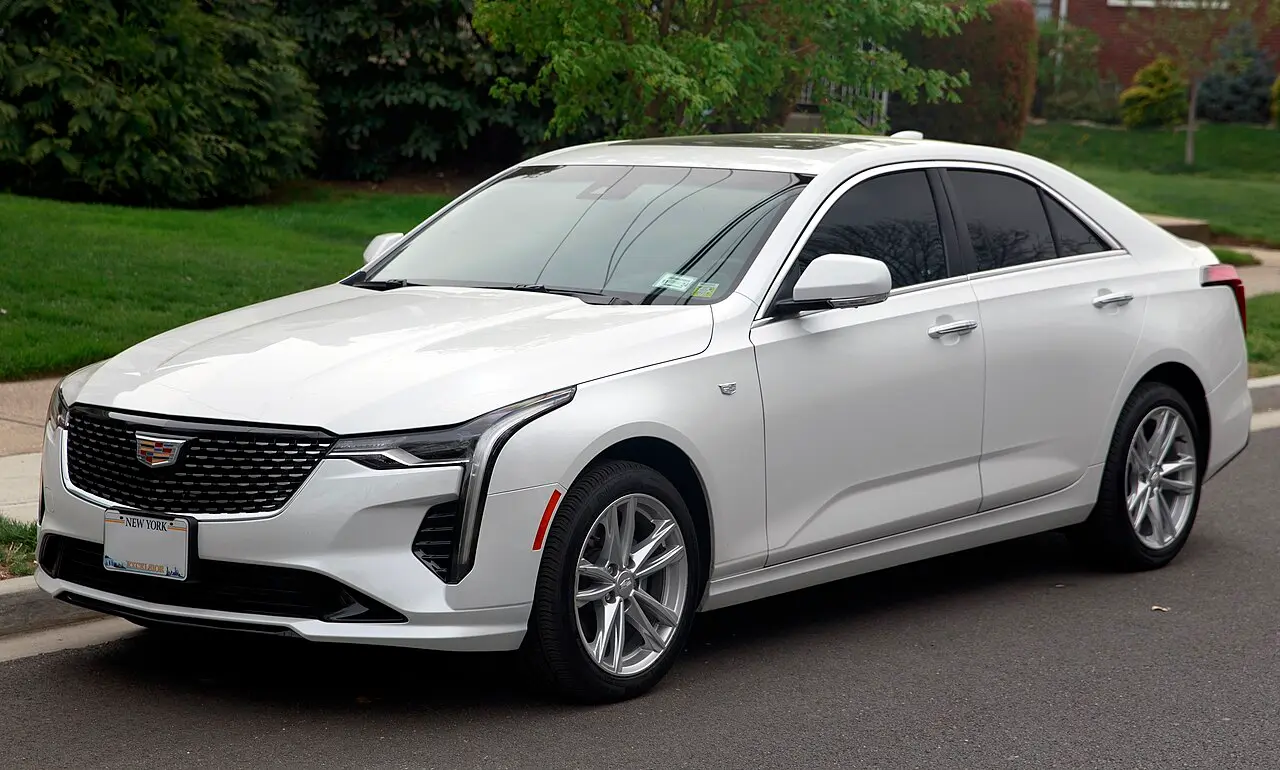
Cadillac CT4

Cadillac CT4
Photo: Mr.choppers / Wikimedia Commons · CC BY-SA 3.0

The official data lists 40 versions of the Cadillac CT4 (2020–2026), in the United States and Canada. Each market publishes its own figures, measured on its own test procedure.

At a glance

Years in the data
2020–2026
Markets
United States, Canada
Engines
2.0 L to 3.6 L
Fuels
Petrol
Lowest consumption (United States)
8.7 L/100 km (EPA)
Lowest consumption (Canada)
8.7 L/100 km (5-cycle)

What is the Cadillac CT4?

The CT4 is a compact luxury four-door sedan at the smaller end of Cadillac’s sedan range. Its compact format suits city driving and daily commutes, while the sedan body also works well for longer journeys. Its angular styling carries Cadillac’s design language into a smaller car.

Generation and engines

The first generation began in 2020. US and Canadian figures cover petrol engines from 2.0 L to 3.6 L. Cadillac also offers sportier CT4-V versions under its V-Series name.

How economical is the Cadillac CT4?

The lowest listed consumption is 8.7 L/100 km in both US EPA and Canadian figures. The best combined EPA rating is 27 MPG. Test procedures differ by market: the US uses EPA testing, Canada uses the 5-cycle test, and European figures use WLTP or NEDC.

Where was the CT4 sold?

US and Canadian figures cover the CT4 from 2020–2026, with 19 versions listed in the US and 21 in Canada.

Questions and answers

What body style is the Cadillac CT4?

It is a compact luxury four-door sedan.

What engine sizes are listed for the CT4?

Petrol engines from 2.0 L to 3.6 L in US and Canadian figures.

What is the CT4’s lowest listed consumption?

8.7 L/100 km in both the US EPA and Canadian figures.

CT4 first generation (since 2020)

Cadillac CT4 first generation
Photo: Mr.choppers / Wikimedia Commons · CC BY-SA 3.0

Model codes: Alpha 2, A2SL · References: en.wikipedia.org, gmauthority.com

United States 19 versions

Model years sold in the USA, from the EPA and the Department of Energy (fueleconomy.gov). MPG on the EPA test; litres per 100 km = 235.215 ÷ MPG.

Years and versionEngineFuelGearboxDriveConsumption (combined)CO₂
2024–2026SIDI2.0 LPetrol8-speed automaticRear-wheel drive26 MPG (9.0 L/100 km) EPA214 g/km
2024–2026SIDI2.0 LPetrol8-speed automaticAll-wheel drive25 MPG (9.4 L/100 km) EPA222 g/km
2021–2026SIDI2.7 LPetrol10-speed automaticRear-wheel drive25 MPG (9.4 L/100 km) EPA221 g/km
2022–2026SIDI2.7 LPetrol10-speed automaticAll-wheel drive23 MPG (10.2 L/100 km) EPA240 g/km
2023–2026SIDI2.7 LPetrol10-speed automaticAll-wheel drive24 MPG (9.8 L/100 km) EPA231 g/km
2025–2026SIDI2.7 LPetrol10-speed automaticRear-wheel drive23 MPG (10.2 L/100 km) EPA238 g/km
2022–2026SIDI3.6 LPetrol10-speed automaticRear-wheel drive19 MPG (12.4 L/100 km) EPA297 g/km
2025–2026SIDI3.6 LPetrol6-speed manualRear-wheel drive18 MPG (13.1 L/100 km) EPA306 g/km
2020–2024SIDI2.7 LPetrol10-speed automaticRear-wheel drive23 MPG (10.2 L/100 km) EPA239 g/km
2022–2024SIDI3.6 LPetrol6-speed manualRear-wheel drive18 MPG (13.1 L/100 km) EPA303 g/km
2022–2023SIDI2.0 LPetrol8-speed automaticRear-wheel drive27 MPG (8.7 L/100 km) EPA206 g/km
2022–2023SIDI2.0 LPetrol8-speed automaticAll-wheel drive26 MPG (9.0 L/100 km) EPA216 g/km
2022SIDI2.7 LPetrol10-speed automaticAll-wheel drive24 MPG (9.8 L/100 km) EPA233 g/km
2020–2021SIDI2.0 LPetrol8-speed automaticAll-wheel drive26 MPG (9.0 L/100 km) EPA213 g/km
2020–2021SIDI2.0 LPetrol8-speed automaticRear-wheel drive27 MPG (8.7 L/100 km) EPA203 g/km
2021SIDI2.7 LPetrol10-speed automaticAll-wheel drive24 MPG (9.8 L/100 km) EPA232 g/km
2021SIDI2.7 LPetrol10-speed automaticAll-wheel drive23 MPG (10.2 L/100 km) EPA239 g/km
2020SIDI2.7 LPetrol10-speed automaticRear-wheel drive24 MPG (9.8 L/100 km) EPA232 g/km
2020SIDI2.7 LPetrol10-speed automaticAll-wheel drive23 MPG (10.2 L/100 km) EPA237 g/km

Canada 21 versions

Model years sold in Canada, from Natural Resources Canada fuel consumption ratings (5-cycle test).

Years and versionEngineFuelGearboxConsumption (combined)CO₂
2024–2026Compact2.0 LPetrol8-speed automatic9.1 L/100 km 5-cycle214 g/km
2024–2026Compact2.0 LPetrol8-speed automatic9.5 L/100 km 5-cycle223 g/km
2021–2026Compact2.7 LPetrol10-speed automatic9.5 L/100 km 5-cycle221 g/km
2022–2026Compact2.7 LPetrol10-speed automatic10.4 L/100 km 5-cycle244 g/km
2023–2026Compact2.7 LPetrol10-speed automatic9.9 L/100 km 5-cycle231 g/km
2026Compact2.7 LPetrol10-speed automatic10.1 L/100 km 5-cycle238 g/km
2022–2026Compact3.6 LPetrol10-speed automatic12.6 L/100 km 5-cycle297 g/km
2025–2026Compact3.6 LPetrol6-speed manual12.9 L/100 km 5-cycle303 g/km
2024–2025Compact2.7 LPetrol10-speed automatic10.2 L/100 km 5-cycle236 g/km
2022–2024Compact3.6 LPetrol6-speed manual13.0 L/100 km 5-cycle303 g/km
2022–2023Compact2.0 LPetrol8-speed automatic8.8 L/100 km 5-cycle206 g/km
2022–2023Compact2.0 LPetrol8-speed automatic9.2 L/100 km 5-cycle216 g/km
2022–2023Compact2.7 LPetrol10-speed automatic10.2 L/100 km 5-cycle239 g/km
2022Compact2.7 LPetrol10-speed automatic10.0 L/100 km 5-cycle233 g/km
2020–2021Compact2.0 LPetrol8-speed automatic8.7 L/100 km 5-cycle203 g/km
2020–2021Compact2.0 LPetrol8-speed automatic9.1 L/100 km 5-cycle213 g/km
2020–2021Compact2.7 LPetrol10-speed automatic10.0 L/100 km 5-cycle234 g/km
2021Compact2.7 LPetrol10-speed automatic9.9 L/100 km 5-cycle232 g/km
2021Compact2.7 LPetrol10-speed automatic10.2 L/100 km 5-cycle239 g/km
2020Compact2.7 LPetrol10-speed automatic9.9 L/100 km 5-cycle232 g/km
2020Compact2.7 LPetrol10-speed automatic10.2 L/100 km 5-cycle238 g/km

Official figures are measured on standard test procedures and differ between markets. Your consumption depends on how, where and in what conditions you drive.