Buick

Buick Riviera

Buick Riviera
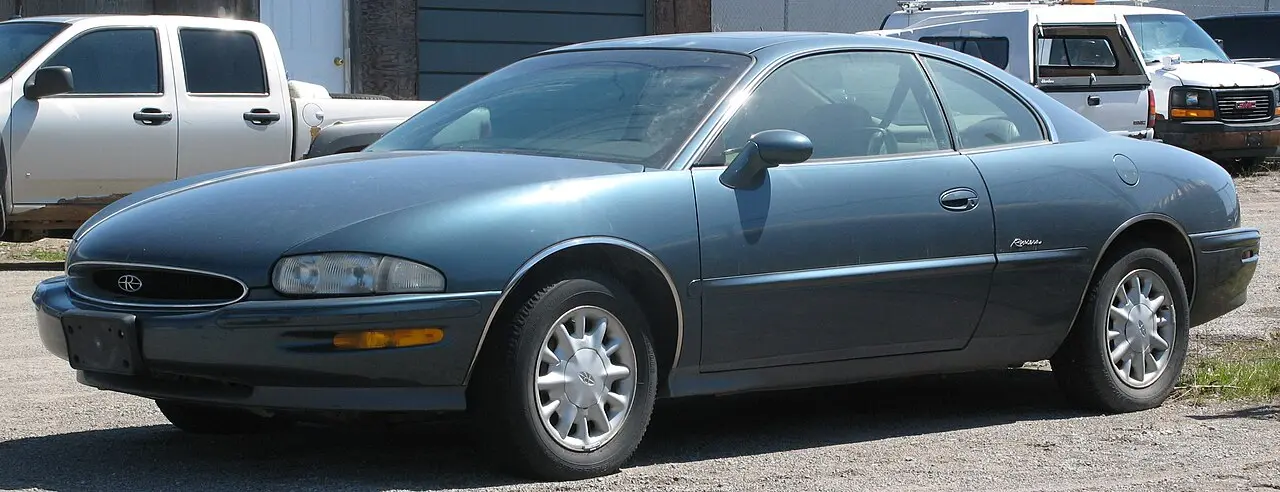
Photo: SsmIntrigue / Wikimedia Commons · CC BY-SA 4.0

The official data lists 28 versions of the Buick Riviera (1984–1999), in the United States and Canada. Each market publishes its own figures, measured on its own test procedure.

At a glance

Years in the data
1984–1999
Markets
United States, Canada
Engines
3.8 L to 5.7 L
Fuels
Petrol, Diesel
Lowest consumption (United States)
11.2 L/100 km (EPA)
Lowest consumption (Canada)
11.5 L/100 km (5-cycle)

What is the Buick Riviera?

The Riviera was Buick’s personal-luxury coupe, a large two-door car known for its distinctive styling. Buick introduced the name in the early 1960s as it entered the personal-luxury market. Over the years, the car’s proportions and engineering changed with American coupe design.

Buick Riviera generations

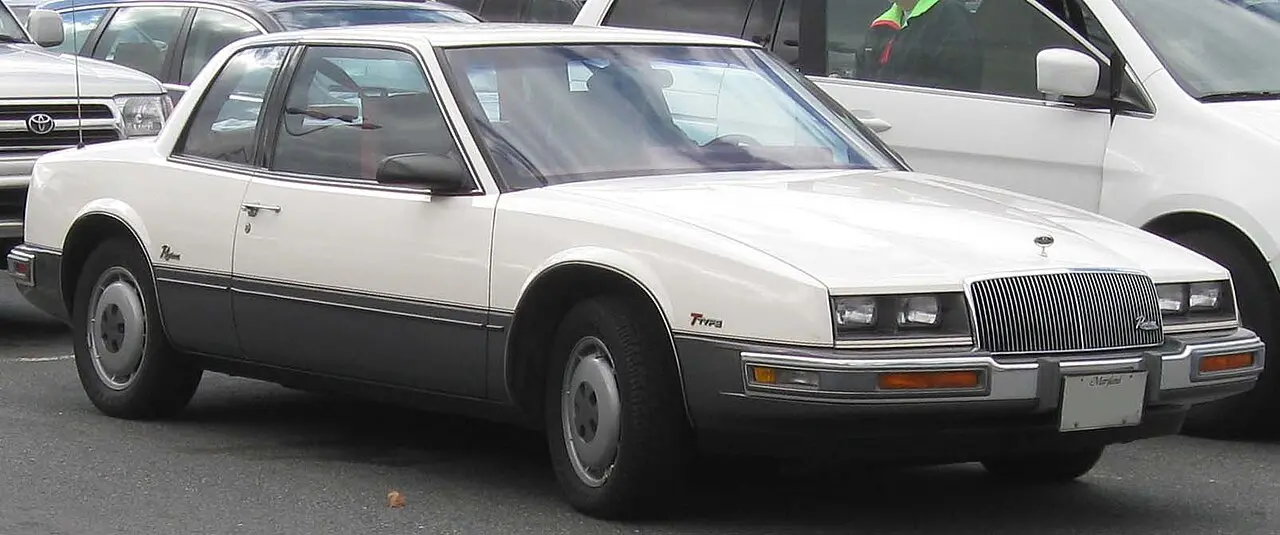
The seventh generation ran from 1986 to 1993. The eighth generation followed from 1995 to 1999. The seventh was an E-body coupe; the final generation used the G-body platform, with a new shape and updated cabin technology.

Engines and power

US-market listings include petrol and diesel Rivieras with engines from 3.8 to 5.7 litres. Canadian listings cover petrol versions with a 3.8-litre engine.

How economical is the Buick Riviera?

The best combined EPA rating for US-market versions is 21 MPG, and the lowest listed consumption is 11.2 L/100 km. Canada’s lowest listed figure is 11.5 L/100 km on NRCan’s 5-cycle test. EPA and 5-cycle procedures differ, so the figures are best understood within their respective markets. European WLTP and NEDC tests also use different procedures.

Questions and answers

What type of car was the Buick Riviera?

It was a personal-luxury coupe with a comfortable two-door layout and distinctive styling.

Which Riviera generations are listed?

The seventh generation ran from 1986 to 1993, followed by the eighth from 1995 to 1999.

What engine sizes are listed for US Rivieras?

US versions range from 3.8 to 5.7 litres and include petrol and diesel engines.

What is the Riviera’s best combined EPA rating?

The best combined EPA rating is 21 MPG.
Riviera seventh generation (1986–1993)

Buick Riviera seventh generation
Photo: IFCAR / Wikimedia Commons · Public domain

Model codes: E-body · References: en.wikipedia.org

Show all 6 versions

Riviera eighth generation (1995–1999)

Buick Riviera eighth generation
Photo: SsmIntrigue / Wikimedia Commons · CC BY-SA 4.0

Model codes: G-body · References: en.wikipedia.org

United States 6 versions

Model years sold in the USA, from the EPA and the Department of Energy (fueleconomy.gov). MPG on the EPA test; litres per 100 km = 235.215 ÷ MPG.

Years and versionEngineFuelGearboxDriveConsumption (combined)CO₂
1998–1999CLKUP3.8 LPetrol4-speed automaticFront-wheel drive19 MPG (12.4 L/100 km) EPA291 g/km
1997(FFS) (MPFI), CLKUP3.8 LPetrol4-speed automaticFront-wheel drive20 MPG (11.8 L/100 km) EPA276 g/km
1997(FFS) (MPFI) (S-CHARGE), CLKUP3.8 LPetrol4-speed automaticFront-wheel drive19 MPG (12.4 L/100 km) EPA291 g/km
1996(FFS) (MPFI), CLKUP3.8 LPetrol4-speed automaticFront-wheel drive19 MPG (12.4 L/100 km) EPA291 g/km
1996(FFS) (MPFI), CLKUP3.8 LPetrol4-speed automaticFront-wheel drive21 MPG (11.2 L/100 km) EPA263 g/km
1995(FFS) (MPFI), CLKUP3.8 LPetrol4-speed automaticFront-wheel drive20 MPG (11.8 L/100 km) EPA276 g/km

Canada 6 versions

Model years sold in Canada, from Natural Resources Canada fuel consumption ratings (5-cycle test).

Years and versionEngineFuelGearboxConsumption (combined)CO₂
1999Mid-size3.8 LPetrol4-speed automatic12.2 L/100 km 5-cycle281 g/km
1998Mid-size3.8 LPetrol4-speed automatic12.7 L/100 km 5-cycle292 g/km
1997Mid-size3.8 LPetrol4-speed automatic12.6 L/100 km 5-cycle290 g/km
1996Mid-size3.8 LPetrol4-speed automatic11.5 L/100 km 5-cycle265 g/km
1996Mid-size3.8 LPetrol4-speed automatic13.2 L/100 km 5-cycle304 g/km
1995Mid-size3.8 LPetrol4-speed automatic13.5 L/100 km 5-cycle311 g/km

Versions outside these generations

United States 10 versions

Model years sold in the USA, from the EPA and the Department of Energy (fueleconomy.gov). MPG on the EPA test; litres per 100 km = 235.215 ÷ MPG.

Years and versionEngineFuelGearboxDriveConsumption (combined)CO₂
1985(FFS,TRBO)3.8 LPetrol4-speed automaticFront-wheel drive17 MPG (13.8 L/100 km) EPA325 g/km
1985(GM-OLDS) (FFS) CA model5.0 LPetrol4-speed automaticFront-wheel drive17 MPG (13.8 L/100 km) EPA325 g/km
1985(GM-OLDS) (FFS)5.0 LPetrol4-speed automaticFront-wheel drive17 MPG (13.8 L/100 km) EPA325 g/km
1985(350 V8)5.7 LDiesel4-speed automaticFront-wheel drive21 MPG (11.2 L/100 km) EPA301 g/km
1984(FFS,TRBO)3.8 LPetrol4-speed automatic–15 MPG (15.7 L/100 km) EPA368 g/km
1984(FFS)4.1 LPetrol4-speed automatic–15 MPG (15.7 L/100 km) EPA368 g/km
1984(FFS) CA model4.1 LPetrol4-speed automatic–15 MPG (15.7 L/100 km) EPA368 g/km
1984(GM-OLDS) · (GM-OLDS) CA model5.0 LPetrol4-speed automatic–16 MPG (14.7 L/100 km) EPA345 g/km
1984(350 V8) (DIESEL)5.7 LDiesel4-speed automatic–21 MPG (11.2 L/100 km) EPA301 g/km

Official figures are measured on standard test procedures and differ between markets. Your consumption depends on how, where and in what conditions you drive.