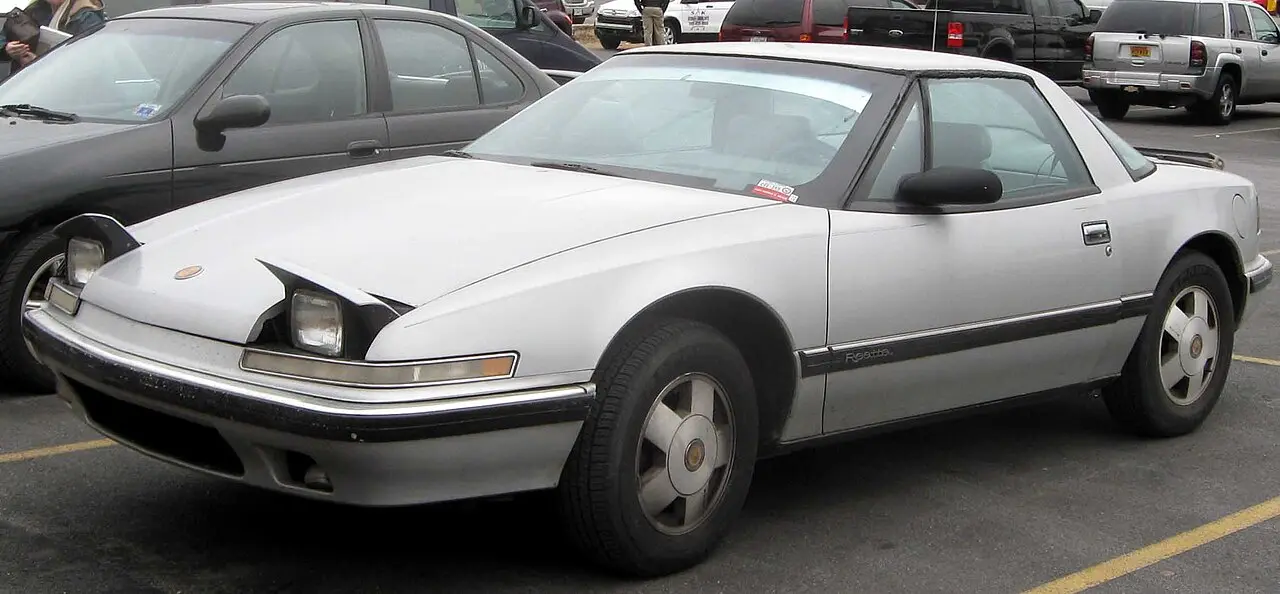
What is the Buick Reatta?
The Reatta was a two-seat personal luxury car from Buick, offered as a coupe and later as a convertible. Its small cabin and hand-assembled construction gave it a distinct place in Buick’s lineup. Early models also featured an electronic control center with a touch-sensitive screen.
The Reatta was sold in the United States from 1988 to 1991. The coupe came first, followed by the convertible during the model’s run.
Engines and power
The Reatta used a 3.8 L petrol engine.
How economical is the Buick Reatta?
The US EPA rates the Reatta at 20 MPG combined, equivalent to 11.8 L/100 km. This is an EPA rating; other markets use different fuel economy test procedures.
Questions and answers
What body styles did Buick offer for the Reatta?
It was available as a two-seat coupe and convertible.
When was the Reatta sold?
The US model years shown run from 1988 to 1991.
What engine does the Reatta use?
It has a 3.8 L petrol engine.
What is the Reatta’s EPA fuel economy?
The EPA rating is 20 MPG combined, equivalent to 11.8 L/100 km.