Buick

Buick Park Avenue

Buick Park Avenue
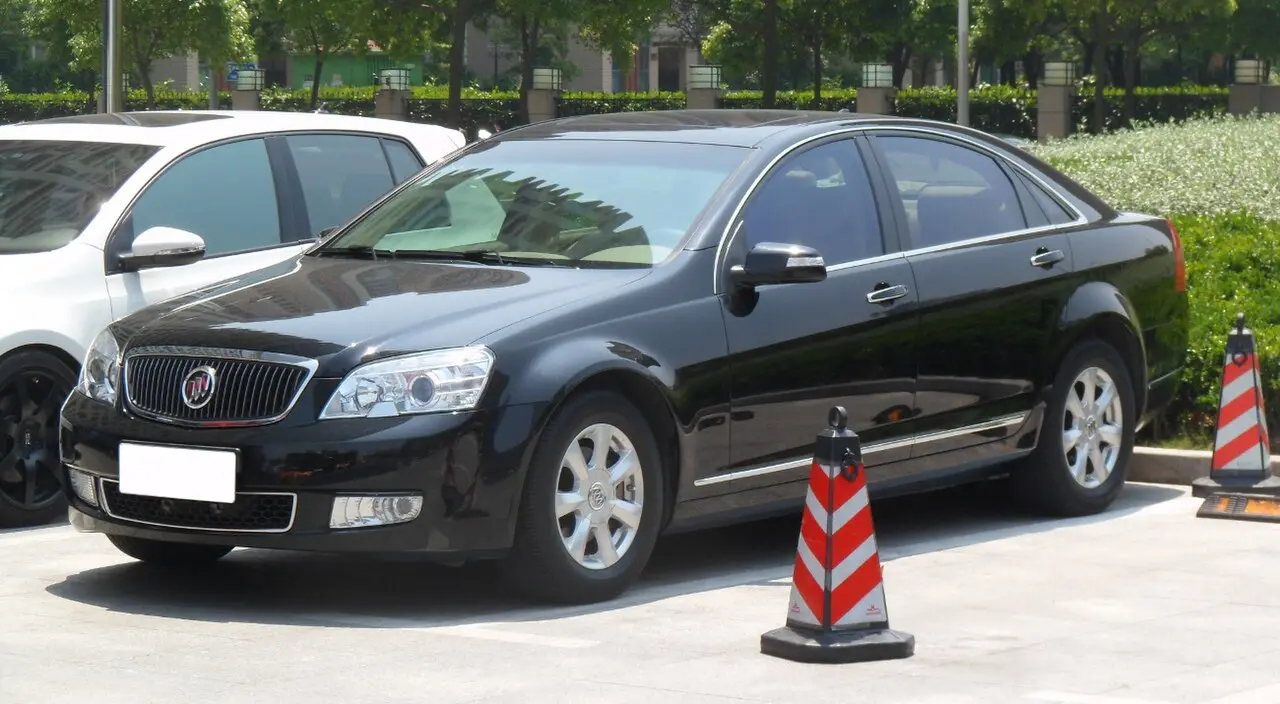
Photo: Navigator84 / Wikimedia Commons · CC BY-SA 3.0

The official data lists 52 versions of the Buick Park Avenue (1984–2005), in the United States and Canada. Each market publishes its own figures, measured on its own test procedure.

At a glance

Years in the data
1984–2005
Markets
United States, Canada
Engines
3.0 L to 5.0 L
Fuels
Petrol, Diesel
Lowest consumption (United States)
9.8 L/100 km (EPA)
Lowest consumption (Canada)
11.3 L/100 km (5-cycle)

What is the Buick Park Avenue?

The Park Avenue was Buick’s full-size luxury sedan, positioned near the top of the brand’s range. Its roomy four-door layout and comfort-minded character made it suited to everyday travel and longer journeys. Buick has long held an upscale place within General Motors, and the Park Avenue carried that identity as a flagship name.

In the United States, the Park Avenue name appears from 1984 to 2005 in EPA figures; Canadian NRCan figures cover 1995 to 2005. The first generation ran from 1991 to 1996 on GM’s C-body platform. The second ran from 1997 to 2005 on the G-body platform.

Engines and power

US versions span engines from 3.0 L to 5.7 L, with petrol and diesel options. Canadian versions in NRCan figures use a 3.8 L petrol engine.

The 3.8 L V6 became closely associated with Buick, including in the Park Avenue. Engine choices varied across the model’s run and between markets.

How economical is the Buick Park Avenue?

The best combined US EPA rating is 24 MPG. The lowest listed US consumption is 9.8 L/100 km, also under the EPA procedure. In Canada, the lowest listed figure is 11.3 L/100 km on the NRCan five-cycle test.

These results use different market-specific procedures. EPA ratings differ from Canada’s five-cycle test and from European WLTP or NEDC tests.

Where was the Park Avenue sold?

The Park Avenue was sold in the United States and Canada, and the second generation was also sold in Europe. US EPA figures cover 1984–2005, while Canadian NRCan figures cover 1995–2005.

Questions and answers

What kind of car was the Buick Park Avenue?

It was Buick’s full-size luxury sedan, with a comfort-focused character and a position near the top of the brand’s range.

What are the Park Avenue generations?

The first generation ran from 1991 to 1996; the second ran from 1997 to 2005.

What engines were available?

US versions span 3.0 L to 5.7 L engines and include petrol and diesel. Canadian versions in NRCan figures use a 3.8 L petrol engine.

What is its best official fuel economy figure?

The best combined US EPA rating is 24 MPG. The lowest listed consumption is 9.8 L/100 km in the US and 11.3 L/100 km in Canada under NRCan’s five-cycle test.
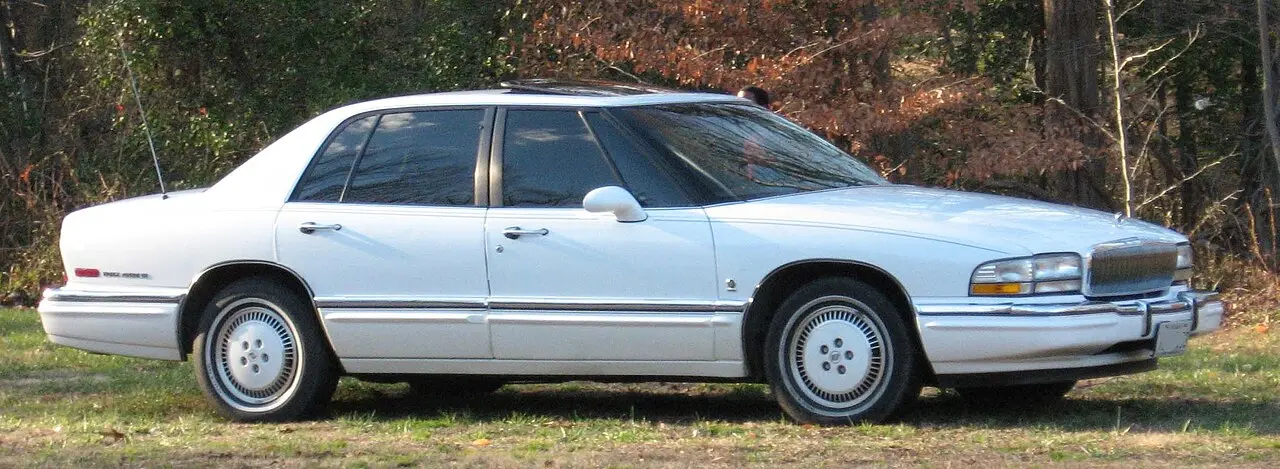
Park Avenue first generation (1991–1996)

Buick Park Avenue first generation
Photo: IFCAR / Wikimedia Commons · Public domain

Model codes: C-body · Sold in: United States and Canada · References: en.wikipedia.org

Show all 12 versions

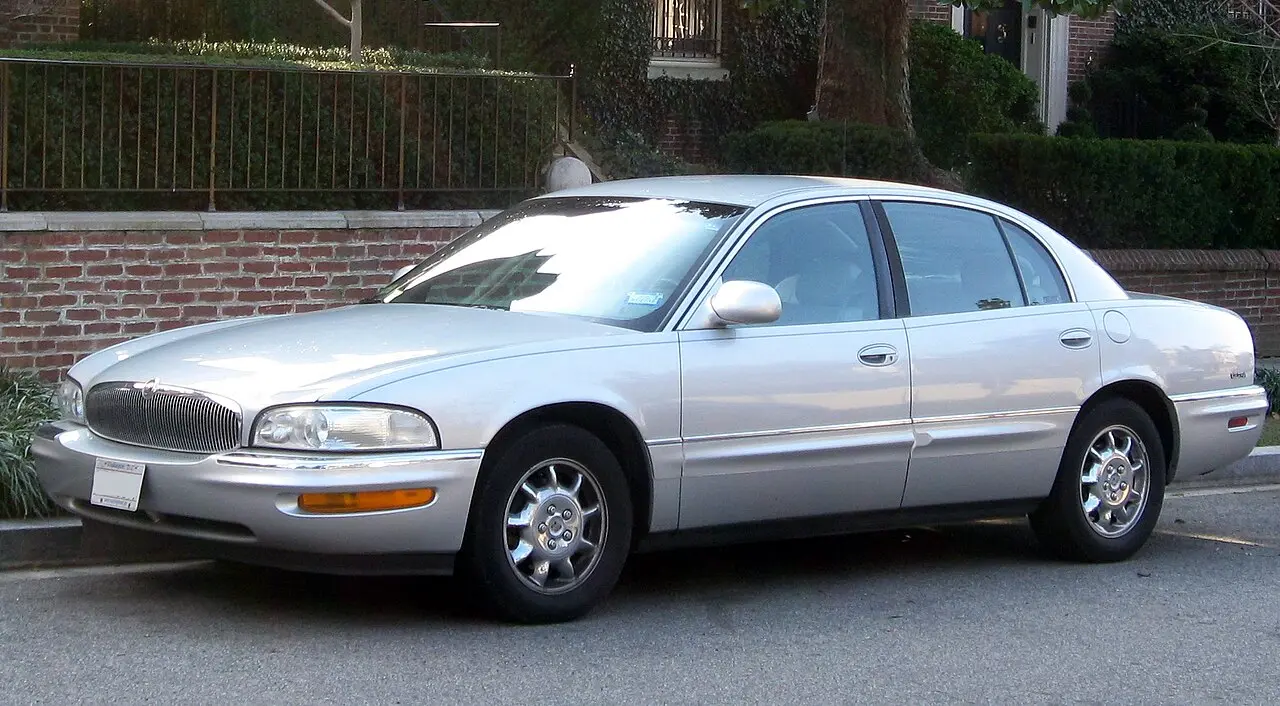
Park Avenue second generation (1997–2005)

Buick Park Avenue second generation
Photo: IFCAR / Wikimedia Commons · Public domain

Model codes: G-body · Sold in: United States, Canada, and European Union · References: en.wikipedia.org

United States 11 versions

Model years sold in the USA, from the EPA and the Department of Energy (fueleconomy.gov). MPG on the EPA test; litres per 100 km = 235.215 ÷ MPG.

Years and versionEngineFuelGearboxDriveConsumption (combined)CO₂
2005CLKUP3.8 LPetrol4-speed automaticFront-wheel drive20 MPG (11.8 L/100 km) EPA276 g/km
2004–2005CLKUP3.8 LPetrol4-speed automaticFront-wheel drive21 MPG (11.2 L/100 km) EPA263 g/km
2004SC, CLKUP3.8 LPetrol4-speed automaticFront-wheel drive20 MPG (11.8 L/100 km) EPA276 g/km
2002–2003SUPERCHR, CLKUP · CLKUP3.8 LPetrol4-speed automaticFront-wheel drive19 MPG (12.4 L/100 km) EPA291 g/km
2002–2003CLKUP3.8 LPetrol4-speed automaticFront-wheel drive21 MPG (11.2 L/100 km) EPA263 g/km
2000–2001CLKUP3.8 LPetrol4-speed automaticFront-wheel drive20 MPG (11.8 L/100 km) EPA276 g/km
2001CLKUP3.8 LPetrol4-speed automaticFront-wheel drive20 MPG (11.8 L/100 km) EPA276 g/km
1998–2000CLKUP3.8 LPetrol4-speed automaticFront-wheel drive19 MPG (12.4 L/100 km) EPA291 g/km
1999CLKUP3.8 LPetrol4-speed automaticFront-wheel drive20 MPG (11.8 L/100 km) EPA276 g/km
1997–1998(FFS) (MPFI), CLKUP · CLKUP3.8 LPetrol4-speed automaticFront-wheel drive20 MPG (11.8 L/100 km) EPA276 g/km
1997(FFS) (MPFI) (S-CHARGE), CLKUP3.8 LPetrol4-speed automaticFront-wheel drive19 MPG (12.4 L/100 km) EPA291 g/km

Canada 15 versions

Model years sold in Canada, from Natural Resources Canada fuel consumption ratings (5-cycle test).

Years and versionEngineFuelGearboxConsumption (combined)CO₂
2004–2005Full-size3.8 LPetrol4-speed automatic11.3 L/100 km 5-cycle260 g/km
2004–2005Full-size3.8 LPetrol4-speed automatic12.6 L/100 km 5-cycle290 g/km
2002–2003Full-size3.8 LPetrol4-speed automatic11.4 L/100 km 5-cycle262 g/km
2003Full-size3.8 LPetrol4-speed automatic12.4 L/100 km 5-cycle285 g/km
2002Full-size3.8 LPetrol4-speed automatic12.3 L/100 km 5-cycle283 g/km
2001Full-size3.8 LPetrol4-speed automatic11.5 L/100 km 5-cycle265 g/km
2001Full-size3.8 LPetrol4-speed automatic12.1 L/100 km 5-cycle278 g/km
2000Full-size3.8 LPetrol4-speed automatic12.0 L/100 km 5-cycle276 g/km
2000Full-size3.8 LPetrol4-speed automatic12.6 L/100 km 5-cycle290 g/km
1999Full-size3.8 LPetrol4-speed automatic11.8 L/100 km 5-cycle271 g/km
1999Full-size3.8 LPetrol4-speed automatic12.2 L/100 km 5-cycle281 g/km
1998Full-size3.8 LPetrol4-speed automatic12.3 L/100 km 5-cycle283 g/km
1998Full-size3.8 LPetrol4-speed automatic12.7 L/100 km 5-cycle292 g/km
1997Full-size3.8 LPetrol4-speed automatic12.8 L/100 km 5-cycle294 g/km
1997Full-size3.8 LPetrol4-speed automatic12.6 L/100 km 5-cycle290 g/km

Versions outside these generations

United States 14 versions

Model years sold in the USA, from the EPA and the Department of Energy (fueleconomy.gov). MPG on the EPA test; litres per 100 km = 235.215 ÷ MPG.

Years and versionEngineFuelGearboxDriveConsumption (combined)CO₂
1990(FFS), CLKUP3.8 LPetrol4-speed automaticFront-wheel drive19 MPG (12.4 L/100 km) EPA291 g/km
1988–1989(FFS) · (FFS), CLKUP3.8 LPetrol4-speed automaticFront-wheel drive20 MPG (11.8 L/100 km) EPA276 g/km
1987(FFS)3.8 LPetrol4-speed automaticFront-wheel drive19 MPG (12.4 L/100 km) EPA291 g/km
1986(FFS)3.8 LPetrol4-speed automaticFront-wheel drive20 MPG (11.8 L/100 km) EPA276 g/km
1985(FFS) CA model3.0 LPetrol4-speed automaticFront-wheel drive18 MPG (13.1 L/100 km) EPA307 g/km
1985(FFS)3.0 LPetrol4-speed automaticFront-wheel drive19 MPG (12.4 L/100 km) EPA291 g/km
1985(FFS)3.8 LPetrol4-speed automaticFront-wheel drive19 MPG (12.4 L/100 km) EPA291 g/km
1985CA model4.3 LDiesel4-speed automaticFront-wheel drive23 MPG (10.2 L/100 km) EPA275 g/km
1984(FFS)4.1 LPetrol4-speed automatic–16 MPG (14.7 L/100 km) EPA345 g/km
1984(FFS) CA model4.1 LPetrol4-speed automatic–16 MPG (14.7 L/100 km) EPA345 g/km
1984(DIESEL) CA model4.3 LDiesel4-speed automatic–24 MPG (9.8 L/100 km) EPA264 g/km
1984(GM-OLDS)5.0 LPetrol4-speed automatic–16 MPG (14.7 L/100 km) EPA345 g/km
1984(GM-OLDS) CA model5.0 LPetrol4-speed automatic–15 MPG (15.7 L/100 km) EPA368 g/km
1984(350 V8) (DIESEL)5.7 LDiesel4-speed automatic–21 MPG (11.2 L/100 km) EPA301 g/km

Official figures are measured on standard test procedures and differ between markets. Your consumption depends on how, where and in what conditions you drive.